The Ultimate Mushroom Substrate Guide: Engineering High-Yield Growth Media
Not all substrates work for all species. C:N ratios, pH buffering, moisture content, and specific recipes matched to the mushrooms you're actually growing.
Contents
Any substrate works for growing mushrooms. You will hear this from beginners who got lucky with a bucket of coffee grounds or a bag of random wood shavings from the hardware store. Then they try a second grow and nothing happens. The truth is brutally specific: your mushroom substrate determines your Biological Efficiency before you ever inoculate. Wrong C:N ratio, wrong pH buffer, wrong sterilization protocol for the nutrient density—and your genetics are irrelevant.
Fungi are heterotrophs. They physically consume their environment to build the ATP required for mycelial expansion and fruiting. Mastering mushroom substrate preparation is chemical engineering: balancing the Carbon-to-Nitrogen (C:N) ratio, managing pH stability against metabolic acids, and matching your heat-treatment protocol to the nutrient density of the media.
A high-performance growth medium is the difference between a weak 40% Biological Efficiency (BE) and a massive 150% BE harvest that exhausts the block over three powerful flushes.
The Biomechanics of Decomposition: Primary vs. Secondary
To build a perfect substrate, you must first understand the “job” of the fungus you are growing.
Primary Decomposers
Most gourmet mushrooms (Oysters, Lion’s Mane, Shiitake) are Primary Decomposers. They have evolved specialized enzymes (lignin peroxidases) that allow them to break down complex polymers like Lignin and Cellulose found in raw wood and straw. They prefer “clean,” uncomposted material.
Secondary Decomposers
Species like the Button mushroom (Agaricus bisporus) are Secondary Decomposers. They cannot break down raw wood effectively. Instead, they require a substrate that has already been partially broken down by bacteria and other fungi (composting). This guide focuses primarily on the substrates required for high-value Primary Decomposers.
The Chemistry of Nutrition: The Carbon-to-Nitrogen (C:N) Ratio
The most critical metric in substrate engineering is the C:N Ratio. Carbon (found in wood, straw, and coir) provides the energy for growth, while Nitrogen (found in bran, soy hulls, and manure) provides the building blocks for protein and DNA.
The Target Range
- Vegetative Growth (Colonization): Mycelium thrives at a C:N ratio of approximately 30:1 to 50:1.
- The Danger of Excess Nitrogen: If your ratio drops below 20:1 (too much nitrogen), the substrate becomes hyper-fertile. Do not add extra bran or coffee grounds “for a boost”—that excess nitrogen is an engraved invitation for Trichoderma. This often leads to “Green Monster” outbreaks, as contaminants can outrun the mushroom mycelium in high-nitrogen environments.
Raw Material Values:
| Material | Avg. C:N Ratio | Role |
|---|---|---|
| Hardwood Sawdust | 300:1 – 500:1 | Primary Energy Source |
| Wheat Straw | 50:1 – 100:1 | Balanced Base |
| Soybean Hulls | 15:1 – 20:1 | High-Octane Supplement |
| Coco Coir | 100:1 | Structural/Moisture Base |
By mixing 50% Hardwood Pellets with 50% Soybean Hulls (the legendary Masters Mix), you achieve a compressed ratio of roughly 40:1, which is the “Goldilocks Zone” for Lion’s Mane and Oyster species.
Mineral Additives: The pH Shield
As mycelium grows, it produces organic acids (such as Oxalic Acid) as metabolic byproducts. These acids lower the pH of the substrate over time. If the environment becomes too acidic (pH < 4.0), the mycelium stalls, and opportunistic molds move in.
Calcium Carbonate (CaCO3) vs. Hydrated Lime (Ca(OH)2)
- Calcium Carbonate (Agricultural Lime): A slow-release buffer. It maintains a stable pH of around 7.5–8.0. It is essential for long-term buffering in bulk substrates and casing layers.
- Hydrated Lime (Calcium Hydroxide): A highly reactive, high-pH base (pH ~12). It is primarily used for Cold Water Pasteurization, where the high pH “shocks” and kills contaminants in straw without the need for heat.
Gypsum (Calcium Sulfate)
Gypsum is the “secret sauce” of bulk growers. It doesn’t significantly alter pH, but it provides essential Calcium and Sulfur. More importantly, it acts as an anti-clumping agent, ensuring that grain spawn and substrate remain loose and easy for the hyphae to navigate.
Master Level Substrate Components
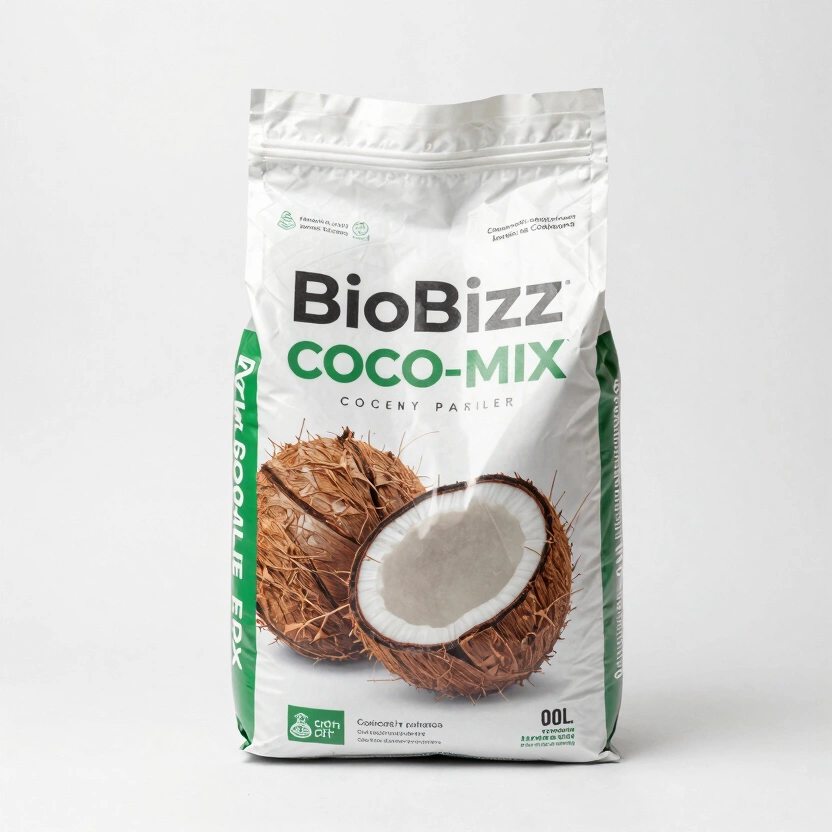
BioBizz Coco-Mix Pure Coconut Fibre Substrate (100 Liters)
High-quality coconut fibre substrate, perfect for building a moisture-retentive CVG mix.
Check Price on Amazon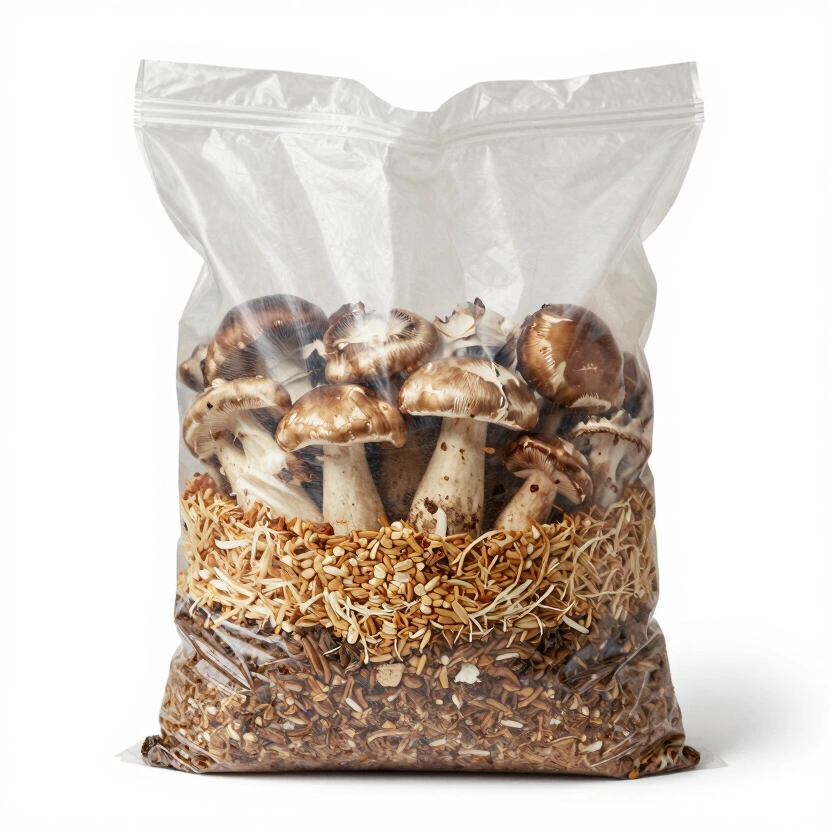
Superior Dung-Loving Mushroom Substrate & Milo Grain 6lb All-in-One Bag
Pre-sterilized all-in-one grow bag with coir, vermiculite, and gypsum formula.
Check Price on Amazon
Horticultural Vermiculite Fine (5L)
pH-neutral mineral substrate for optimal moisture retention in mushroom mixes.
Check Price on Amazon* Affiliate links. Prices last updated March 6, 2026.
Preparation Masterclass: Choosing Your Protocol
Your sterilization method must match your nutrient density.
1. Bucket Tek (Atmospheric Pasteurization)
Ideal for low-nutrient substrates like CVG (Coir, Vermiculite, Gypsum).
- The Process: Place dry ingredients in a 5-gallon insulated bucket. Add boiling water (roughly 3.5 liters per 650g coir brick). Close the lid and let sit for 24 hours.
- Why it works: The high heat kills active bacteria and fungi, but the low nutrients prevent thermophilic spores from blooming.
2. Cold Lime Pasteurization
The most energy-efficient method for large-scale straw production.
- The Process: Submerge straw in water treated with Hydrated Lime (roughly 2g per liter) to hit a pH of 12. Soak for 16 hours. Drain and inoculate.
- The Science: The alkaline environment destroys the cell walls of competitors while the mushroom mycelium (which is more resistant to high pH) survives.
3. PC Sterilization (15 PSI Standard)
Mandatory for high-nutrient “supplemented” substrates like Masters Mix.
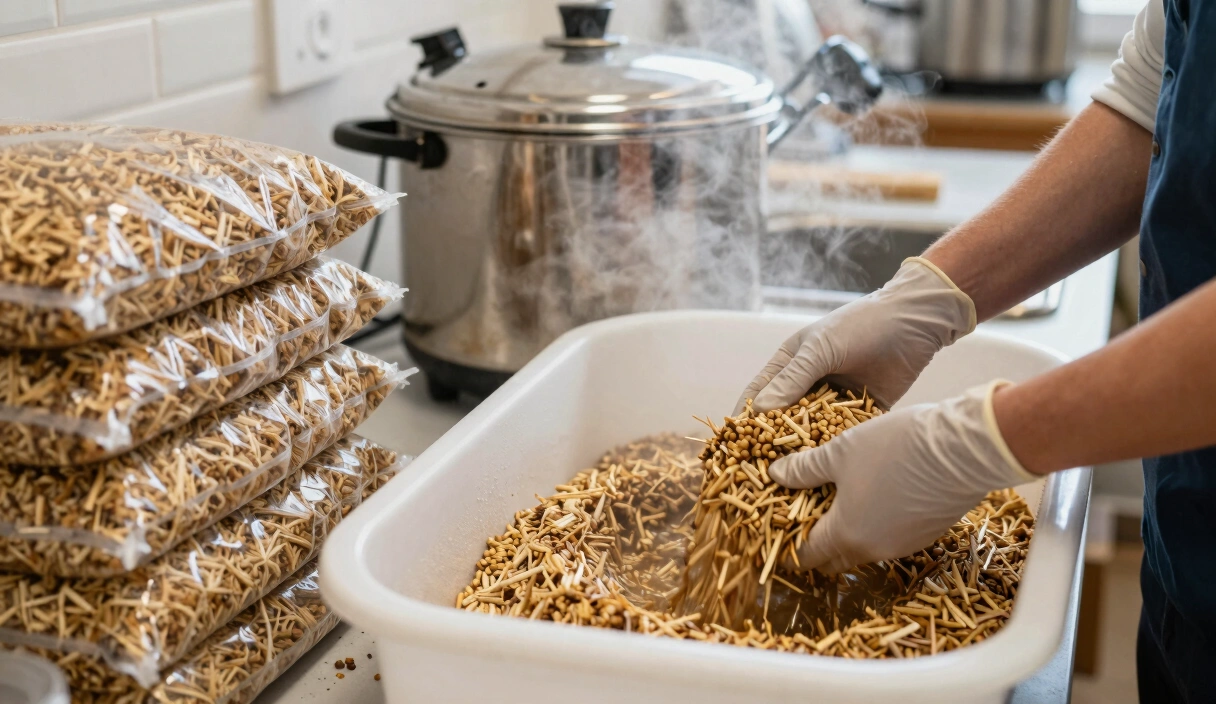
- The Process: Hydrate the mix to 60% (Field Capacity). Bag it. Sterilize in a pressure cooker at 15 PSI (121°C) for 2.5 hours.
- The Risk: If you under-sterilize a supplemented block, you are essentially building a “mold bomb.” Never cut the sterilization time short because your pressure cooker “felt hot enough”—check the gauge, confirm 15 PSI, and hold it for the full cycle. The 15 PSI rule is non-negotiable for grain and supplemented wood.
The Squeeze Test: Precision Hydration
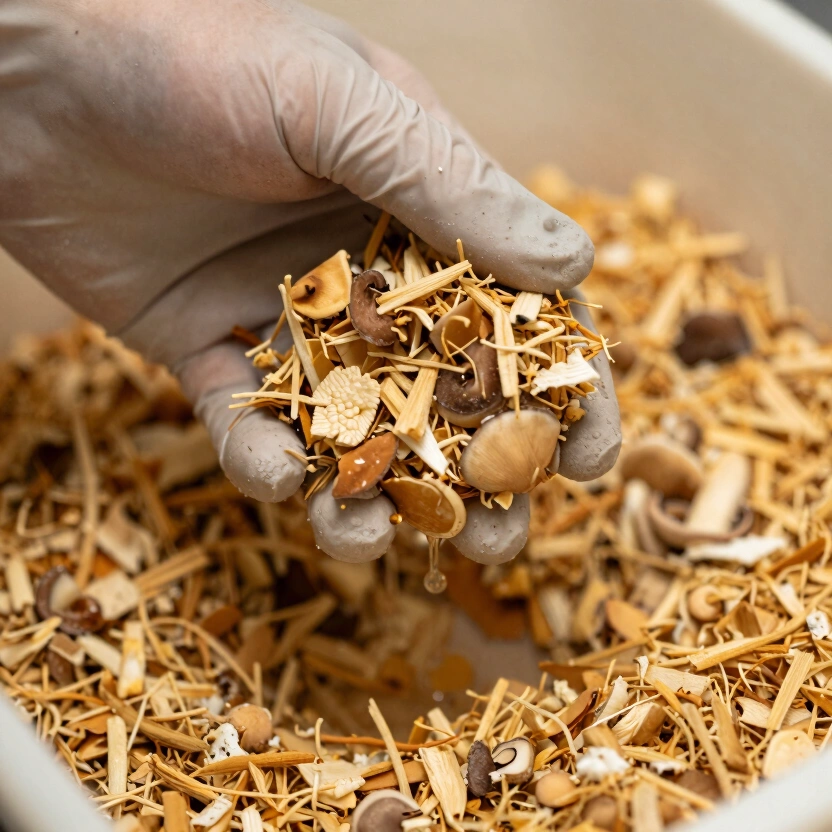
The difference between a successful grow and anaerobic rot is often 5% moisture.
- Field Capacity: Grab a handful of substrate and squeeze hard.
- The Result: You should see exactly 1 to 3 drops of water escape between your knuckles.
- The Fix: If it’s a stream, add more dry vermiculite. If it’s bone dry, add 50ml of water at a time and re-test. Never eyeball hydration—the difference between 58% and 65% moisture content is invisible to the naked eye but will determine whether you get mushrooms or anaerobic rot.
Species-Specific Substrate Matrix
| Species | Primary Substrate | Supplement | Treatment |
|---|---|---|---|
| Oyster | Wheat Straw | None / 5% Bran | Lime or Heat Pasteuri. |
| Lion’s Mane | Hardwood Sawdust | 50% Soy Hulls | 15 PSI Sterilization |
| Shiitake | Hardwood Sawdust | 10% Rice Bran | 15 PSI Sterilization |
| Reishi | Hardwood Sawdust | 10% Wheat Bran | 15 PSI Sterilization |
The Circular Economy: Spent Mushroom Substrate (SMS)
After 3–4 flushes, the substrate block is physically exhausted of nutrients but remains a biological goldmine.
- Soil Amendment: SMS is rich in nitrogen-fixing bacteria and broken-down lignin. It is an elite fertilizer for heavy-feeding plants like tomatoes and pumpkins.
- Vermicompost: Earthworms thrive on the residual mycelial protein found in spent blocks.
Choose one substrate recipe from the species matrix above, run the squeeze test until you hit exactly 1-3 drops, and sterilize or pasteurize using the protocol matched to your nutrient density—then track your Biological Efficiency across three flushes to establish your baseline.
Frequently Asked Questions
Can I use garden soil or compost to grow gourmet mushrooms?
No. Gourmet species like Oysters and Lion’s Mane are wood-decomposers that require complex lignin and cellulose structures. Garden soil is loaded with billions of competing microbes and lacks the carbon architecture these fungi need. You will get immediate contamination and zero mushrooms. Stick to wood-based substrates, straw, or coco coir prepared with the correct sterilization protocol.
What is the best mushroom substrate for a complete beginner?
CVG (Coco Coir, Vermiculite, Gypsum) is the most forgiving option. Semi-nutritive, naturally contaminant-resistant, and prepared with the simple Bucket Tek method—no pressure cooker needed. It has enough energy for the mushrooms but is not rich enough to attract every mold spore in your house. Once you get consistent results with CVG, graduate to Masters Mix for higher yields.
Can I over-sterilize my substrate in the pressure cooker?
Yes. Running a pressure cooker for 5+ hours triggers the Maillard Reaction, where sugars and proteins in supplements like soybean hulls caramelize into compounds that are inhibitory or toxic to mycelium. The blocks turn dark brown, and colonization stalls or fails entirely. Follow the 2.5-hour rule at 15 PSI for supplemented substrates to achieve full sterility without destroying nutritional quality.
How do I know if my prepared substrate is contaminated before inoculating?
Your nose is the best diagnostic tool. Healthy substrate smells like fresh earth, forest rain, or the specific raw material. A sour or vinegary odor means anaerobic bacterial infection. A sweet coconut scent is the volatile signature of early-stage Trichoderma before it turns green. If anything smells off, discard the batch. Inoculating contaminated substrate wastes spawn and spreads the problem.
Why does Gypsum keep appearing in substrate recipes even though mushrooms do not need it?
Gypsum (Calcium Sulfate) serves two roles. It provides Calcium and Sulfur as micronutrients for mycelial health. More critically, it acts as an anti-clumping agent that keeps substrate particles separated, maintaining the interstitial air gaps needed for gas exchange and preventing anaerobic dead zones where bacteria thrive. At 2-5% by dry weight, it is cheap insurance against structural failure in your substrate.