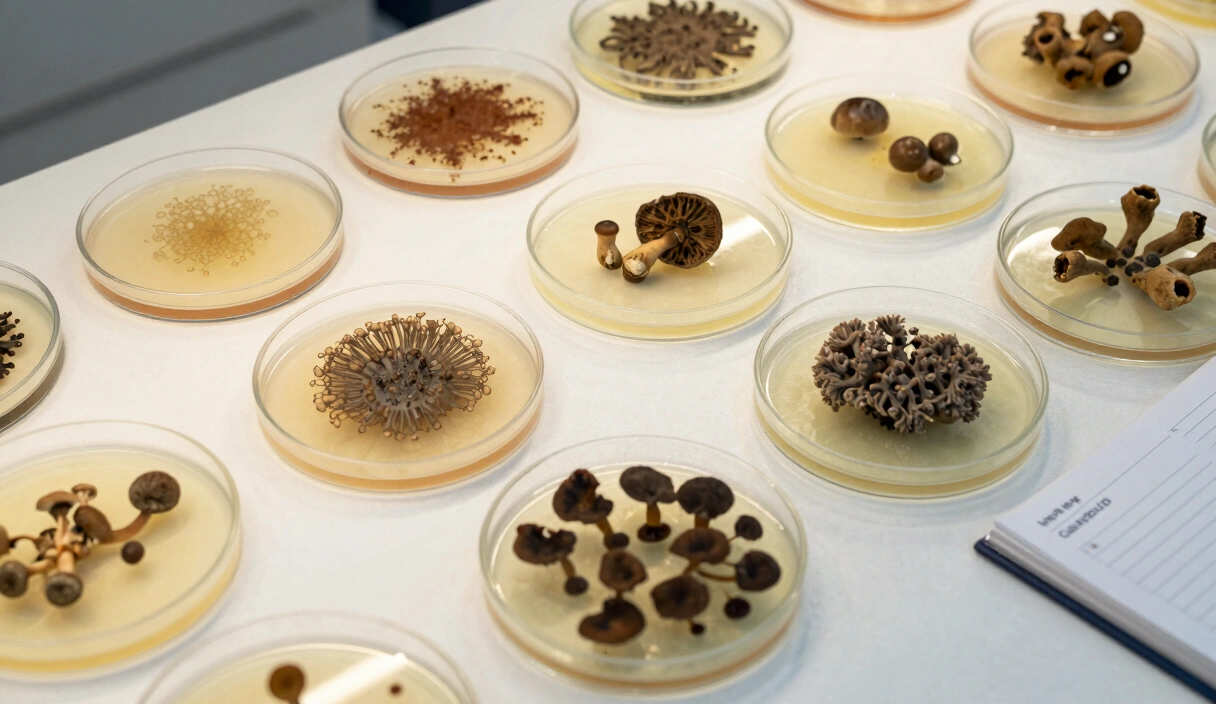
Mushroom Breeding: The Science of Strain Crossing and Hybrid Vigor
Crossing mushroom strains for better yields. Monokaryotic isolation, clamp connection verification, and what hybrid vigor actually means for growers.
Contents
Most growers assume that finding a good strain means the work is done. Clone it, store it, run it forever. That assumption costs you yield every single generation. Genetics degrade. Strains senescence. The culture you cloned two years ago is measurably slower today than when you first isolated it. Mushroom breeding is the only way to create new genetic combinations that outperform your aging library, and it is not as inaccessible as the microscopy requirement makes it sound.
Mushroom breeding protocols rely on isolating Monokaryons from single-spore germinants, pairing them on agar, and verifying the resulting dikaryons through microscopic confirmation of Clamp Connections. The process lets you combine traits from two parent strains, like fast colonization rate from one and dense cap morphology from another, into an F1 hybrid that outperforms both. You do not need a university lab. You need a microscope, a Still Air Box, patience, and an understanding of how fungal mating types work.
The Cellular Foundation: Monokaryon vs. Dikaryon
Fungi in the Basidiomycota phylum possess a unique reproductive strategy that differs fundamentally from plants and animals.
1. The Monokaryon (Haploid)
When a single spore germinates, it produces Primary Mycelium, or a Monokaryon.
- The Genetic State: Each cell contains only one nucleus (n).
- Morphology: Monokaryotic growth is typically thin, wispy (tomentose), and slow.
- Reproductive Limit: A monokaryon is incapable of producing fruiting bodies. It exists in a permanent search for a compatible mate.
2. The Dikaryon (Heterokaryotic)
When two compatible monokaryons fuse (Plasmogamy), they form a Dikaryon.
- The Genetic State: Each cell now contains two independent nuclei (n+n)—one from each parent. These nuclei do not fuse until the final moment of Karyogamy inside the mushroom gills.
- Morphology: Dikaryotic mycelium is thick, aggressive, and often rhizomorphic. This is the productive “engine” of the mushroom farm.
The Technical Workflow: Monokaryotic Isolation
To breed a specific hybrid, you cannot simply mix spores from two mushrooms. You must isolate individual monokaryons first.
If you have never looked at mycelium through a microscope before, do yourself a favor and buy a used AmScope B120C for around $150 before you attempt any of this. I spent four months trying to verify clamp connections with a cheap USB digital microscope in 2023 and could not resolve the septa clearly enough to distinguish monokaryons from dikaryons. Wasted an entire breeding cycle on ambiguous results.
1. Serial Spore Dilution
- The Slurry: Place a small piece of a spore print into 10ml of sterile distilled water.
- The Dilution: Perform a 1:100 serial dilution until you have a concentration of approximately 10 spores per milliliter.
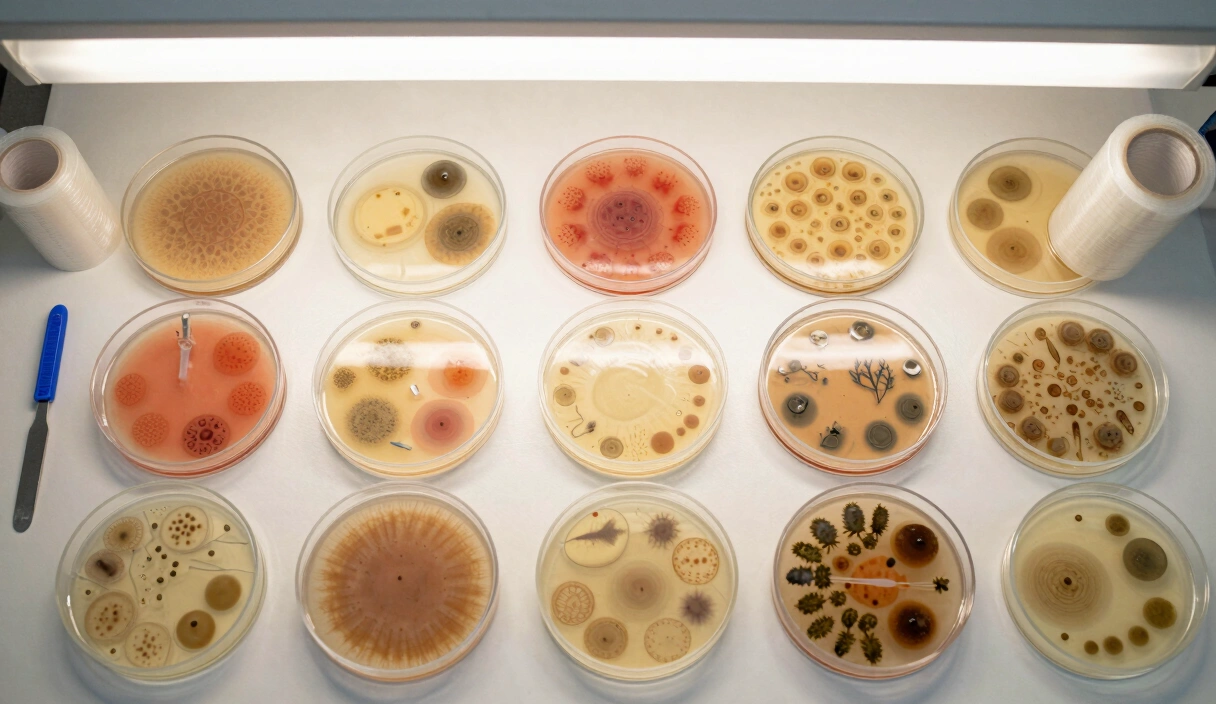
- The Plating: Streak 0.1ml of this dilution onto 10 MEA agar plates.
- Incubation: Wait for 5–7 days. You are looking for widely spaced, tiny colonies that originated from a single spore.
2. Identifying the “Unmated” Isolate
Take biopsies from these colonies. Under a microscope at 400x magnification, inspect the Septa (the walls between cells).
- The Diagnostic: If the septa are simple and lack any lateral bulges, the isolate is monokaryotic. If you see a small “handle” or loop over the septum, it has already mated and is useless for controlled breeding.
The Cross: Engineering Plasmogamy
Once you have ten isolated monokaryons from Parent A and ten from Parent B, you begin the crossing matrix.
The Pairing Protocol
Place a small wedge of Monokaryon A and Monokaryon B exactly 1cm apart on a fresh agar plate.
- The Meeting Point: As the two colonies grow toward each other, their hyphae will meet.
- The Buller Phenomenon: If compatible, the nuclei from one strain will migrate into the hyphae of the other, dikaryonizing the entire colony.
- Verification: After 7 days, take a sample from the far edge of the meeting point. If you find Clamp Connections, the cross is successful. You have created a new, unique hybrid.
You need to understand: most of your crosses will fail. If you are working with a tetrapolar species, the compatibility rate between two random monokaryons hovers around 25%. Do not invest emotional energy into a single pairing plate. Set up 10 pairings and expect 2 or 3 to take.
Microscopy & Genetic Tools
Mushroom Agar According to Kimmig (Pack of 20)
Pre-poured sterile agar plates optimized for fungal mycelium growth.
Check Price on Amazon
Sabouraud 2% Glucose Agar Plates (Pack of 20)
Sterile nutrient media plates for advanced microbiological cultures.
Check Price on Amazon
Nutrient Agar Petri Dishes Science Kit
Complete agar kit for home mycology experiments and culture isolation.
Check Price on Amazon* Affiliate links. Prices last updated March 6, 2026.
Screening for Hybrid Vigor: The BE Mathematics
Not every cross is a winner. The goal of breeding is to identify Hybrid Vigor (Heterosis)—a state where the offspring outperforms both parents.
The Screening Matrix
Grow your new hybrids alongside the parent strains in identical environmental conditions.
- Growth Velocity ($V_g$): Measure the radial expansion in mm/day.
- Biological Efficiency (BE): Measure the total fresh weight per dry weight of substrate.
- Thermogenesis Tolerance: Test how the dikaryon performs at slightly elevated temperatures (80°F+).
Technical Tip: Professionals often cross “High Yield / Low Quality” strains with “Low Yield / High Quality” strains to find the mathematical middle ground that is commercially viable.
Here is something you will not read in most breeding guides: the fastest-growing hybrid on agar is not always the best producer on bulk substrate. I have seen hybrids clock 9mm/day radial expansion on MEA and then stall completely on supplemented hardwood. Screen on the actual production substrate you plan to use, not just on agar speed.
If your pairing plates show clamp connections at 400x, the cross worked, but the new hybrid is worthless unless you archive it immediately. Create Master Slants the same week you verify the dikaryon, and consider building a DIY laminar flow hood if you plan to maintain monokaryotic isolates long-term, because SAB work at that scale gets unreliable fast.
Frequently Asked Questions
Can you cross two different mushroom species like Lion’s Mane and Oyster?
Interspecies hybrids are common in plants but functionally impossible for home mycologists. Breeding works only within a species. You can cross a Blue Oyster strain with a Pearl Oyster strain because they are both Pleurotus ostreatus, but crossing across species boundaries requires techniques well beyond a home lab setup.
What do clamp connections look like under the microscope?
A small crook or handle that bridges the main septum between two cells. Clamps ensure both daughter cells receive one nucleus from each parent during division. If you see them at 400x magnification, the strain is dikaryotic and capable of producing fruiting bodies. No clamps means the isolate is still monokaryotic or the cross failed.
How many monokaryons should I isolate before attempting a cross?
Fungi use bipolar or tetrapolar mating systems governed by multiple alleles, so compatibility between any two random monokaryons is not guaranteed. Isolate and pair at least 12 to 15 individual monokaryons from each parent strain to reach a 90% statistical chance of finding a compatible combination. Fewer than that and you are gambling on probability.
Can I selectively breed mushrooms for better flavor?
Flavor is a polygenic trait, so breeding for it requires large-scale organoleptic testing across many F1 offspring. Medicinal potency breeding is even harder and demands HPLC analysis. For home breeders, the most practical targets are visible, measurable traits: biological efficiency and radial growth speed on agar.
Does hybrid vigor persist through transfers or does it degrade?
It degrades. A hybrid dikaryon is subject to the same mycelial senescence as any other strain. Create Master Slants immediately after verifying clamp connections and store them at 4 degrees C in cold dormancy.
Related Articles
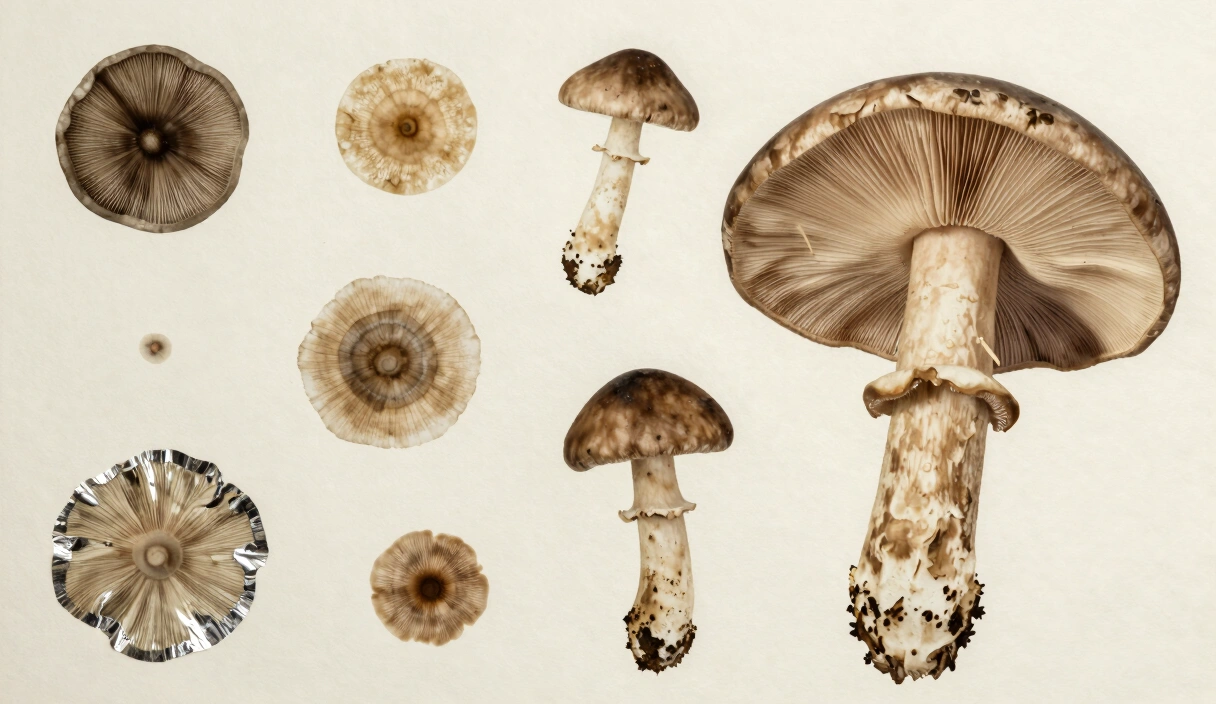
Spore Prints and Syringe Physics: The Science of Fungal Archiving
The right way to take spore prints, make syringes, and store genetics for years. Covers foil vs. glass, hydration, and long-term viability.
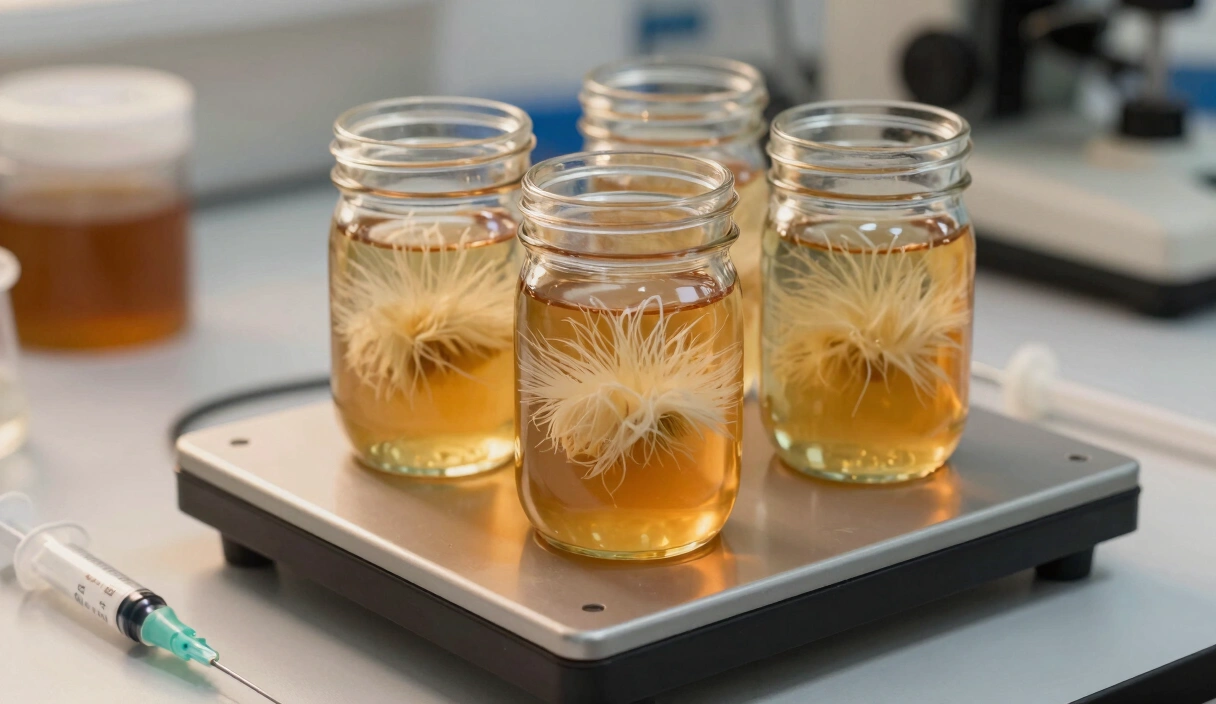
Liquid Culture Masterclass: Engineering High-Speed Fungal Inoculants
How to make, store, and expand mushroom liquid cultures. Covers peptone ratios, sugar clarity, and why a $22 stir plate beats a $60 one.
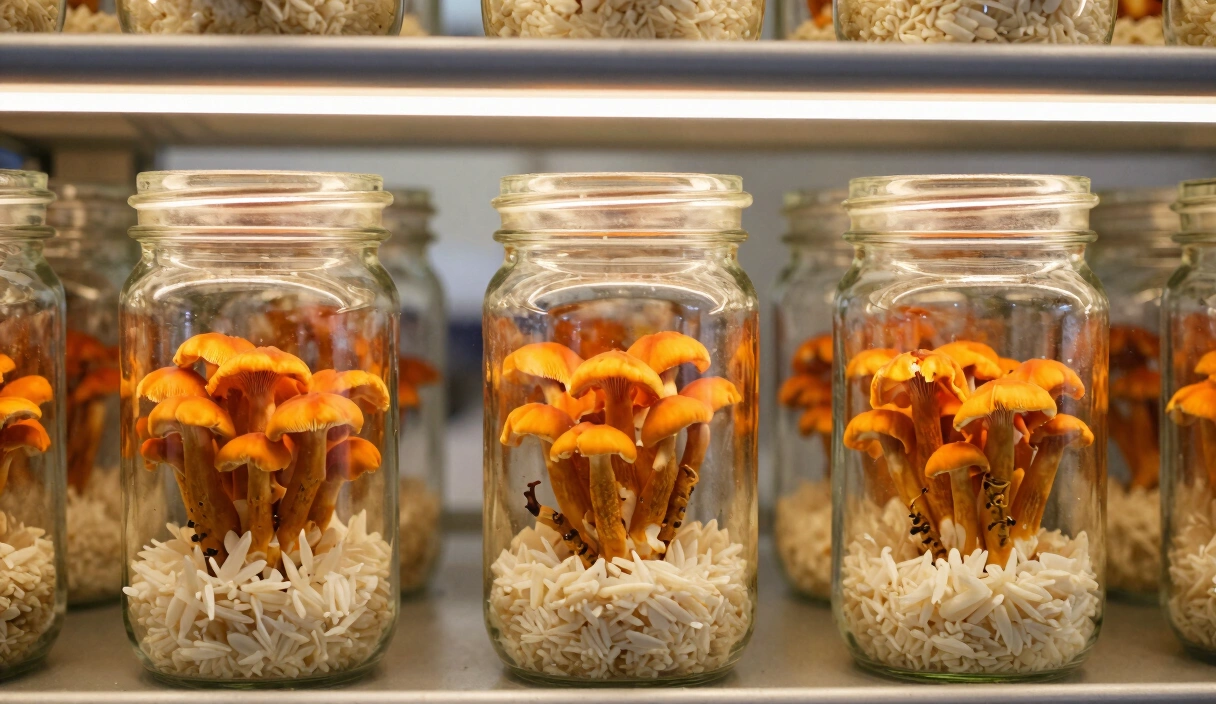
Cordyceps Militaris: The Laboratory Guide to High-Yield Vegan Cultivation
Growing Cordyceps militaris on rice substrate under 450nm LEDs. No insects required — just sterile technique, patience, and a humidity controller.