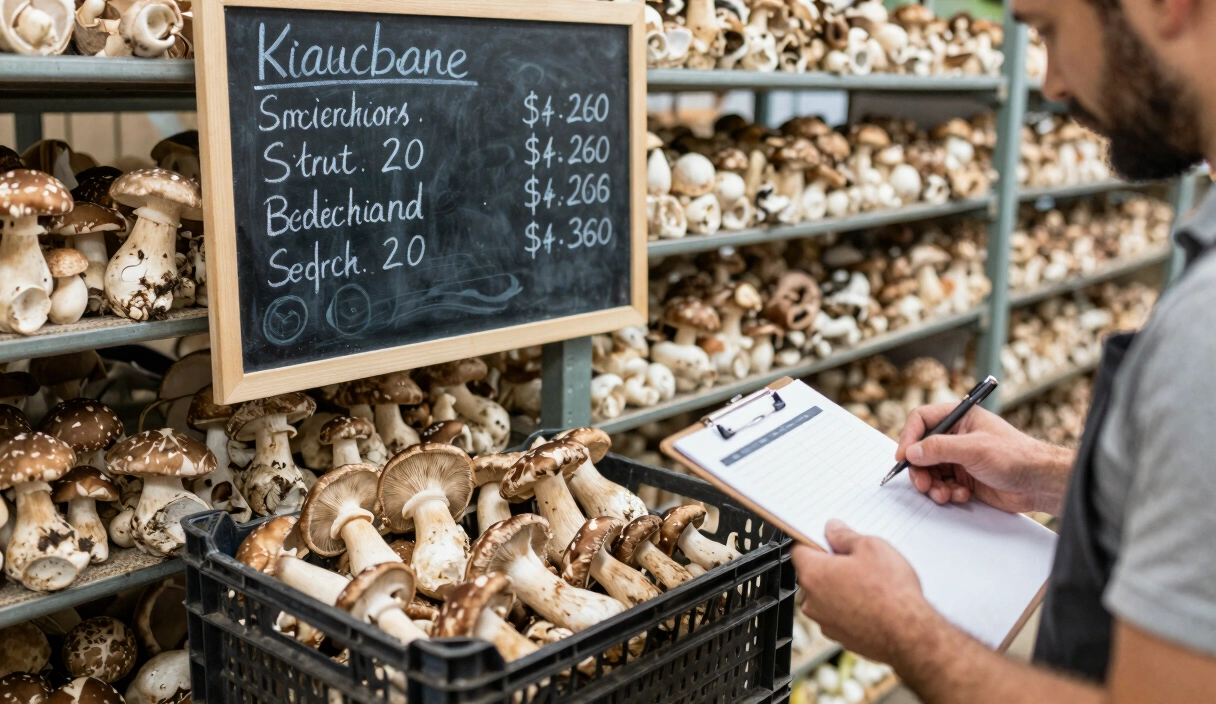
The Economics of Mycology: Small-Scale Mushroom Business ROI
The real numbers behind starting a mushroom farm. Production costs per 5lb block, energy bills, and profit margins at farmers market prices.
Contents
A single 5lb fruiting block costs between $3.05 and $5.05 to produce in-house. That same block yields roughly 2 lbs of gourmet mushrooms worth $24 to $44 at farmers market prices. I ran these numbers obsessively during my first year, and the mushroom business ROI still surprises people who assume agriculture means thin margins.
The gourmet mushroom market occupies a strange economic niche. High-value, perishable products produced in small footprints with relatively low initial capital. A 10x15 foot grow space can realistically generate $600 to $900 per month in gross revenue. But the difference between a profitable venture and a “break-even hobby” comes down to three variables: internal substrate production, kilowatt-hours per pound of harvest, and high-margin sales channel selection.
Stop thinking in “flushes.” Start thinking in “cycles.” What follows is the unit economics of that 5lb block and the financial blueprints for scaling a micro-farm past the breakeven point.
The Unit Economics of the 5lb Fruiting Block
The 5lb (2.2kg) block is the industrial standard for indoor gourmet cultivation. Its performance determines the health of your entire business.
Cost Breakdown: In-House Production vs. Outsourcing
| Cost Driver | Self-Produced (Bulk) | Ready-to-Fruit (Bought) |
|---|---|---|
| Substrate (Masters Mix) | $0.80 - $1.20 | Included |
| Grain Spawn (Genetics) | $0.20 - $0.50 | Included |
| Bags & Filters | $0.40 - $0.60 | Included |
| Energy (Sterilization) | $0.15 - $0.25 | Included |
| Labor (Allocated) | $1.50 - $2.50 | Included |
| Total Cost per Block | $3.05 - $5.05 | $20.00 - $35.00 |
The Technical Insight: To achieve a sustainable ROI, you must move to in-house substrate production. I spent my first six months buying ready-to-fruit blocks at $28 each and wondering why my spreadsheet kept bleeding red. Purchasing ready-to-fruit blocks is an excellent way to test market demand, but the high unit cost (often equal to 80% of the first-flush revenue) makes long-term scaling impossible.
Revenue & Yield: The Biological Efficiency ROI
Your revenue is a direct function of your Biological Efficiency (BE).
- The Yield Curve: A high-quality Masters Mix block will yield 1.25 lbs of fresh mushrooms in the first flush.
- The Decay Rate: The second flush typically yields 50% of the first, and the third flush yields 20%.
- Total Cycle Yield: ~2.0 lbs of mushrooms over 6 weeks.
Market Channel Pricing (2026 Averages)
- Farmers Markets (Direct-to-Consumer): $18 - $22 per lb. (Highest margin, high labor).
- High-End Restaurants (Gastro): $12 - $15 per lb. (High volume, consistent).
- Local Grocery/Health Stores: $10 - $12 per lb. (Bulk stability, low margin).
Professional Production Monitoring
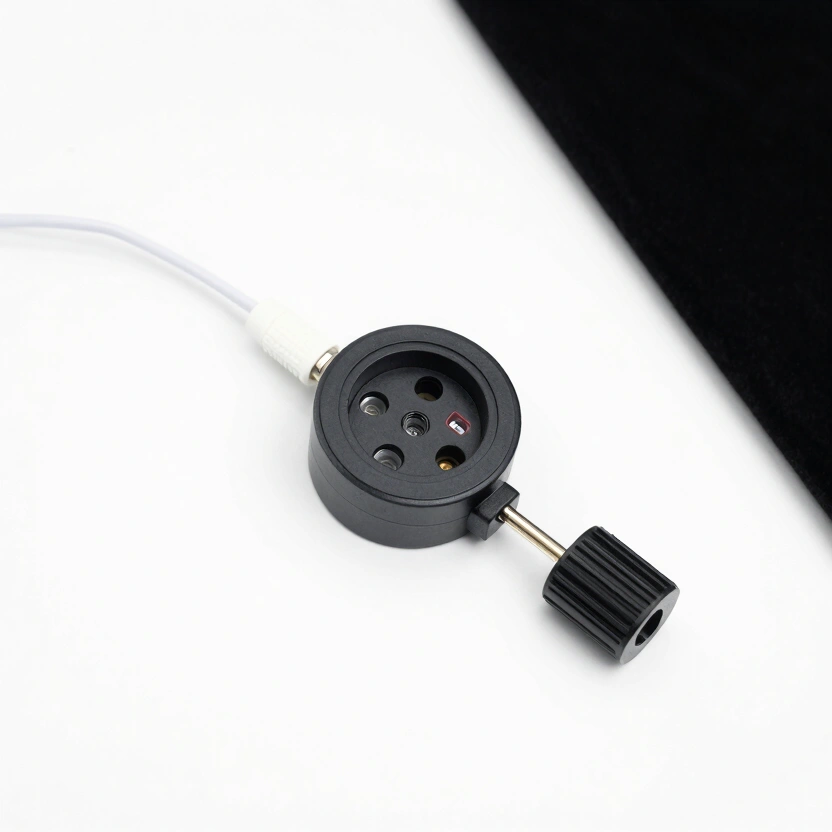
KETOTEK Digital Humidity Regulator Socket
Plug-and-play hygrostat sensor for automated humidity management.
Check Price on Amazon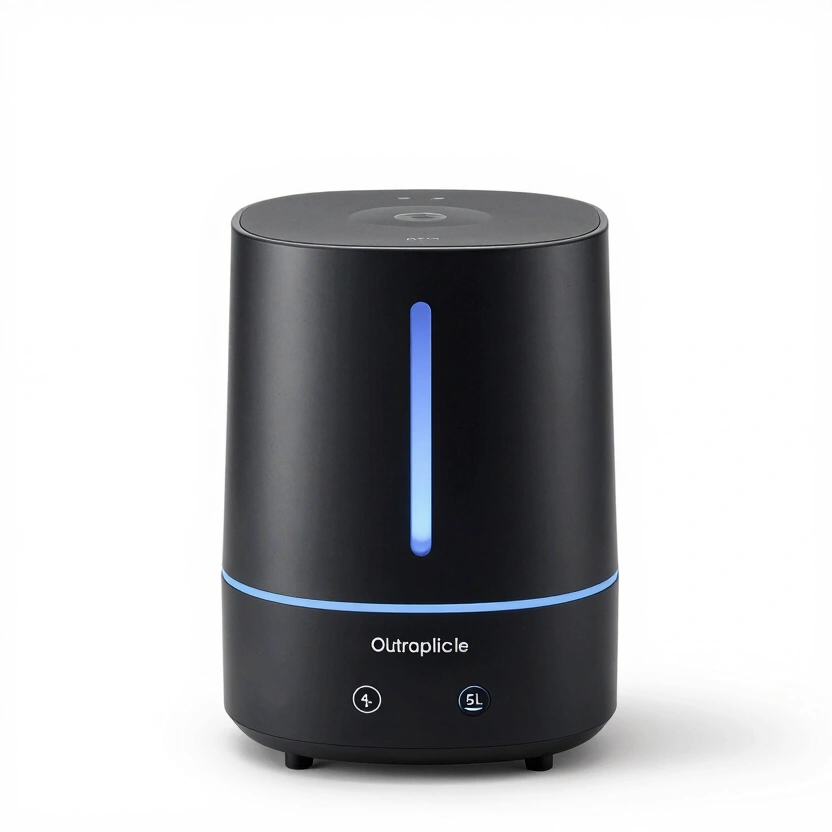
Spider Farmer Smart Ultrasonic Humidifier (5L)
Automatic humidifier with built-in hygrometer for precise fruiting chamber control.
Check Price on Amazon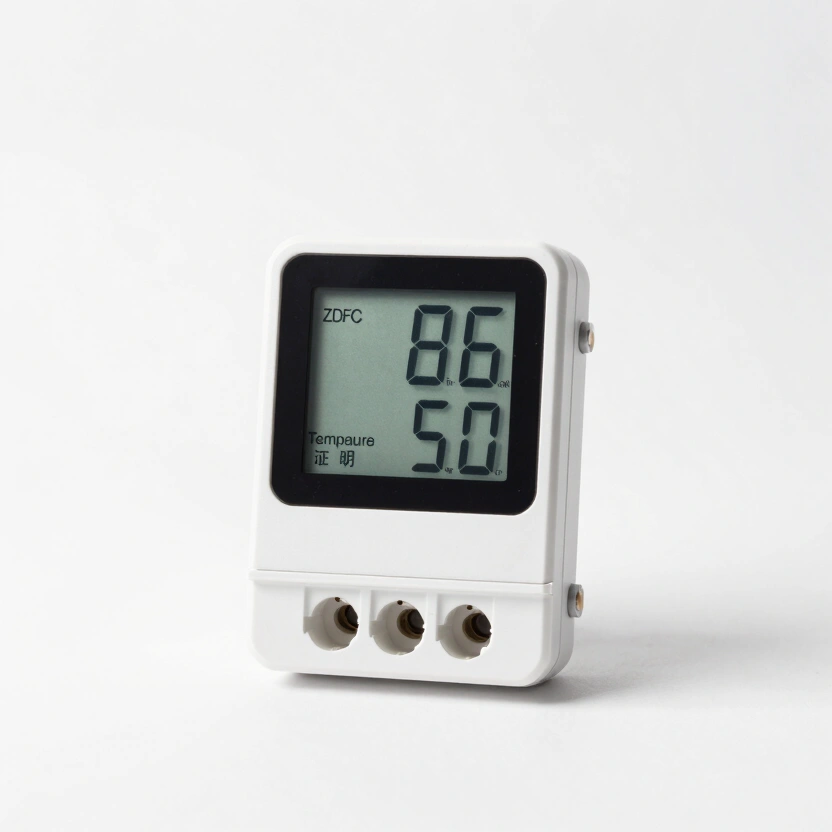
Hygrostat Socket Temperature & Humidity Switch
Integrated controller for monitoring and switching climate gear in grow tents.
Check Price on Amazon* Affiliate links. Prices last updated March 6, 2026.
Energy Audit: The Invisible Cost of HVAC
In an indoor farm, you are paying to defy nature. Maintaining 95% humidity and 65°F while exhausting CO2 6 times an hour is energy-intensive.
- The Sterilization Load: Using a 23-quart pressure cooker consumes roughly 1.5 kWh per run. On a scaled farm with an atmospheric steam sterilizer, this cost drops per block but remains your primary energy expense.
- The Climate Load: Your HVAC and ultrasonic humidifiers account for ~15% of your total operating costs.
- Technical Fix: Utilize Insulated Grow Chambers (like cold-room panels) to reduce the thermal load. I tracked my electricity bill for three months before and after adding 2-inch foam panels to my fruiting room walls—my monthly cost dropped by $47. Every degree of temperature stability you gain through insulation is a direct increase in your monthly profit margin.
Labor ROI: Working “On” the Business vs. “In” the Business
The greatest trap for the small-scale farmer is the “Labor Sink.”
- Manual Tasks: Mixing substrate, filling bags, and cleaning floors are low-value tasks.
- Automation ROI: Investing in a Substrate Mixer or an Automatic Bagger may cost $2,000, but if it reduces your labor time from 15 minutes per block to 3 minutes, it pays for itself within the first 1,000 blocks.
- The 100-Block Rule: Until you are moving 100 blocks per week, stick to semi-manual systems. I resisted buying the substrate mixer for months, convinced I could outwork the bottleneck by hand. I was wrong. Beyond 100 blocks, labor becomes the limiting factor for growth, and mechanical automation becomes mandatory.
Scaling Strategy: Yield per Square Foot
In urban environments, your most expensive input is rent.
- Horizontal (Shelving): Standard 4-tier racks allow for 8 blocks per sq. ft. of floor space.
- Vertical (Hanging): If growing Oysters, hanging bags can increase density to 12 blocks per sq. ft.
- Financial Goal: Aim for a monthly gross revenue of $40 - $60 per square foot of grow space. If you are below this, you are likely not utilizing your vertical volume effectively.
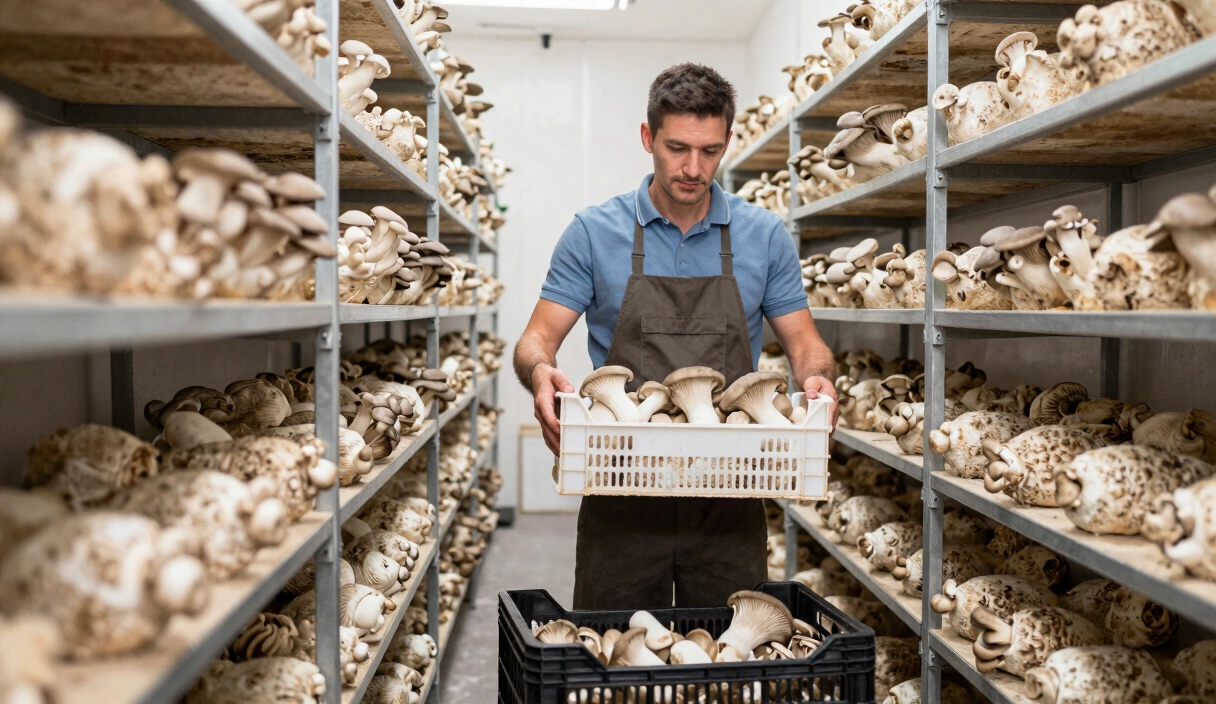
Download your first 30-day production log, calculate your actual cost-per-block using the formula above, and identify which sales channel—farmers market, restaurant, or grocery—matches your current weekly output before you spend another dollar on equipment.
Frequently Asked Questions
How much does it actually cost to start a mushroom farm from scratch?
Bare minimum for a functional micro-operation: about $800 to $1,500. That covers a pressure cooker ($100-$300), a still air box or flow hood ($50-$700), shelving ($150), a Martha Tent or monotub setup ($50-$200), and your first substrate and spawn supplies. The expensive part is not starting—it is scaling past the 50-block-per-week threshold where you need dedicated climate control.
Which mushroom species gives the best ROI per square foot?
Lion’s Mane currently leads on margin ($20-$25/lb retail) and Pink Oyster leads on turnover speed (harvest in 14 days from inoculation). For most beginners, Blue Oyster hits the sweet spot: it sells at $14-$18/lb, tolerates imperfect environments, and produces reliably enough to build a customer base without the genetics headaches of more sensitive species.
How do I handle unsold fresh mushrooms before they spoil?
Fresh gourmet mushrooms last 5 to 7 days refrigerated. Build a “waste-to-value” pipeline before you lose your first batch: dehydrate unsold stock into cracker-dry product for long-term sale (see our Harvesting & Drying Guide), grind dried mushrooms into umami seasoning powder, or partner with a local maker for mushroom jerky or tinctures. The dehydrator pays for itself within two market weekends.
Should I sell at farmers markets or to restaurants first?
Start at farmers markets. You get immediate cash, direct customer feedback, and real pricing data—all without committing to the volume consistency restaurants demand. Once you can reliably produce 15+ lbs per week, approach one restaurant with a sample box and an 8-hour harvest-to-kitchen guarantee. Restaurant accounts smooth out your revenue, but a chef who gets shorted once will not call back.
Can I run a profitable mushroom farm part-time?
Yes—at small scale. Producing 15-20 lbs per week (roughly $1,000/month gross at mixed channel pricing) requires about 5-8 hours of weekly labor and fits inside a single Martha Tent occupying 10-15 square feet. The constraint is not time but consistency: mushrooms do not care about your weekend plans, and a missed harvest window costs real money.
Related Articles
Cordyceps Militaris: The Laboratory Guide to High-Yield Vegan Cultivation
Growing Cordyceps militaris on rice substrate under 450nm LEDs. No insects required — just sterile technique, patience, and a humidity controller.
Building a Martha Tent: The Professional Guide to Automated Fruiting
How to build a Martha tent fruiting chamber with automated humidity, FAE, and sensor monitoring. Includes parts list and wiring diagram.
Laminar Flow Hood vs. Still Air Box: The Technical Lab Physics Guide
Do you actually need a flow hood, or is a Still Air Box enough? A cost-per-plate comparison with contamination rate data from both setups.