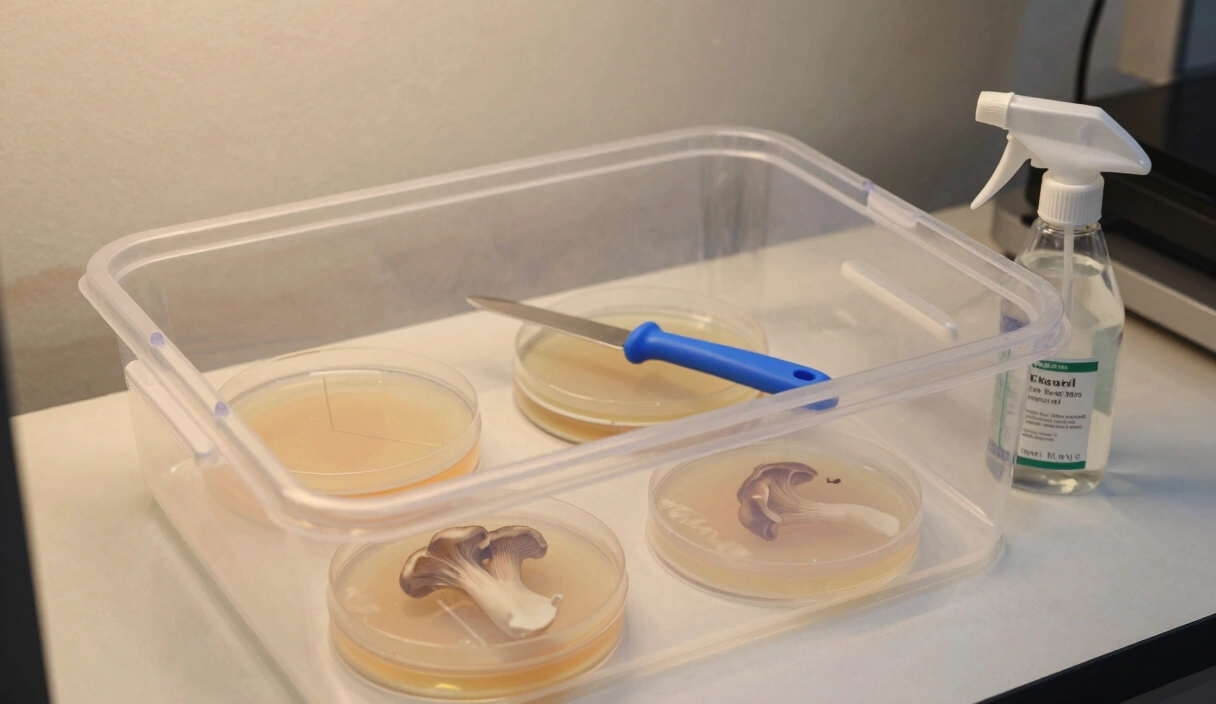
DIY Still Air Box Guide: Engineering a Professional Sterile Lab for Under $20
A $15 plastic tote is the most effective contamination prevention tool in mycology. Here's exactly how to build and use a Still Air Box.
Contents
What if your biggest contamination problem costs $15 to solve? Every cubic meter of your indoor air carries between 100 and 1,000 viable mold spores and bacterial cells. Commercial labs throw $1,500 at Laminar Flow Hoods to deal with this. You can beat 90% of those contaminants with a plastic tote, a tuna can, and a lighter.
A Still Air Box does not filter air. It stops air. By creating an environment where internal currents are nonexistent, you let gravity do the work. Contaminants fall to the floor of the box, and your working volume stays semi-sterile. I built my first SAB in 2021 from a $12 Sterilite tote and a can of black beans. Five years later, my contamination rate on agar transfers sits below 6%. The physics have not changed, the technique has not changed, and the cost has barely budged. Below, I break down the fluid dynamics, chemical safety, and ergonomic engineering required to build a professional-grade still air box for under $20.
The Physics of Stillness: Why “Still Air” Beats “Filtered Air”
A common beginner mistake is attempting to build a “cheap” flow hood using a box fan and a furnace filter. From a fluid dynamics perspective, this is disastrous. These systems create massive Turbulence, which swirls spores around your work area rather than removing them.
The Gravity Advantage
In an SAB, the air remains perfectly stagnant. According to Stokes’ Law, a microscopic mold spore will fall through still air at a predictable, very slow rate.
- The Workflow: By letting the box sit for 15 minutes before use, 99% of airborne particles will settle onto the bottom surface.
- The Boundary Layer: As long as your movements inside the box are slow and deliberate, you do not disturb this layer of fallen particles, ensuring your open agar plates remain pristine.
The Glove Box Trap: Why “Open Holes” are Superior
Many newcomers assume that attaching heavy rubber gloves to the holes makes the box “more sterile.” This is a fundamental engineering error.
The Piston Effect
Picture this: you push your right hand forward to grab a petri dish, and a tiny puff of basement air slips through the lid seam behind your left elbow. You never see it. Three days later, green fuzz. That is the piston effect in action. When you move your hands inside a sealed glove box, the volume of your arms changes the internal air pressure. This acts like a piston, forcing unsterile room air into the box through every microscopic seam and gap in the lid.
- The SAB Solution: Open arm-ports allow for immediate pressure equalization. Air does not “rush in” because there is no pressure differential. This allows the internal air to remain motionless even as you work.
The Chemistry of Sterility: 70% vs. 99% Isopropyl
When sanitizing your SAB and your hands, the concentration of your Isopropyl Alcohol (IPA) is critical. Paradoxically, 99% IPA is significantly less effective than 70% IPA.
The Biochemistry of the “Kill”
- Proteinn Denaturation: Alcohol kills microbes by collapsing their protein structures. This process requires water as a catalyst.
- The Coagulation Barrier: 99% IPA is so aggressive that it flash-coagulates the proteins on the outside of a cell wall, creating a protective shell. The alcohol cannot penetrate this shell, leaving the microbe dormant but alive.
- The 70% Sweet Spot: The 30% water content in 70% IPA slows the evaporation rate and keeps the cell wall permeable. This allows the alcohol to penetrate deep into the cytoplasm, ensuring total destruction of the organism.
Precision Tools for Sterile Lab Work
Mushroom Agar According to Kimmig (Pack of 20)
Pre-poured sterile agar plates optimized for fungal mycelium growth.
Check Price on Amazon
Nutrient Agar Petri Dishes Science Kit
Complete agar kit for home mycology experiments and culture isolation.
Check Price on Amazon
Sabouraud 2% Glucose Agar Plates (Pack of 20)
Sterile nutrient media plates for advanced microbiological cultures.
Check Price on Amazon* Affiliate links. Prices last updated March 6, 2026.
Blueprint: Building the MycoTechnic Standard SAB
1. Material Selection (The Tote)
Choose a Clear Plastic Tote between 66 and 110 quarts. Clarity is essential for safe blade work. The bin should have a flat bottom and a gasketed lid if possible (though a standard lid works fine).
2. Ergonomic Hole Placement
Don’t just center the holes. Sit in front of the tote and mark where your elbows naturally rest.
- Shoulder Width: Typically 8–10 inches apart.
- Height: Holes should be 4–5 inches from the bottom to allow you to rest your forearms on the floor of the box while working. This stability reduces shaky movements that generate air currents.
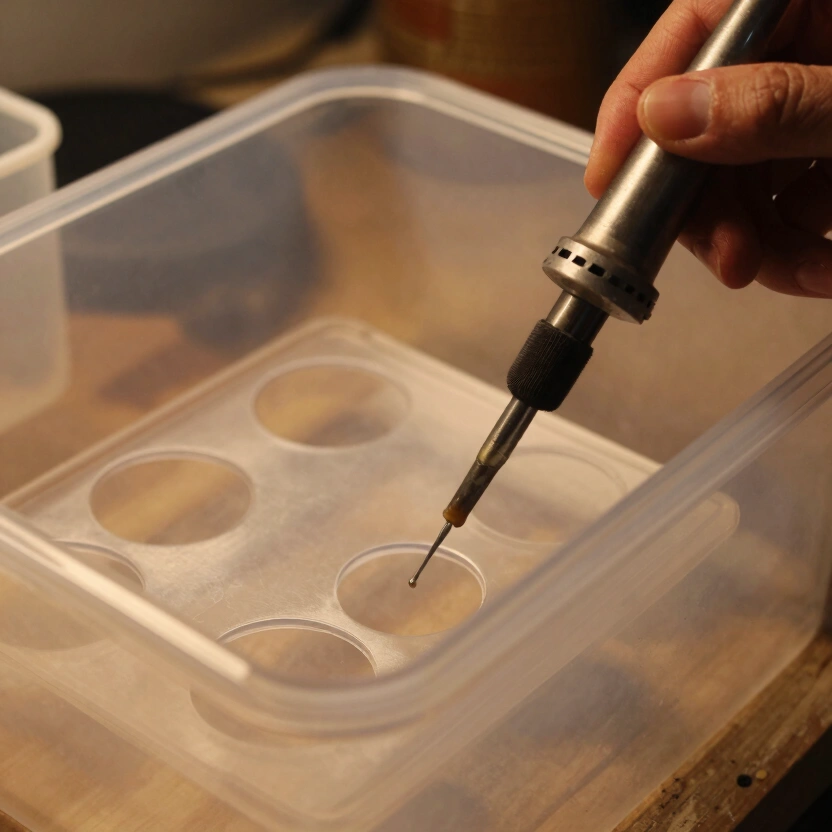
3. The Tuna Can Tek (Precision Melting)
Never cut your arm-ports with a knife or a saw; the plastic will crack under the stress.
- The Process: Find an empty 4-inch metal can (standard bean or tuna can). Heat the rim on a gas stove until it is glowing orange.
- The Melt: Press the hot can firmly onto your markings. It will slice through the plastic like butter, creating a perfectly smooth, reinforced, and rounded edge that won’t scratch your arms.
I tried cutting holes with a jigsaw once. Cracked the tote on the second cut and spent the evening buying a replacement. The tuna can method is not optional; it is the only technique that does not stress-fracture cheap polypropylene.
Professional Workflow: The Bleach-Towel Protocol
Even a perfect SAB will fail if your aseptic technique is sloppy. To reach 95%+ success rates on agar, use the Bleach-Towel Trick:
- Preparation: Soak a white towel in a 10% bleach solution and wring it out until damp.
- Placement: Lay the damp towel flat on the floor of your SAB.
- The Mechanism: Any spore that falls due to gravity lands on the towel and is chemically neutralized instantly. This prevents any secondary air currents from picking the spore back up.
Safety Alert: The Flash-Fire Risk
You would be surprised how many forum posts start with “small fireball inside my SAB.” It happens more often than contamination reports.
NEVER use a butane torch or flame-sterilize your scalpel inside the SAB. Isopropyl alcohol vapor is heavier than air and pools at the floor of the box. If you light a flame inside, you will trigger a fuel-air explosion. Always flame-sterilize your tools outside the box, wait 2 seconds for the glow to fade, and then bring the tool inside.
Grab a 66-quart clear tote, melt two arm-ports with the tuna can method, and pour your first agar plates tonight. The SAB is the cheapest piece of equipment that will actually change your contamination rate.
Frequently Asked Questions
Is a still air box as effective as a laminar flow hood?
For hobbyist tasks like pouring agar, performing transfers, and inoculating grain jars, a properly used SAB hits 90-95% effectiveness compared to a flow hood. The gap is speed, not cleanliness. If you are processing fewer than 20 plates per session, the SAB is more than adequate. For a deeper comparison, see our laminar flow hood vs SAB breakdown.
How long do I wait after closing the SAB lid before working?
15 minutes. That is the time required for air currents generated by closing the lid to settle and for gravity to pull particles to the floor. Skipping this wait is the single most common cause of unexplained contamination in SAB work.
Why should I use open arm holes instead of gloves on my SAB?
Sealed gloves create the Piston Effect. Moving your hands inside a sealed box changes internal air pressure, forcing unsterile room air through every seam. Open ports allow instant pressure equalization, keeping the internal volume motionless.
Can I flame-sterilize a scalpel inside a still air box?
No. Isopropyl alcohol vapor is heavier than air and pools at the bottom of the box. A butane torch or lighter will ignite it. Flame your tools outside the box, wait two seconds, then bring the tool in.
What size tote is best for a DIY still air box?
A 66 to 110 quart clear plastic tote works best. Clarity matters because you need to see your blade work through the walls. Flat-bottomed totes with gasketed lids are ideal, though a standard lid works fine.
Related Articles
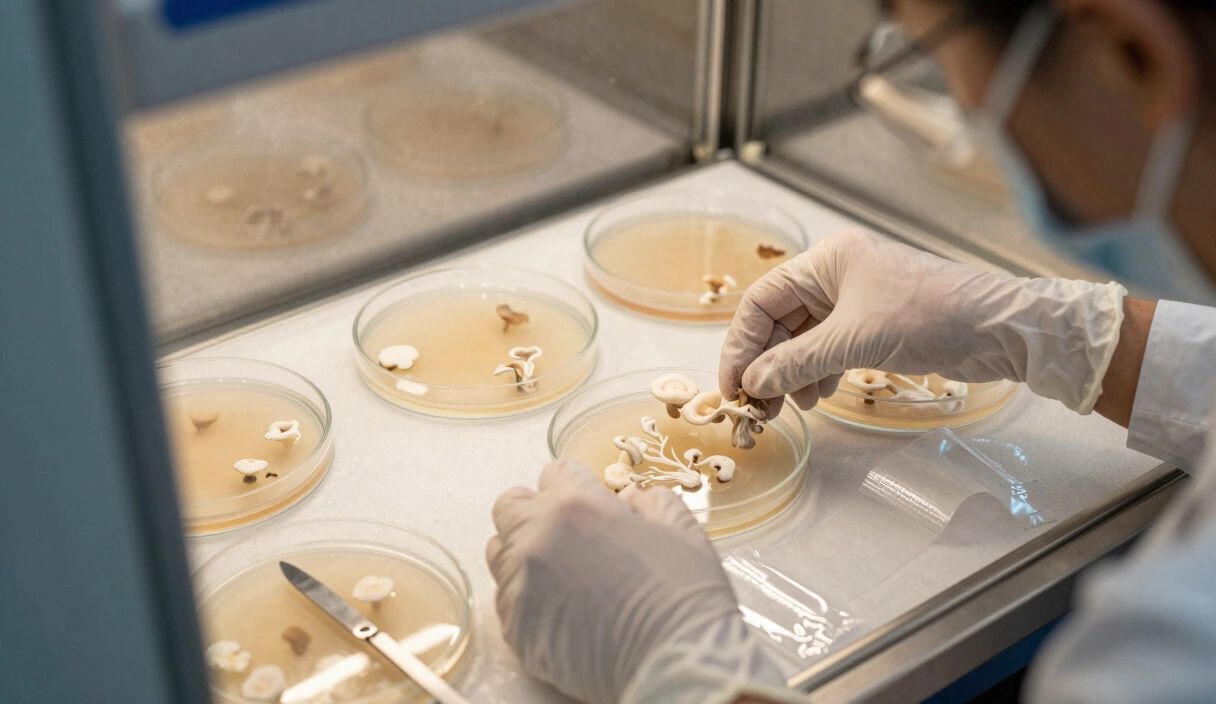
Mushroom Agar Work: The Complete Guide to Isolating, Storing, and Expanding Cultures
Master the "black belt" of mycology. From Fanny Hesse’s kitchen discovery to advanced genetic sectoring, we explore the physics, chemistry, and real-world hacks of agar work.
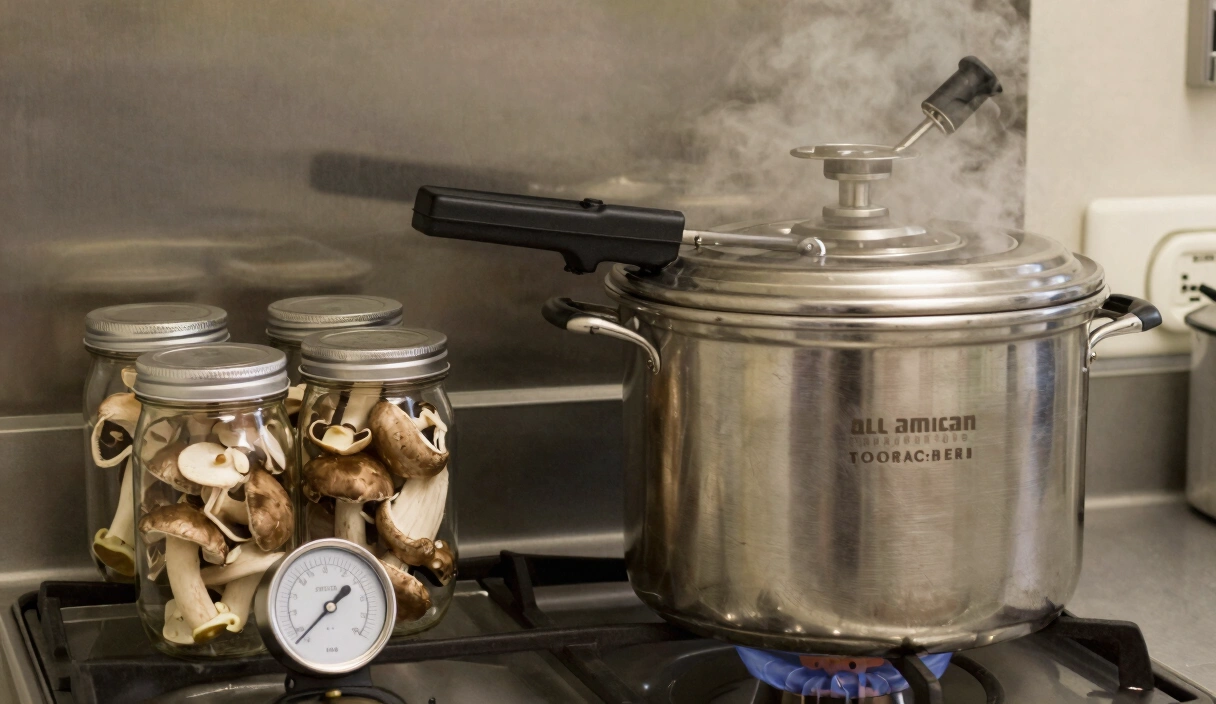
Best Pressure Cookers for Mushroom Cultivation 2026: The Sterilization Authority
Presto 23-Quart or All American 921? The pressure cooker comparison every mushroom grower eventually faces. Specs, PSI data, and altitude corrections.

The Best Mushrooms to Grow at Home: A Technical Selection Guide
Which mushrooms are easiest to grow at home? A ranked comparison by CO2 sensitivity, temperature tolerance, and Biological Efficiency for beginners.