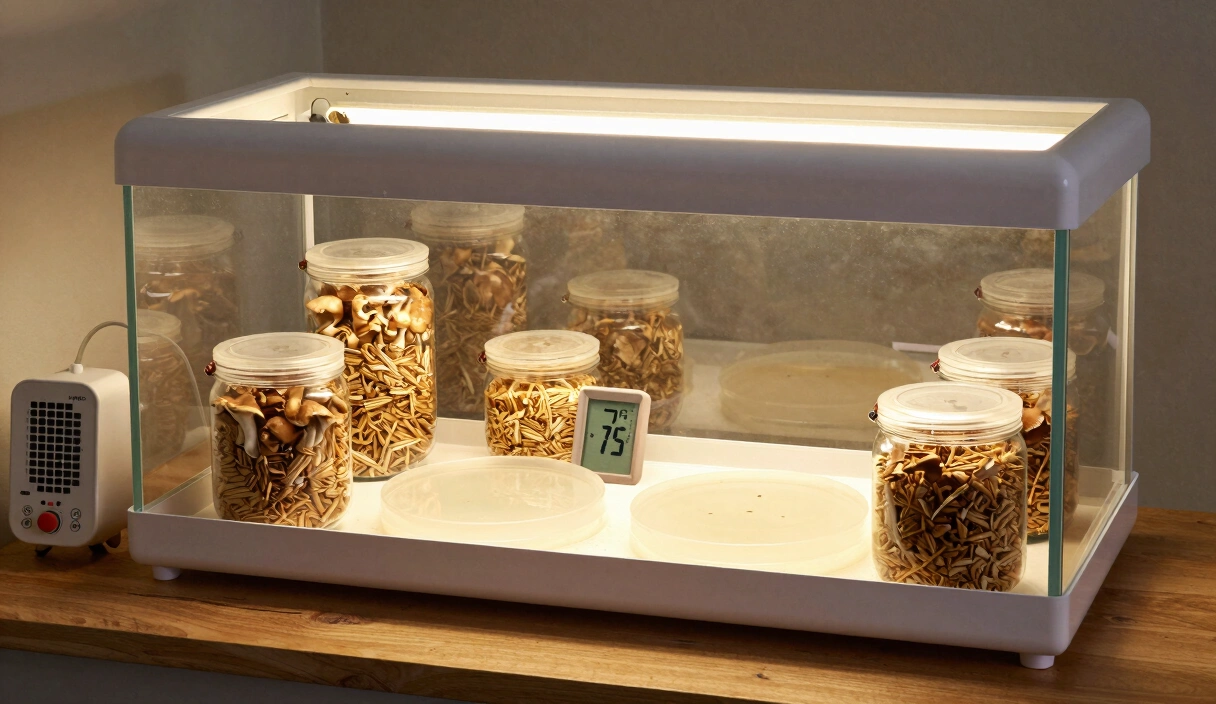
DIY Incubation Chambers: Engineering Thermal Stability for Fungal Colonization
How to hold 75-80F for weeks without cooking your grain. DIY incubation chambers, PID controllers, and the metabolic heat fungi generate themselves.
Contents
Before thermometers and PID controllers, early mushroom growers in 17th-century France used the heat from decomposing horse manure to incubate Champignon de Paris in the limestone caves beneath Paris. The principle was crude but thermodynamically sound: a biological heat source, insulated by stone, producing a stable temperature range for weeks. Three centuries later, the problem remains identical. You need steady warmth. You need it for days. And the fungus itself generates enough metabolic heat to sabotage the process if you are not paying attention.
Most growers invest in sterile lab gear and fruiting automation, then leave their grain jars in a closet where the temperature swings 10 degrees between day and night. That inconsistency is a primary driver of stalled colonization and opportunistic contamination. Mycelial expansion is a bio-exothermic process. Actively colonizing substrate produces between 0.5 and 2.5 Watts of heat per kilogram. Without a dedicated incubation chamber, the core of a 5lb block can climb to 85-90°F even when ambient air sits at 75°F. That is the thermal zone where Aspergillus thrives and your gourmet mycelium stalls. Below, I break down the physics of metabolic heat, PID temperature control, and the blueprints for a DIY incubation chamber under $50.
The Thermodynamics of Mycelium: Understanding W/kg
Fungi are heterotrophs; they generate ATP by breaking down complex carbon chains. A byproduct of this chemical digestion is heat.
- The Metric: Research shows that actively colonizing mycelium produces between 0.5 and 2.5 Watts of heat per kilogram of substrate.
- The Scale Problem: While a single agar plate produces negligible heat, a 66-quart tub filled with 15 lbs of grain and substrate becomes a significant heat source. If your room temperature is 75°F (24°C), the core of that tub can easily reach 85°F to 90°F, which is the thermal threshold where many gourmet species stall and thermophilic molds (like Aspergillus) thrive.
Precision Control: PID vs. Hysteresis
Most cheap aquarium or greenhouse thermostats utilize Hysteresis control. They turn the heater ON when the temp is 1° below target and OFF when it is 1° above.
- The Problem: This creates a “Sine Wave” temperature profile. More importantly, it does not account for the thermal momentum of the heater or the biological heat of the mycelium.
- The PID Solution: A Proportional-Integral-Derivative (PID) controller uses a mathematical algorithm to predict heat requirements. It “pulses” the power to the heater as it approaches the setpoint, maintaining a steady state within ±0.1°C. For consistent genetic work on agar, PID control is the non-negotiable standard.
If you are still relying on a cheap aquarium thermostat with a 2-degree swing, you are gambling with every plate you incubate. You will not see the damage until three days later when half your transfers stall for no obvious reason.
Thermal Control Infrastructure
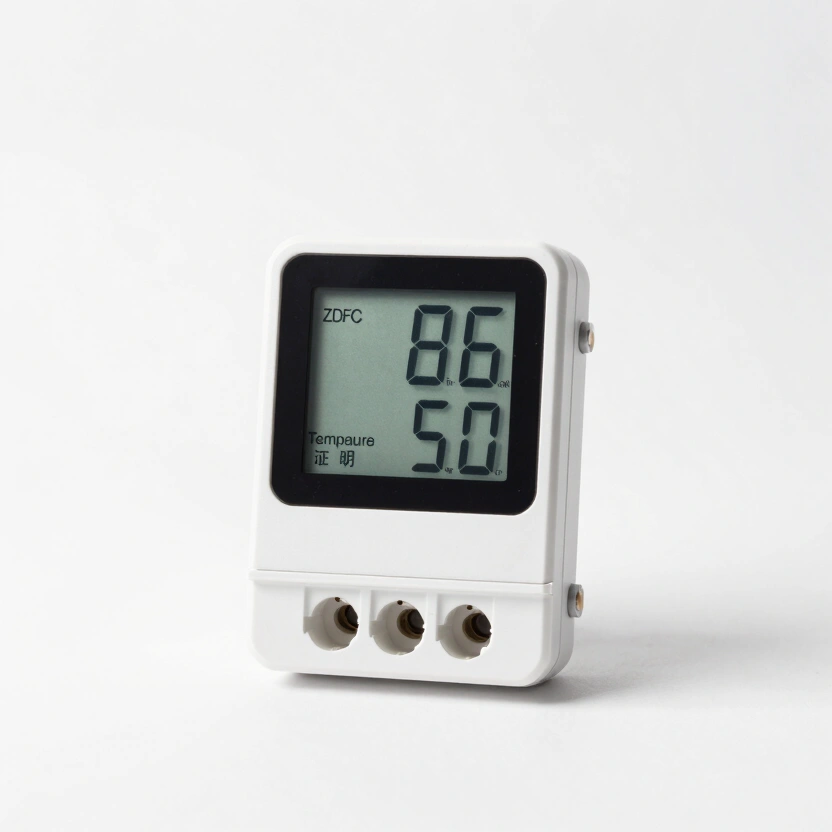
Hygrostat Socket Temperature & Humidity Switch
Integrated controller for monitoring and switching climate gear in grow tents.
Check Price on Amazon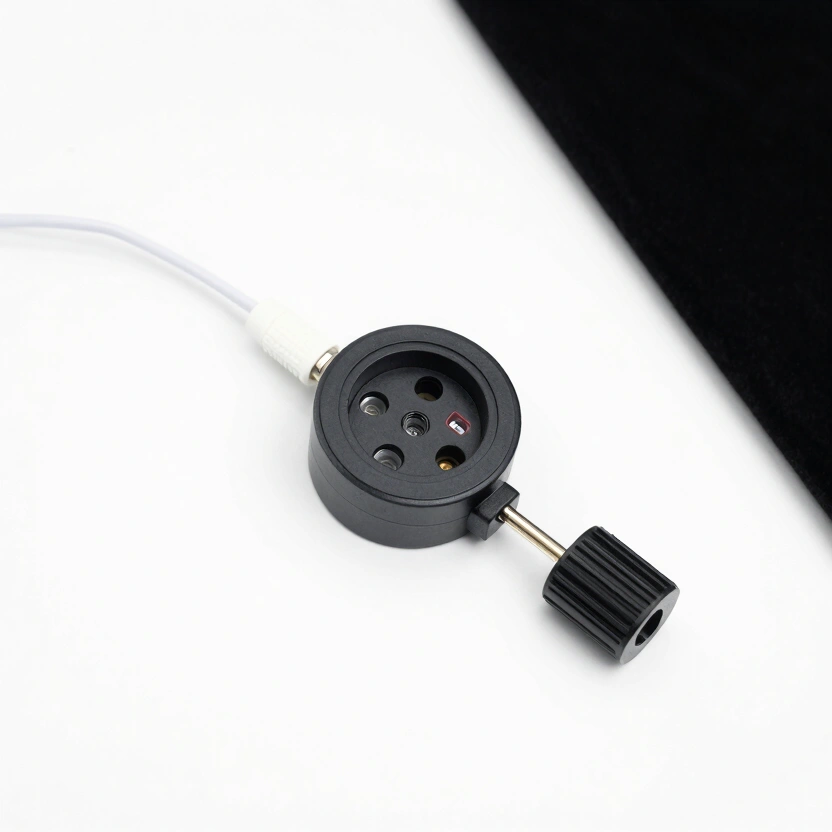
KETOTEK Digital Humidity Regulator Socket
Plug-and-play hygrostat sensor for automated humidity management.
Check Price on Amazon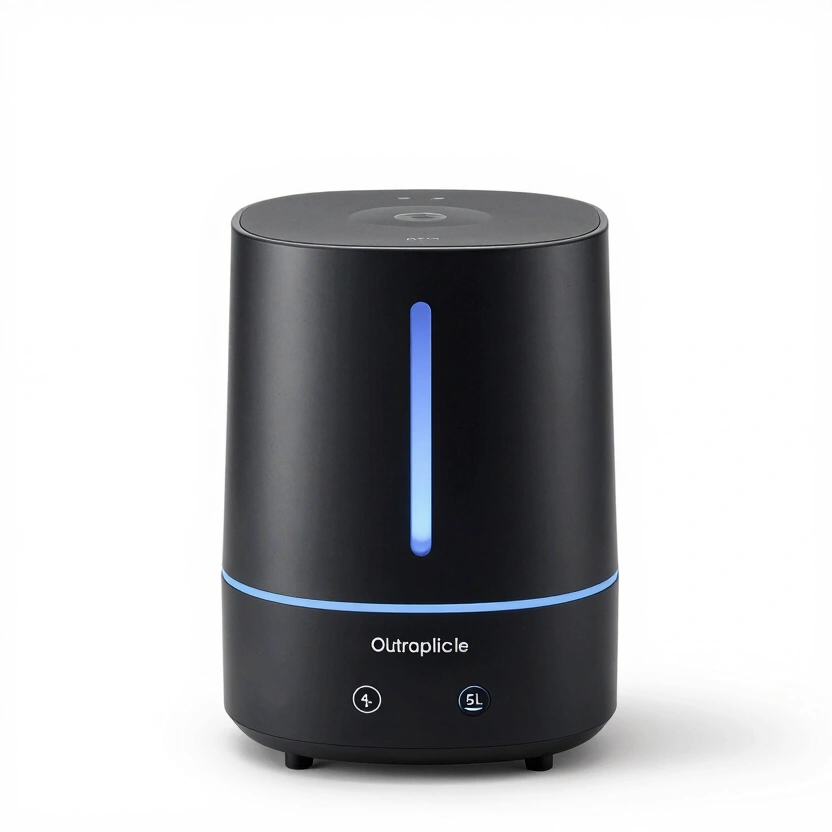
Spider Farmer Smart Ultrasonic Humidifier (5L)
Automatic humidifier with built-in hygrometer for precise fruiting chamber control.
Check Price on Amazon* Affiliate links. Prices last updated March 6, 2026.
Blueprint: The Tub-in-Tub (TiT) Incubation System
The TiT Tek is the most reliable low-cost method for achieving thermal stability and 100% humidity during colonization.
1. Materials List
- Two Plastic Totes: One slightly smaller than the other.
- Aquarium Heater: 50W to 100W with a digital dial.
- PIR or Styrofoam Insulation: To wrap the outer tote.
- Distilled Water: To prevent mineral build-up.
2. Assembly Protocol
- The Water Jacket: Place the aquarium heater at the bottom of the larger tote. Fill with enough water to submerge the heater completely.
- The Inner Chamber: Place the smaller tote inside the larger one. It should “float” or be supported by spacers so that the bottom is in direct contact with the heated water.
- The Seal: Close the lid of the inner tote. This creates a dry, warm environment for your jars and plates. The thermal mass of the water acts as a buffer, preventing rapid temperature swings when you open the lid.
Environmental Management during Incubation
1. CO2 Concentrations
During Stage 4 (Colonization), fungi are highly tolerant of CO2. In fact, concentrations up to 10,000 ppm can inhibit the growth of certain competitors while favoring the mushroom mycelium.
- Technical Tip: Do not “fan” your incubation chamber. Keep it closed to maintain high CO2 and high thermal stability. Gas exchange should occur only through the filter patches on your jars or bags.
I was surprised to discover that my sealed incubation tub hit 8,000 ppm CO2 within 48 hours of loading 10 colonizing jars. That concentration would suffocate you in a closed room, but the mycelium runs faster in it than in fresh air.
2. Humidity and Desiccation
Even in a sealed jar, agar plates will dry out over 30 days if the ambient humidity in the chamber is low. The TiT system naturally provides a high-humidity environment between the two tubs, which prevents the agar from cracking and ensures the leading edge of the mycelium remains hydrated.
Safety Protocol: Preventing the Flash Point
DIY heating systems are a leading cause of home lab fires. You need to take this seriously. I have seen photos of melted tote bottoms fused to heating mats in mycology forums. One grower lost a garage shelf of colonizing bags and nearly started a house fire.
- The Air-Gap Rule: Never place a heating mat directly under a plastic tote. The lack of airflow causes “hotspots” that can melt the plastic.
- The Liquid Heat Transfer: Always use a water-based or air-circulated system (using a low-RPM fan) to distribute heat evenly.
- GFCI Protection: Since you are combining water and electricity in the TiT system, always plug your heater into a GFCI (Ground Fault Circuit Interrupter) outlet.
Build the Tub-in-Tub system this weekend with a $15 aquarium heater and two nesting totes, then use a probe thermometer to confirm your core substrate temperature matches ambient within 2°F. Stable incubation is what turns average strain isolation results into consistently rhizomorphic growth.
Frequently Asked Questions
Can I put mushroom jars directly on a heating mat?
Not recommended. The mat overheats the bottom of the jar, creating convection currents that dry out lower grain and stall colonization. If you must use a mat, mount it on the side wall of an insulated box and use a small fan to circulate air evenly.
Why do most growers incubate mushroom mycelium at 75°F instead of warmer?
At 80-85°F, your mycelium grows slightly faster but so do Trichoderma, Bacillus, and other competitors. Holding a steady 75°F (24°C) gives your mushroom a competitive edge: nearly the same colonization speed with significantly less contamination pressure. See our mushroom lifecycle guide for how Stage 4 temperature determines Stage 6 yields.
How do I prevent algae in a Tub-in-Tub incubation system?
Add 5ml of 3% hydrogen peroxide per gallon of water every two weeks. This keeps the warm water sterile, eliminates foul smells, and prevents pathogen introduction when you open the lids.
Should agar plates be stored upside down during incubation?
Always. Storing plates lid-down prevents condensation from dripping onto the agar surface. Water droplets on agar create bacterial highways that can destroy a clean isolation in hours.
How much warmer is the inside of a colonizing substrate bag than the surrounding air?
Typically 5-7°F warmer. Use a probe thermometer inserted into a dummy bag of sterilized substrate to monitor thermogenesis without breaking the sterile seal of your production blocks.
Related Articles
Arduino and ESP32 for Mycology: Engineering Custom Environment Controllers
Build a custom mushroom environment controller with an ESP32. NDIR CO2 sensors, relay logic, and the code that automates humidity and FAE.
DIY Laminar Flow Hood Guide: Engineering Professional Sterility at Home
Build your own laminar flow hood for under $300. HEPA H14 filter selection, blower CFM calculations, and the plenum design that actually works.
The Log Inoculation Masterclass: Engineering High-Yield Outdoor Mushroom Beds
Drill, plug, wax, wait. The log inoculation method produces shiitake for 4-6 years from a single hardwood log. Moisture, spawn depth, and timing protocols.