Harvesting and Dehydration Protocols: The Science of Fungal Preservation
When to pick, how to dry, and what water activity level keeps mushrooms shelf-stable. Dehydrator settings, snap tests, and storage mistakes to avoid.
Contents
How do you know when a mushroom is ready to pick? Not “roughly.” Not “when it looks big enough.” The exact morphological moment. For Oysters, it is when the cap margins level out but have not yet curled upward. For Lion’s Mane, it is when the cascading teeth reach a quarter inch. Miss that window by 12 hours and the fruit body redirects energy into sporulation, coating your grow room in fine dust and leaving you with a lighter, less potent harvest.
The timing of your mushroom harvesting and drying protocol determines everything downstream. A single flush from a 66-quart monotub yields several pounds of fresh biomass at over 90% water content. Without immediate, precise intervention, that biomass undergoes rapid autolysis and oxidative browning. Culinary texture degrades. Medicinal compounds like Erinacines and beta-glucans begin breaking down within hours. Preservation is an exercise in manipulating Water Activity ($a_w$) to a level where enzymatic activity and microbial growth become physically impossible. The target is $a_w < 0.60$, which translates to “cracker-dry.” Below, I break down the biochemistry of post-harvest degradation and the industrial protocols for getting there.
The Critical Window: Timing the Harvest
Success in preservation begins minutes before the harvest. For every species, there is a distinct morphological marker that signals the peak of biological vigor before Sporulation begins.
- Oyster Mushrooms (Pleurotus): Harvest just as the cap margins begin to level out but before they curl upward.
- Lion’s Mane (Hericium): Harvest when the cascading “teeth” reach 1/4 to 1/2 inch in length.
- The Spore Risk: If you wait too long, the mushroom redirects its energy into spore release. This not only makes the fruit body less dense but also coats your grow room in a fine dust that can trigger respiratory irritation and contaminate future grows.
I once left a Blue Oyster tub 18 hours past peak because I was out of town. Came home to a room coated in white spore dust and a harvest that weighed 30% less than the previous flush from the same genetics. One missed window.
The Physics of Dehydration: Understanding Water Activity ($a_w$)
Most beginners measure dryness by “weight loss.” This is a mistake. The only metric that matters for shelf-life is Water Activity ($a_w$)—a measure of how much “free” water is available for microorganisms to use.
The 0.60 $a_w$ Threshold
Microbiological research shows that at a water activity below 0.60, no bacteria, yeast, or mold can grow.
- Cracker-Dry Haptics: For a mushroom, reaching $a_w < 0.60$ manifests as being “cracker-dry”—the mushroom should snap like a dry cracker when bent. If it bends or feels leathery, its $a_w$ is likely between 0.70 and 0.85, meaning it will develop mold within weeks inside a sealed jar.
I sealed a batch of Lion’s Mane that felt “dry enough” into mason jars without checking. Two weeks later, every jar had a thin layer of white fuzz on the surface. The mushrooms were at $a_w$ 0.72. “Feels dry” is not a measurement. The snap test is not optional.
Enzymatic Stabilization: Stopping the Browning
When you slice a mushroom, you trigger the release of Polyphenol Oxidases (PPO). These enzymes react with oxygen to create dark pigments (melanin), similar to an apple turning brown.
The Inactivation Protocol
For high-value culinary mushrooms, you can prevent this by using a brief heat-shock or an acid wash.
- Acidification: Slicing mushrooms into a bath of water with 1% citric acid or lemon juice lowers the pH below the operating range of PPO enzymes.
- The Blanching Option: For mushrooms intended for freezing or immediate drying, blanching at 176°F (80°C) for two minutes will permanently inactivate the enzymes, preserving the pearly white color of Lion’s Mane or the deep blue of Oyster caps.
Processing & Preservation Gear
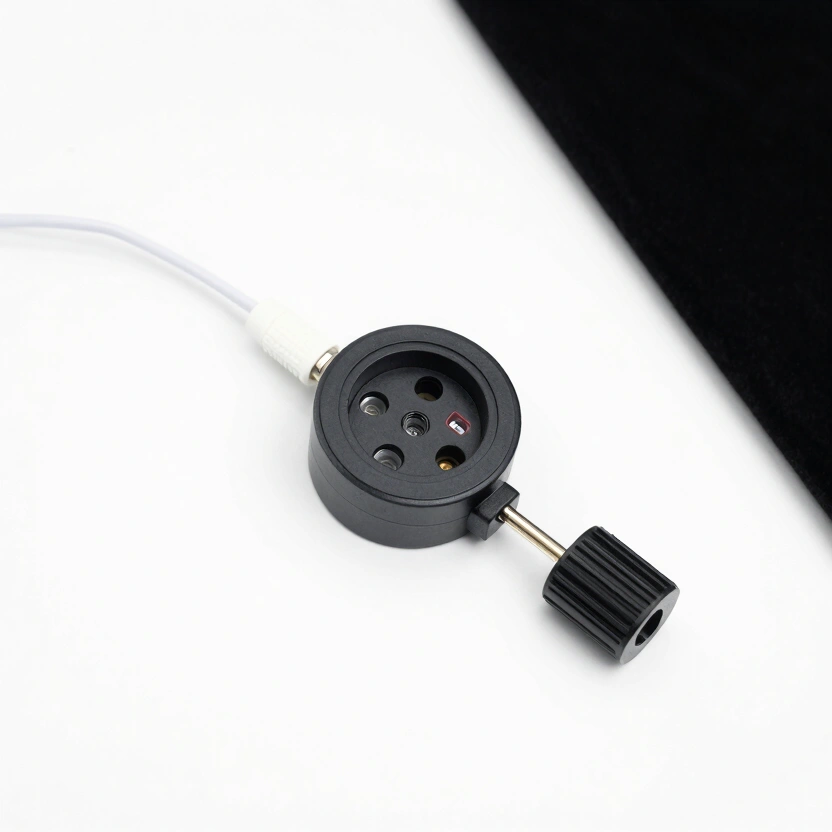
KETOTEK Digital Humidity Regulator Socket
Plug-and-play hygrostat sensor for automated humidity management.
Check Price on Amazon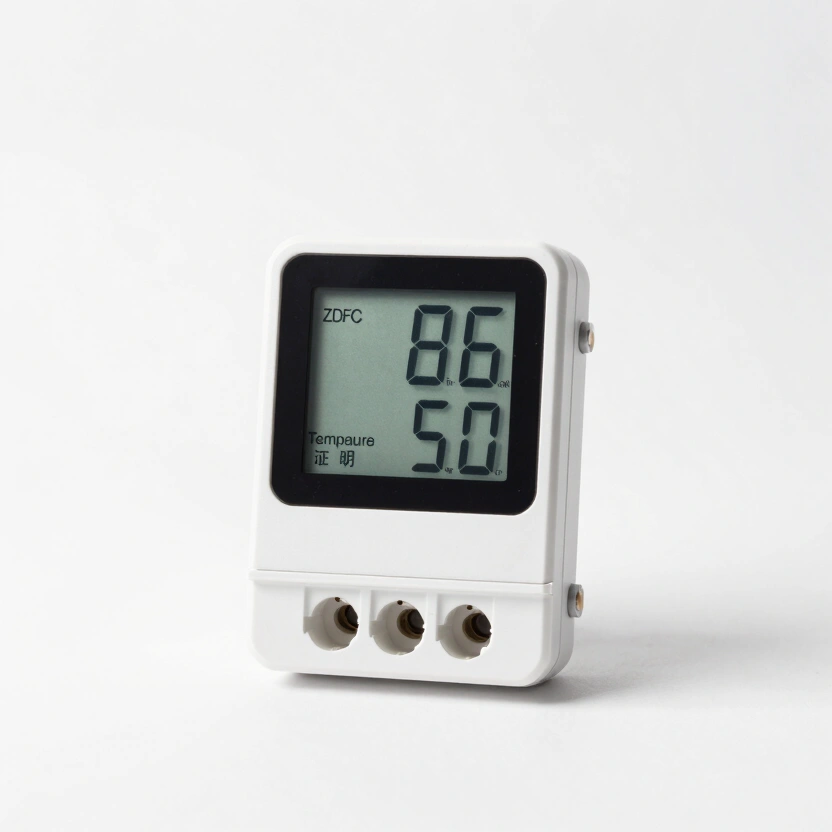
Hygrostat Socket Temperature & Humidity Switch
Integrated controller for monitoring and switching climate gear in grow tents.
Check Price on Amazon
Horticultural Vermiculite Fine (5L)
pH-neutral mineral substrate for optimal moisture retention in mushroom mixes.
Check Price on Amazon* Affiliate links. Prices last updated March 6, 2026.
The Dehydration Workflow: Precision Temperature Control
1. The Pre-Dry
If harvesting large volumes, utilize a high-velocity fan to pull surface moisture off the mushrooms for 2–4 hours before placing them in the dehydrator. This prevents “sweating” and reduces the overall energy load.
2. The Dehydration Cycle
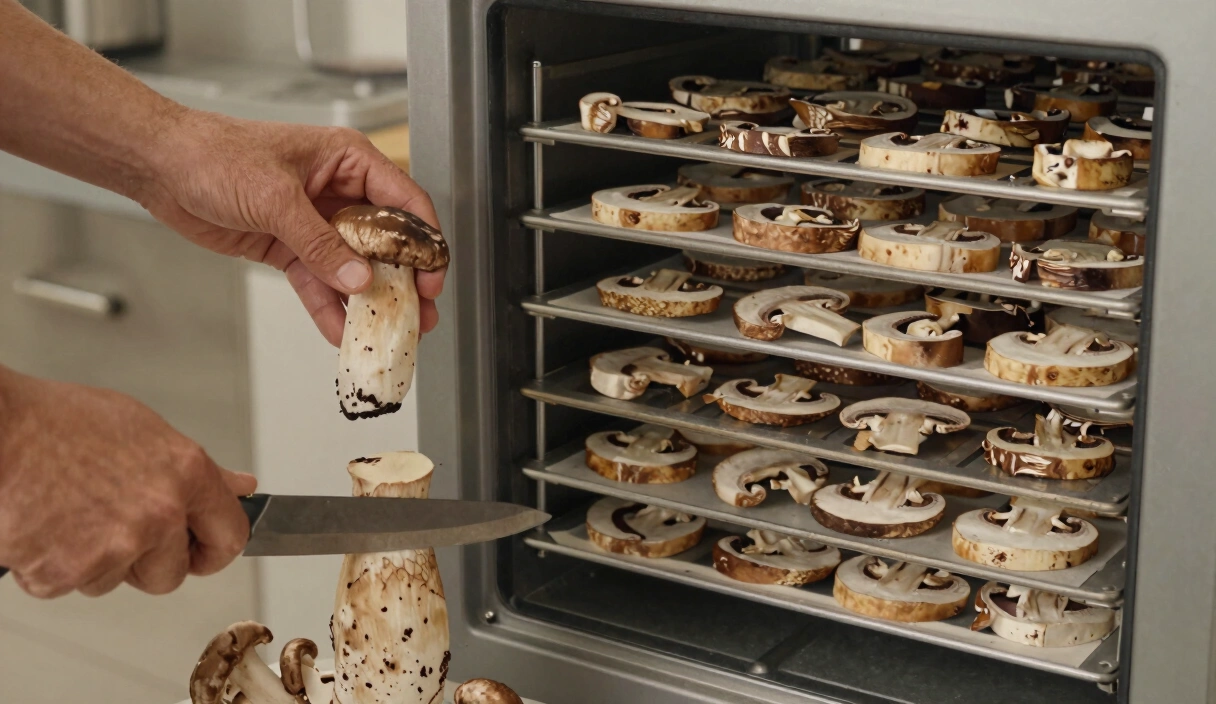
Use a dedicated food dehydrator with a digital thermostat and adjustable airflow.
- Target Temperature: 130°F to 140°F (55°C-60°C).
- The Rationale: Temperatures above 160°F (71°C) can lead to the degradation of heat-sensitive compounds like Vitamin D and certain beta-glucans. Temperatures below 110°F take too long, increasing the risk of bacterial “sour rot” during the drying process.
- Airflow Physics: Ensure your dehydrator trays are not overcrowded. Each slice requires a “boundary layer” of dry air to pull moisture out of the tissue.
Long-Term Storage: The “Re-Hydration” Battle
Dried mushrooms are Hygroscopic—they actively pull moisture from the air. Even if you dry them to $a_w 0.50$, they will re-hydrate to $a_w 0.75$ if left in a high-humidity room.
The Technical Storage Protocol
- Vessel: Use heavy-walled glass jars (Mason jars) with a two-piece lid system. Plastic bags are permeable to moisture over time.
- The Desiccant Hack: Always include a Food-Grade Silica Gel Packet in every jar. The silica gel acts as a “moisture buffer,” absorbing any humidity that enters when the jar is opened.
- Vacuum Sealing: For storage exceeding 12 months, use a vacuum sealer to remove O2, preventing the oxidation of fats and keeping the flavor profile “fresh.”
What surprised me is how fast dried mushrooms reabsorb moisture. I left an open jar of cracker-dry Shiitake on my kitchen counter for 48 hours during a humid August week. They went from snapping to bending. Dried mushrooms are relentlessly hygroscopic.
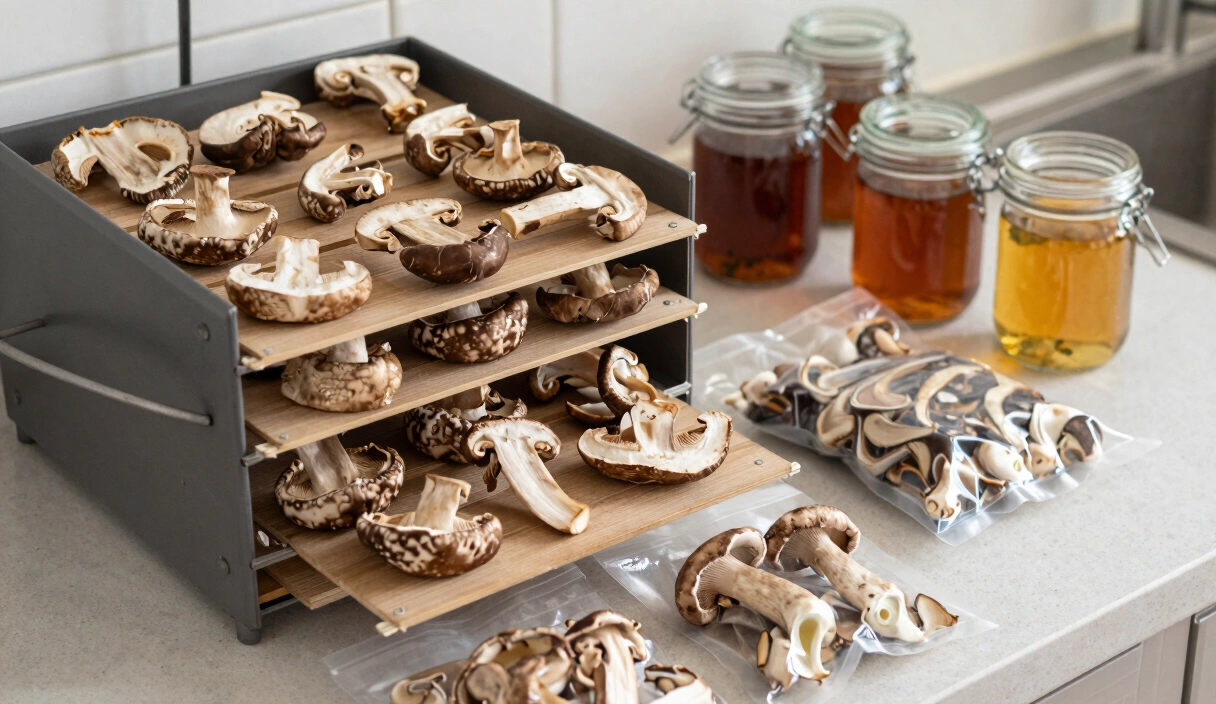
Harvest at the species-specific morphological peak, get the biomass into your dehydrator within 30 minutes, hold 130-140°F until every piece passes the snap test, then seal in glass with silica gel. From there, you can grind into powder, encapsulate, or extract knowing the starting material is shelf-stable for years.
Frequently Asked Questions
Can I dry mushrooms in a regular kitchen oven?
Not well. Most ovens bottom out at 170°F, which degrades heat-sensitive medicinal compounds and flavor volatiles. Ovens also lack the high-volume airflow needed to pull moisture away from the tissue efficiently. If you have no dehydrator, set the oven to its lowest setting, prop the door open, and point a box fan inside.
How do I know when dried mushrooms are cracker-dry without a meter?
The snap test. Bend the thickest piece, usually the stem base or the center of a Lion’s Mane pom-pom. If it snaps cleanly with an audible crack, it is likely below $a_w$ 0.60. If it bends or feels leathery, it needs more time in the dehydrator.
How long do dried mushrooms stay potent?
Stored correctly (dark, cool, sealed, $a_w < 0.60$, oxygen-free), dried mushrooms retain 90%+ of medicinal beta-glucans and culinary flavor for 2 to 3 years. Light and heat destroy potency fast. A jar above a stove goes bland in 6 months.
Can I rehydrate dried mushrooms back to fresh texture?
Shiitake and Oysters recover about 80% of their original texture after 20 minutes in warm water or broth. Save the soaking liquid. It is concentrated umami packed with water-soluble nutrients, perfect as a soup or sauce base.
What temperature should I dehydrate mushrooms at for medicinal use?
130-140°F (55-60°C). Above 160°F you degrade Vitamin D and certain beta-glucans. Below 110°F the process takes too long and risks bacterial sour rot during the extended drying window.
Related Articles
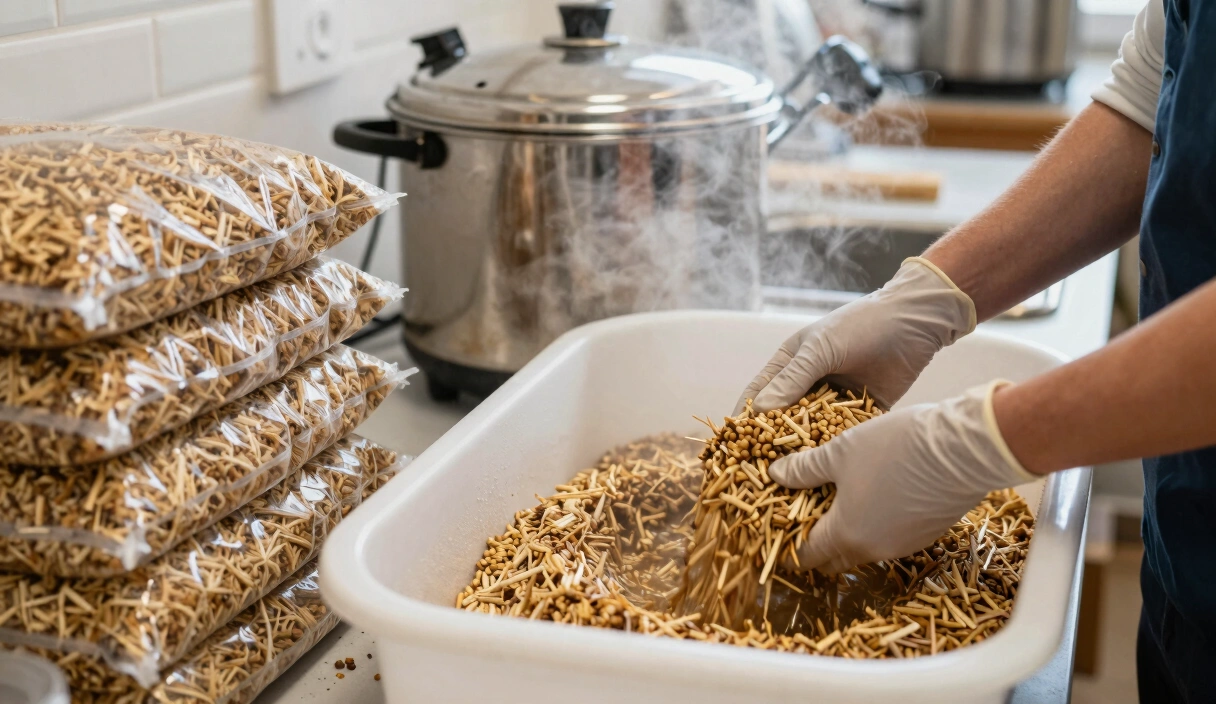
Masters Mix Masterclass: Engineering the Ultimate Substrate for Gourmet Fungi
The 50/50 hardwood pellet and soy hull formula that university research proved produces the highest Biological Efficiency for gourmet mushrooms.
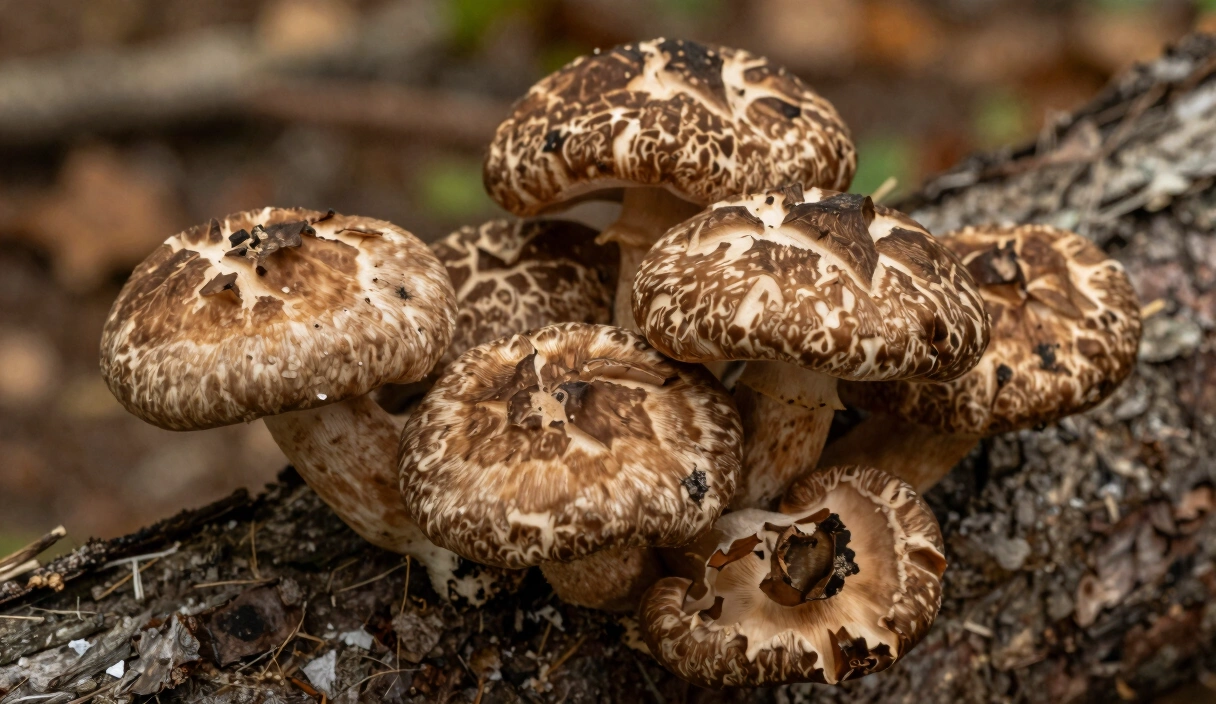
Shiitake Mushroom Mastery: Engineering the Browning and Cold Shock Process
Shiitake cultivation hinges on the browning phase most growers rush through. Cold shocking, donko vs. koshin grades, and sawdust block optimization.
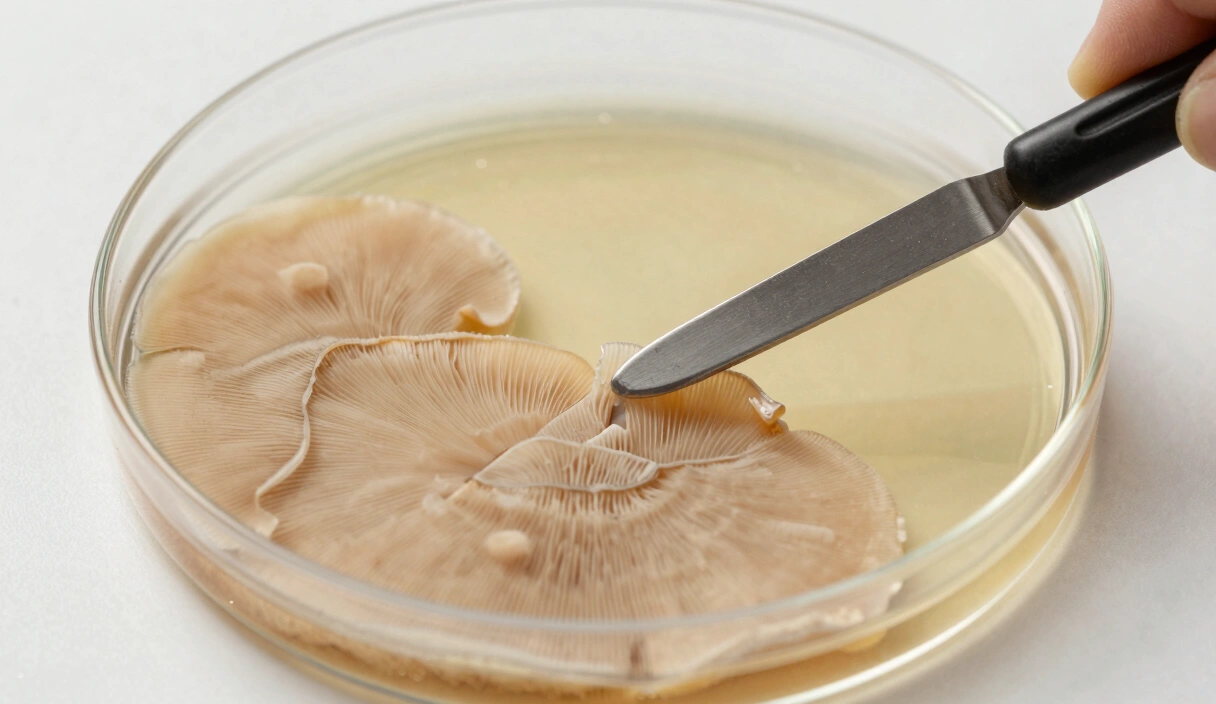
Strain Isolation and Sectoring: Mastering Mycelial Purity and Longevity
How to isolate fast-growing mushroom genetics on agar through sectoring. Includes transfer protocols and signs of mycelial senescence.