Enoki Mushroom Mastery: Engineering Morphology and Cold-Weather Yields
Wild enoki looks nothing like the white supermarket version. How to grow Flammulina velutipes at home using cold shocking and CO2-driven stem elongation.
Contents
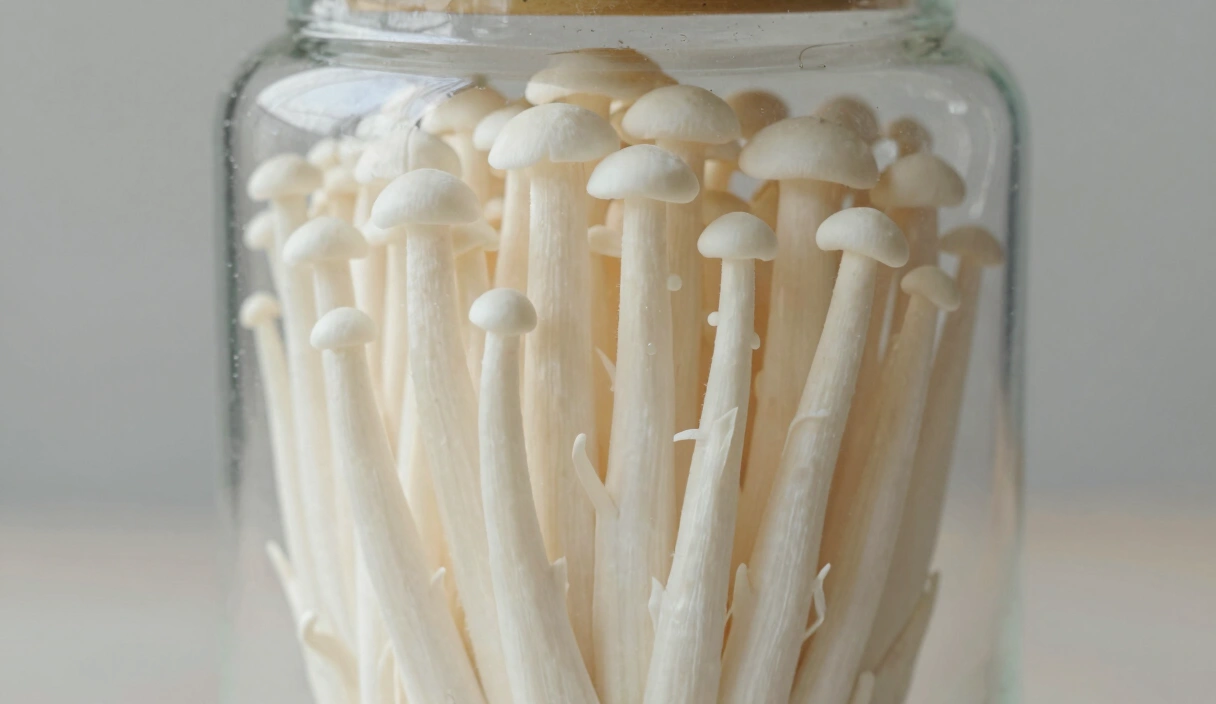
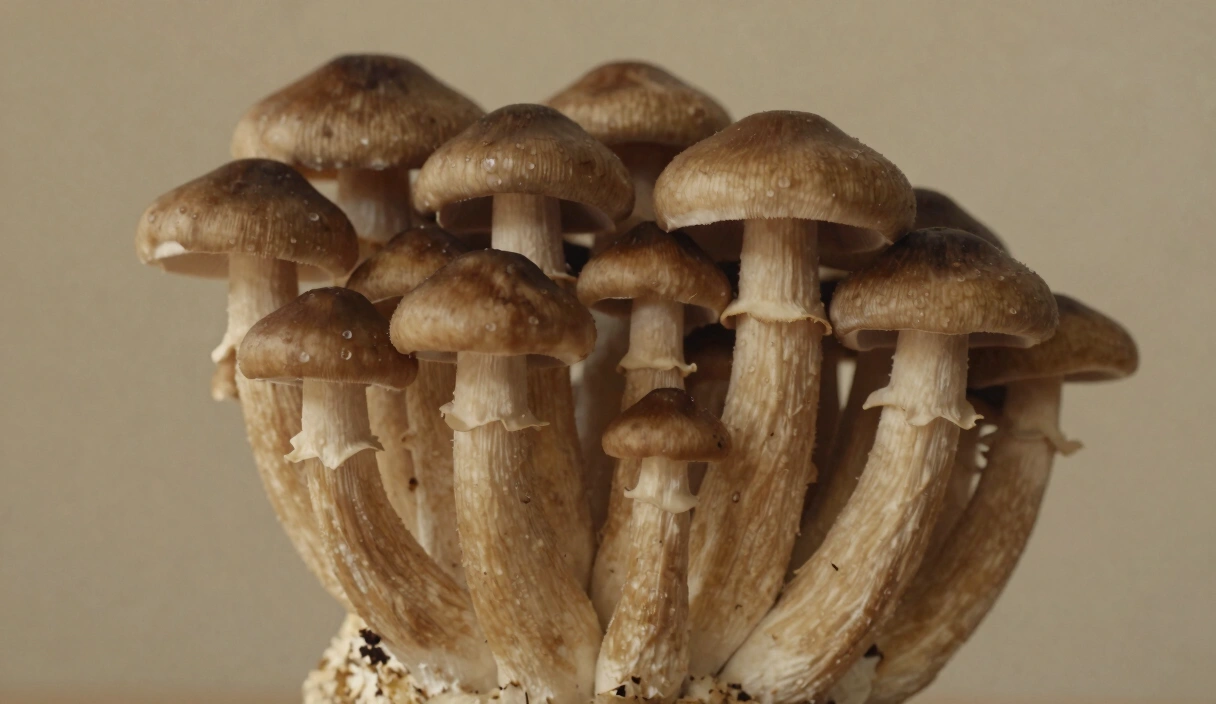
Picture a wild Flammulina velutipes cluster on a fallen elm in January: squat, dark-capped, almost tawny brown, gripping the bark like velvet buttons. Now picture the supermarket version – ghostly white noodles crammed into a plastic sleeve, caps so small they barely register. Same species. The difference is not genetics. It is atmospheric engineering. If you want to grow enoki mushrooms at home, you are signing up for an exercise in CO2 manipulation and light deprivation that would make a sensory-deprivation researcher jealous.
The wild form is called “Velvet Shank” for a reason: thick, fuzzy stems built to survive frost. The commercial form is a product of high-CO2 collaring – a technique that forces Flammulina into panicked stem elongation while starving the caps of the energy they need to expand. I have run both wild-style and commercial-style grows side by side, and the morphological gap is staggering. Master the cold-shock initiation, dial in the CO2 gradient, and you get restaurant-quality Enoki from a jar in your garage fridge.
The Biology of Form: Stipe vs. Pileus
The Enoki mushroom uses Carbon Dioxide (CO2) concentrations as a primary directional signal. This is an evolutionary adaptation for growing under the bark of fallen trees or in deep, oxygen-deprived leaf litter.
1. The Elongation Trigger (CO2 > 2,000 ppm)
When CO2 levels rise above 2,000 ppm, the fungus “assumes” it is trapped in an anaerobic crevice.
- The Mechanism: The fungus redirects all metabolic energy into the stipe (stem), elongating the cells rapidly to reach higher, oxygenated air layers.
- The Commercial Standard: In commercial “Bottle Culture,” CO2 levels are often held between 2,500 and 4,000 ppm. This forces the stems to grow 4–6 inches in length while maintaining a tiny, pinhead cap.
2. The Cap Suppression Threshold
Above 1,500 ppm CO2, the expansion of the Pileus (cap) is genetically suppressed. This ensures that the mushroom remains tender and uniform, which is the gold standard for high-end culinary markets. If CO2 drops to atmospheric levels (< 600 ppm) too early, the energy shifts to the cap, resulting in a “Wild-Style” mushroom that is tougher and less visually appealing for noodle dishes.
The Collaring Technique: Physics of the Gas Trap
To achieve the long-stemmed look without high-tech atmospheric controllers, technical growers use the Collaring Method.
- The Setup: After the substrate (traditionally hardwood sawdust or grain) is fully colonized, a plastic “collar” or sleeve is placed around the top of the fruiting jar or bag.
- The Gas Physics: As the mushrooms breathe, they release CO2. Because CO2 is 1.5 times denser than oxygen, it pools inside the plastic sleeve. This creates a localized, high-CO2 microclimate directly over the growing tips, forcing the mushrooms to “climb” the collar in search of fresh air.
Do not use rigid cardboard as a collar substitute – it wicks moisture, collapses, and dumps condensation directly onto your pins. I made this mistake with a cereal box sleeve during my first Enoki run and lost the entire tray to bacterial blotch within 48 hours.
Precision Tools for Cold-Weather Cultivation
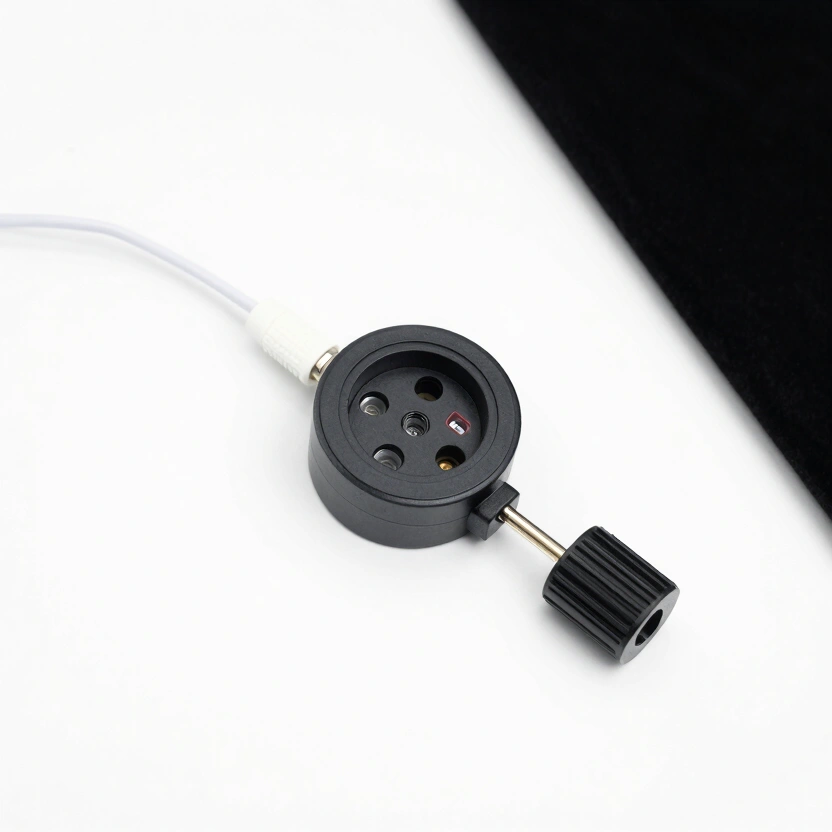
KETOTEK Digital Humidity Regulator Socket
Plug-and-play hygrostat sensor for automated humidity management.
Check Price on Amazon
Spider Farmer Smart Ultrasonic Humidifier (5L)
Automatic humidifier with built-in hygrometer for precise fruiting chamber control.
Check Price on Amazon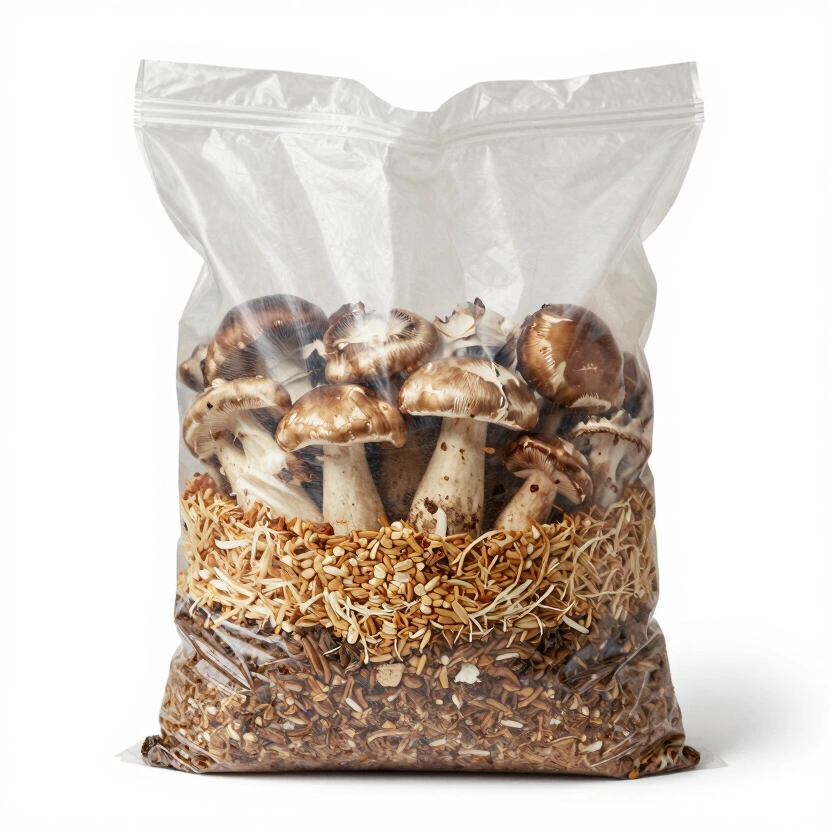
Superior Dung-Loving Mushroom Substrate & Milo Grain 6lb All-in-One Bag
Pre-sterilized all-in-one grow bag with coir, vermiculite, and gypsum formula.
Check Price on Amazon* Affiliate links. Prices last updated March 6, 2026.
Phase 1: Winter Induction (The Initiation Shock)
Flammulina velutipes is a true winter mushroom. It requires a significant temperature drop to move out of the vegetative cycle.
- Colonization: 72°F (22°C) for 14–21 days in total darkness.
- The Cold Shock: Drop the ambient temperature to 45°F – 50°F (7°C – 10°C) for 7 days. This temperature drop activates the cold-shock proteins required for primordia formation.
- Expansion Phase: Once pins are visible, raise the temperature slightly to 55°F (13°C) to accelerate growth while maintaining the high-CO2 environment.
Watch the temperature closely here – a swing above 60°F for even a single day can trigger premature cap expansion and ruin the elongated noodle morphology you have spent weeks building toward.
Light Manipulation: The Science of “Pure White”
The brilliant white color of supermarket Enoki is not a result of genetics alone; it is a result of Light Suppression.
- Phototropic Pigmentation: When exposed to 6500K LED light, Enoki will produce brown and yellow pigments (phenolic compounds) to protect its tissue from UV damage.
- The Technical Workflow: For commercial-grade white Enoki, maintain the fruiting chamber in near-total darkness. Minimal light (just enough for directional growth) is used only during the final 48 hours before harvest.
What surprised me most: even a dim nightlight left on in the same room produced visible browning on caps within two days. Flammulina is absurdly photosensitive compared to every other species I have grown.
Environmental Setpoints for High-Yield Enoki
| Phase | Temp (°F) | Humidity (RH) | CO2 (ppm) | Light |
|---|---|---|---|---|
| Inkubation | 72 | 60% | > 10,000 | Dark |
| Pinning | 45–50 | 95% | 2,000–3,000 | Dark |
| Fruiting | 52–55 | 85–90% | 3,000–5,000 | Dim / Dark |
Enoki rewards patience with the cold-shock phase and obsessiveness with CO2 readings – skip either and you end up with brown, stubby clusters that look nothing like the commercial product. Once your collaring technique is locked in, move on to building a Martha tent configured for the sub-55°F, high-CO2 environment that Flammulina demands.
Frequently Asked Questions
Why are my enoki mushrooms turning brown and slimy?
Excess condensation at low temperatures. Cold air holds less moisture, so water pools directly on the caps. Drop your RH to 85% during the expansion phase and increase FAE to clear stagnant air. If you smell something sour, you are dealing with bacterial blotch – act fast.
Can you grow enoki on straw instead of sawdust?
Yes, but expect lower yields. Enoki is a wood-decomposer that thrives on the complex carbohydrates in oak or beech sawdust. Straw works in a pinch if you supplement with at least 15% wheat bran for the nitrogen boost.
Wild brown enoki vs white enoki – which is better?
Depends on what you want. Wild-style has a stronger earthy flavor and chewier texture. White commercial-style is milder, more tender, and visually distinct. Medicinally, they are nearly identical, though wild specimens exposed to more light stress may carry slightly higher antioxidant pigment levels.
When should I harvest enoki mushrooms?
Harvest when the stems hit 4 to 5 inches and the caps are still tiny pinheads. Once the caps flatten, you have waited too long. Cut the entire cluster at the collar base with a sterile knife.
Do you have to scratch the substrate surface before fruiting?
Yes. Scraping the top quarter-inch removes the mycelial mat and exposes fresh substrate for water absorption during cold shock. This single step is the difference between a patchy pin-set and a dense, uniform cluster.
Related Articles
King Oyster Mastery: Engineering Hypertrophy and Texture in Pleurotus eryngii
Thick stems, dense texture, restaurant-grade slabs. How to grow King Oyster mushrooms by manipulating CO2, light, and casing layer depth.
Pioppino Mushroom Mastery: Engineering Texture and Color in Cyclocybe aegerita
Pioppino grows slowly, fruits late, and demands patience. But the dense, crunchy texture makes Cyclocybe aegerita worth the extra weeks.
The Economics of Mycology: Small-Scale Mushroom Business ROI
The real numbers behind starting a mushroom farm. Production costs per 5lb block, energy bills, and profit margins at farmers market prices.