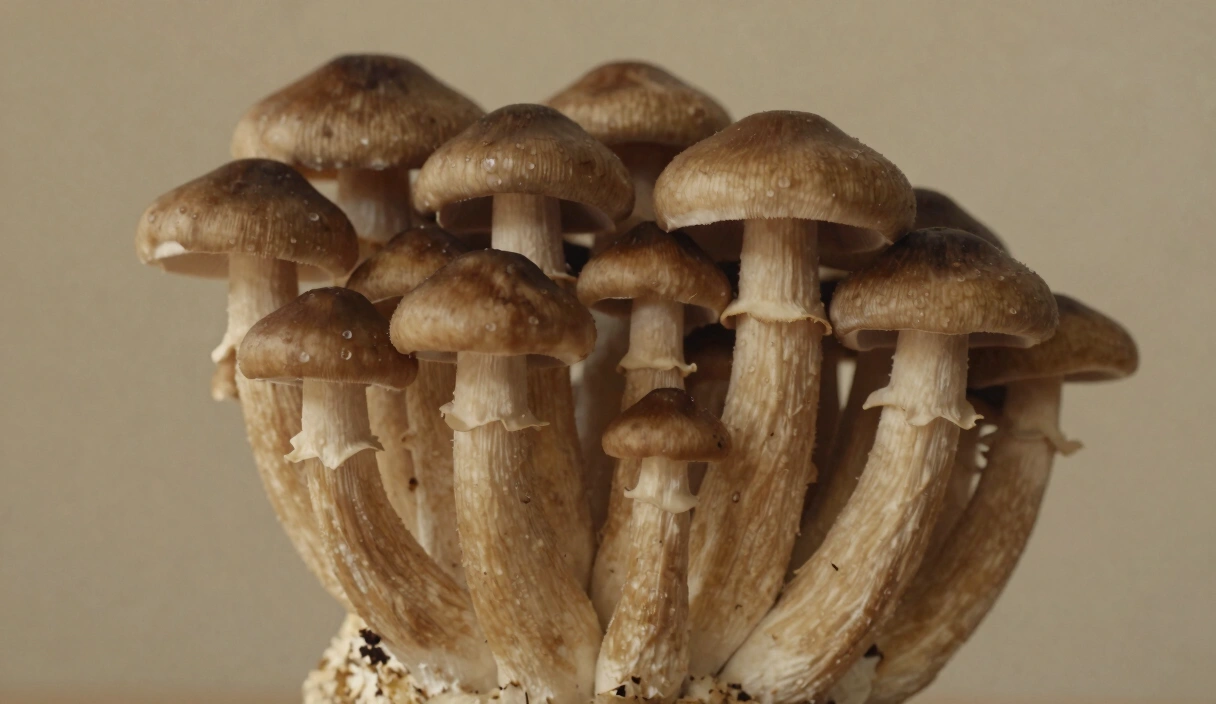
Pioppino Mushroom Mastery: Engineering Texture and Color in Cyclocybe aegerita
Pioppino grows slowly, fruits late, and demands patience. But the dense, crunchy texture makes Cyclocybe aegerita worth the extra weeks.
Contents
Italian farmers have been growing Pioppino mushrooms on poplar stumps since at least the Roman Republic. Pliny the Elder documented Cyclocybe aegerita cultivation in the first century AD, making this species one of the oldest deliberately cultivated fungi in European history. Centuries before anyone understood mycelium, Italian growers were burying poplar logs in damp soil and harvesting dense clusters of crunchy, dark-capped mushrooms they called “piopparelli.” The technique worked because poplar is the natural host, and Mediterranean climates deliver exactly the humidity and temperature swings this species needs.
Modern indoor growers can skip the poplar stumps, but the underlying biology has not changed. If you want to grow pioppino mushrooms at home, you are working with one of the most oxygen-demanding species in the hobby. Cyclocybe aegerita treats elevated CO2 as an emergency brake on reproduction – keep levels above 1,500 ppm and nothing happens. Drop below 800 ppm, combine that with a sharp temperature shift, and you get the thick-stemmed, velvet-capped clusters that justify all the effort.
The Biology of the Black Poplar: A Hardwood Specialist
In the wild, Pioppino is primarily found on living or dead Poplar trees (Populus), but it has adapted to various hardwoods like Beech and Oak. It is a slow-to-moderate colonizer that builds dense, woody mycelial networks.
1. Substrate Stoichiometry: The Nitrogen Balance
Pioppinos are highly sensitive to “Nitrogen Overloading.”
- The Problem: Using a 50/50 Masters Mix (soy hulls) often provides too much available nitrogen, which causes the mycelium to stay in a vegetative state, leading to “Abort” patches or deformed, cauliflower-like growths.
- The MycoTechnic Standard: Utilize a hardwood base supplemented with 10% to 15% Wheat Bran. This targets a C:N ratio of approximately 40:1 to 45:1, providing the perfect energy density for both cap expansion and stem rigidity.
- pH Stability: Like Maitake, Pioppino prefers a slightly acidic to neutral range (pH 6.0 – 6.5). Supplementing with 1% Gypsum is mandatory to prevent clumping and maintain the interstitial air gaps required for gas exchange.
Phase 1: Incubation and the Maturation Window
Pioppino colonization is faster than Shiitake but requires a distinct “Consolidation” phase.
- Colonization: 72°F (22°C) for 21 days.
- The Maturation Period: Once the block is 100% white, do not move it to fruiting immediately. Wait an additional 7 to 10 days. During this window, the fungus secretes specialized enzymes that harden the chitin in the stem, ensuring the mushrooms don’t become “mushy” during the cooking process.
I rushed this step on my first Pioppino run – moved to fruiting the same day I saw full colonization. The resulting mushrooms had the texture of wet cardboard. That extra week of consolidation is not optional.
Pioppino Substrate Essentials
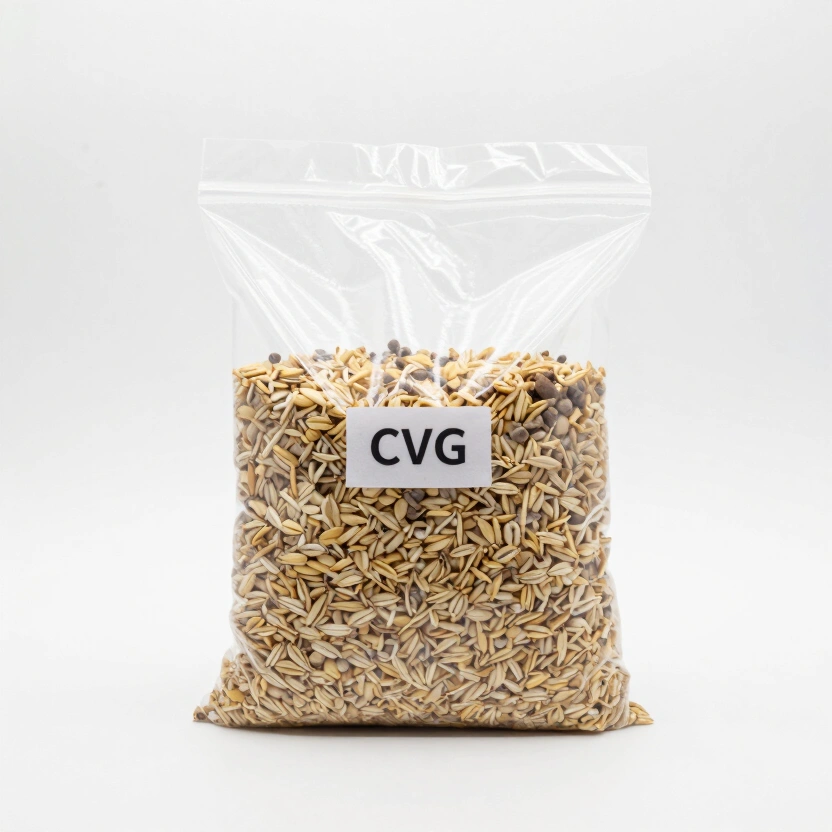
Sterilized CVG Substrate & Grain Combo Bag
All-in-one sterilized solution for effortless mushroom growing.
Check Price on Amazon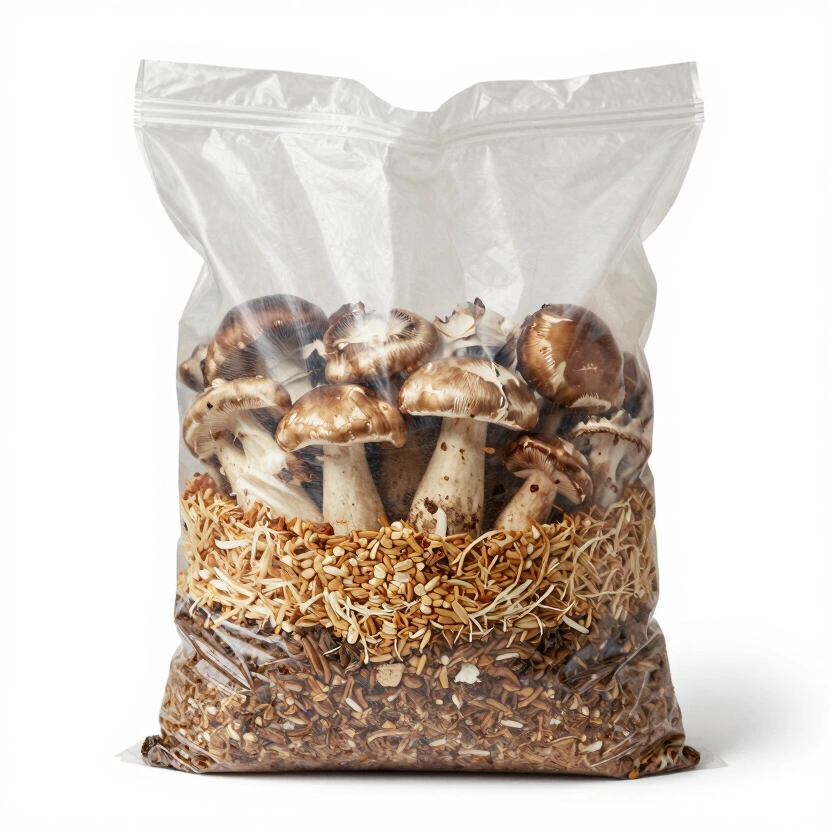
Superior Dung-Loving Mushroom Substrate & Milo Grain 6lb All-in-One Bag
Pre-sterilized all-in-one grow bag with coir, vermiculite, and gypsum formula.
Check Price on Amazon
Horticultural Vermiculite Fine (5L)
pH-neutral mineral substrate for optimal moisture retention in mushroom mixes.
Check Price on Amazon* Affiliate links. Prices last updated March 6, 2026.
Phase 2: Initiation and the 800 ppm Rule
Pioppino is one of the most “O2-hungry” species in cultivation. It uses CO2 as a positional sensor—high levels signal that it is still deep inside a log.
1. The FAE Trigger
To achieve the classic thick-stemmed, small-cap look, you must drop CO2 concentrations to < 800 ppm during the first 48 hours of fruiting.
- The Consequence: If CO2 stays above 1,500 ppm, the stems will stretch (hypertrophy) and the caps will fail to open, resulting in a low-quality harvest with a “stringy” texture.
2. The Temperature-Color Gradient
The visual quality of a Pioppino cluster is determined by the Melanin Synthesis in the cap.
- Deeper Brown: To achieve the dark, velvet-chocolate color, drop the fruiting temperature to 55°F – 60°F (13°C – 15°C).
- Lighter Gold: Fruiting at 68°F (20°C) results in a lighter, golden-brown cap. While growth is faster at higher temps, the shelf life and flavor intensity are significantly reduced.
I ran a side-by-side batch at 58°F and 68°F last winter. The cold batch took five extra days but produced caps so dark they looked lacquered. The warm batch grew faster, sure, but the flavor was flat and the stems went rubbery within 24 hours of harvest.
Phase 3: Humidity Management and Stem Density
Pioppino clusters fruit in dense “pincushion” patterns. This density creates its own micro-climate.
- Pinning RH: 95% – 98% for the first 5 days.
- Expansion RH: Once clusters are 1 inch tall, drop RH to 85%.
- The Physics: Lowering the humidity increases the rate of Transpiration. This pulls more nutrient-rich water from the substrate through the stem, leading to a denser, crunchier mushroom.
Most online guides treat Pioppino and Oyster humidity requirements as interchangeable. They are not. Oysters tolerate sloppy RH swings. Pioppinos punish them with cracked stems and aborted pins – a distinction that cost me two full harvests before I figured it out.
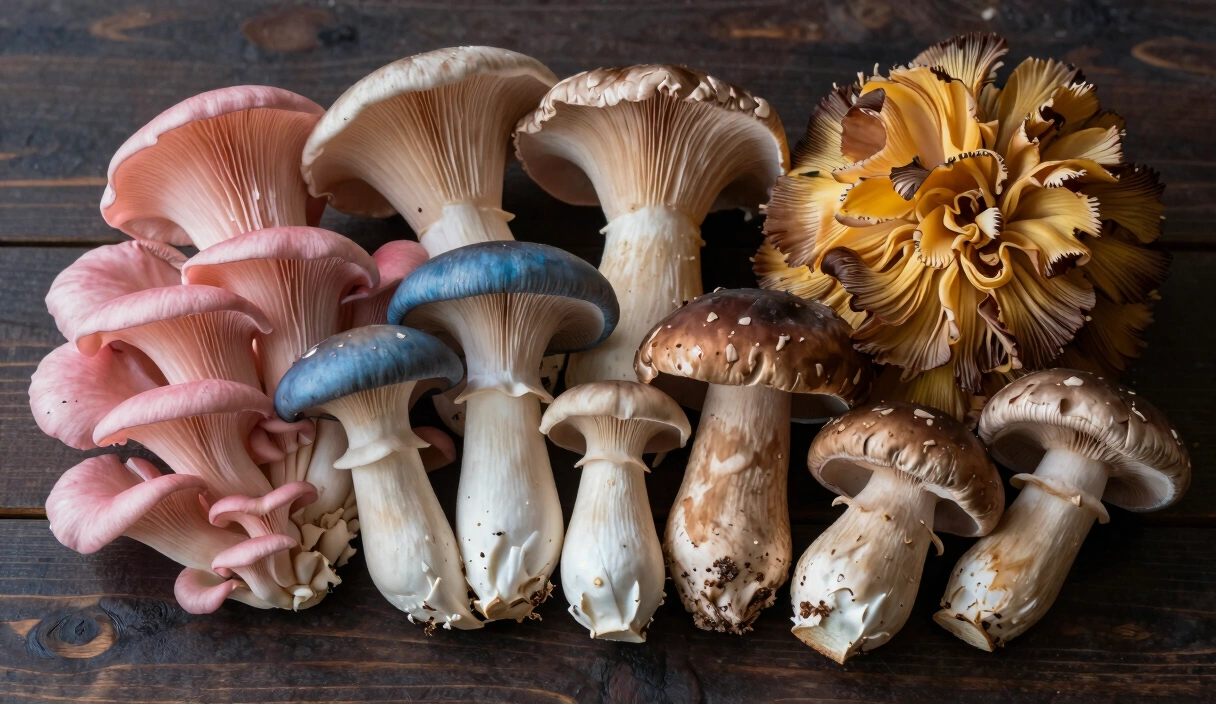
Pioppino is the species that punishes lazy FAE management harder than any other mushroom I have grown – get the CO2 below 800 ppm, lock the humidity within a 3% band, and the clusters practically build themselves. If you want to automate that precision, start with an Arduino & ESP32 sensor build to keep your NDIR readings honest.
Frequently Asked Questions
Why do my pioppino stems crack horizontally?
Humidity swings. When RH drops from 95% to 70% and back, the outer stem skin dries and loses elasticity while the interior keeps growing. The result is horizontal ruptures across the stem. A PID-controlled humidifier holding steady within 3% variance fixes this.
Can pioppino mushrooms grow on outdoor logs?
Yes – Poplar, Willow, and Elm all work well. Use the “Totem” or “Raft” method, burying the logs partially in clean sand to hold moisture. Pioppinos are more sensitive to wild competitors than oyster mushrooms, so site selection matters more.
Are pioppino caps supposed to be sticky?
That viscid film is normal. Cyclocybe aegerita produces mucilaginous polysaccharides as a moisture barrier. If the stickiness turns to actual slime and smells sour, though, that is bacterial blotch – increase FAE immediately.
How many flushes do you get from one pioppino block?
Expect 2 to 3 flushes from a standard sawdust block. First flush delivers the highest quality. After the second harvest, contamination risk climbs and the dikaryon loses vigor, so commercial operations typically recycle at that point.
What is the right time to harvest pioppino clusters?
Harvest when the veil has just broken but the cap edges still curl downward. Once caps flatten or flip upward, spore release accelerates and stem texture degrades fast.
Related Articles
Maitake Mushroom Mastery: Engineering Yields for Grifola frondosa
Maitake is one of the hardest gourmet mushrooms to fruit indoors. The Grifola frondosa guide covering substrate pH, primordial brain formation, and D-fraction.
King Oyster Mastery: Engineering Hypertrophy and Texture in Pleurotus eryngii
Thick stems, dense texture, restaurant-grade slabs. How to grow King Oyster mushrooms by manipulating CO2, light, and casing layer depth.
Reishi Cultivation: Engineering Antlers and Conks through CO2 Manipulation
Reishi antlers contain 20-40% more triterpenes than conks — and they're actually easier to grow. CO2 manipulation, morphogenesis, and harvest timing.