Bacterial Pathogens II: The Pathology of Blotch and Slime in Mycology
Brown spots on your caps? Pseudomonas tolaasii produces tolaasin toxins that dissolve mushroom tissue. Diagnosis, prevention, and the 4-hour evaporation rule.
Contents
Commercial mushroom operations report bacterial blotch infection rates between 15% and 25% of total harvest weight during peak humidity months. That is not a fringe problem. For a farm producing 200 lbs per week, blotch can silently destroy 30-50 lbs of sellable product—$360 to $750 in lost revenue every seven days from an organism most growers have never heard of.
Bacterial blotch and slime pathogens, primarily Pseudomonas tolaasii and related Pseudomonas species, do not compete for the substrate. They directly parasitize the fruiting body. While a fungal contaminant might kill a block, a bacterial blotch outbreak can ruin the aesthetic and structural integrity of an entire Martha Tent harvest within hours. Success in high-humidity cultivation requires a transition from general sanitation to a specific understanding of Cap Hygiene and the biochemistry of toxin-induced cellular collapse.
Eliminating blotch means managing the Evaporation Window on the mushroom cap and mitigating the biological vectors—especially fungus gnats—that transport these motile bacteria directly to your primordia.
The Molecular Assassin: How Tolaasin Destroys Tissue
The virulence of Pseudomonas tolaasii is driven by its secretion of Tolaasin, a potent lipodepsipeptide (LDP) toxin. Unlike bacteria that slowly digest tissue, Tolaasin is a high-speed molecular weapon.
1. The Pore-Forming Mechanism
Tolaasin molecules utilize a “Golf-Club” structure to insert themselves into the plasma membrane of mushroom hyphae.
- The Aggregation: Multiple tolaasin molecules aggregate within the lipid bilayer, forming transmembrane pores (Barrel-Stave model).
- Ion Leakage: These pores destroy the cell’s electrochemical gradient, allowing vital cations like Potassium ($K^+$) and Calcium ($Ca^{2+}$) to leak out uncontrollably.
- Osmotic Lysis: The resulting pressure imbalance leads to rapid water influx, causing the fungal cells to swell and literally explode (lysis). This is why blotch-infected tissue appears sunken, dark, and water-soaked.
2. The Enzymatic Browning Response
When Tolaasin ruptures the internal vacuoles of the mushroom, it releases latent Tyrosinase (Polyphenol Oxidase).
- The Reaction: Tyrosinase oxidizes phenolic compounds into Melanins.
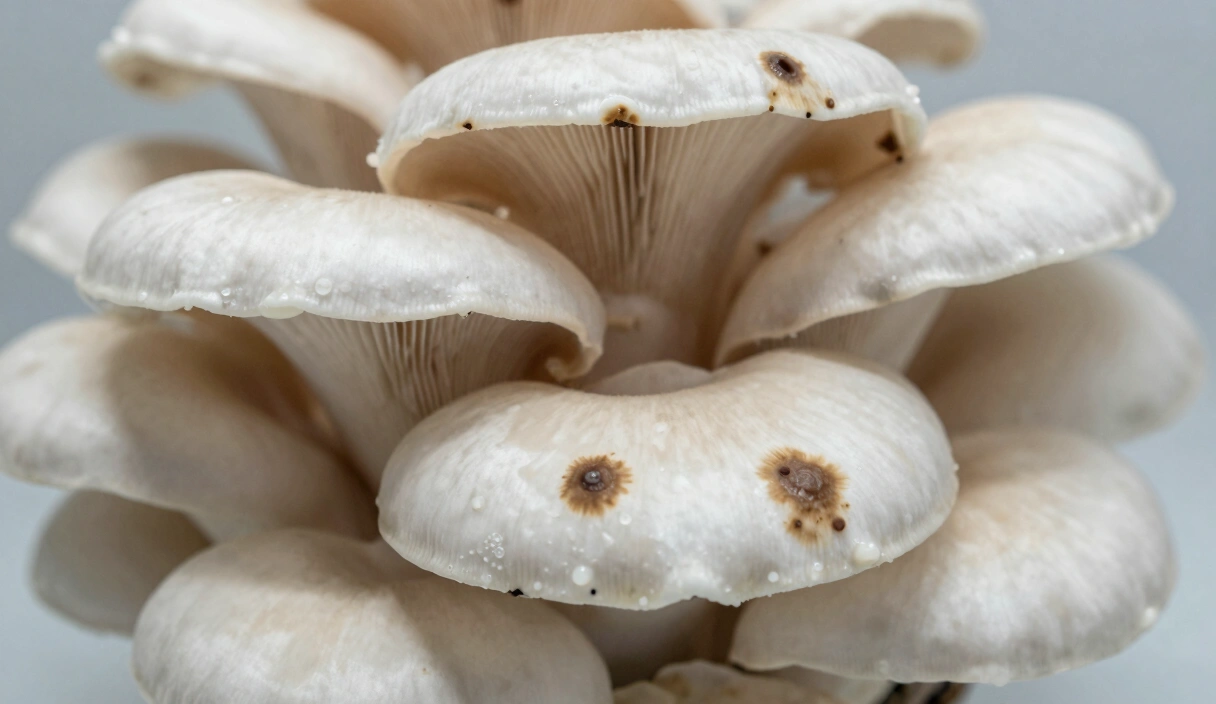
- The Diagnosis: This biochemical chain reaction is what creates the characteristic brown or ginger-colored lesions on the cap surface. If you see sunken brown spots on your Lion’s Mane or Oyster caps, stop and think about what you are actually looking at—you are seeing the mushroom’s own immune system attempting, and failing, to wall off a molecular-level chemical attack. Those brown patches are not “bruises.” They are battlefield scars.
Epidemiology: The Role of Biological Vectors
Bacteria like Pseudomonas are motile (they swim using flagella), but they cannot fly. In a closed grow room, they rely on two primary transportation systems.
1. Water Droplets
If your ultrasonic humidifier produces heavy droplets or if condensation drips from the ceiling of your Martha Tent, the bacteria hitch a ride in the water. Once a droplet lands on a cap, the bacteria have a liquid medium to colonize and begin the Tolaasin production cycle.
2. Fungus Gnats (The Invisible Carriers)
Trauermücken, or Fungus Gnats, are the most dangerous vectors in mycology.
- The Loop: Gnats feed on contaminated substrate or “aborts” (pins that have died). They pick up Pseudomonas on their legs and bodies and transport the bacteria directly to the moist, nutrient-rich surface of newly forming primordia.
- The Solution: Maintaining a 100% insect-free grow room is not just an aesthetic choice; it is a critical requirement for bacterial disease management. Ask yourself honestly: when was the last time you checked the mesh on your intake vents? A single torn screen is an open door for the gnats that carry Pseudomonas directly to your freshest pins.
Precision Hygiene & Monitoring Tools
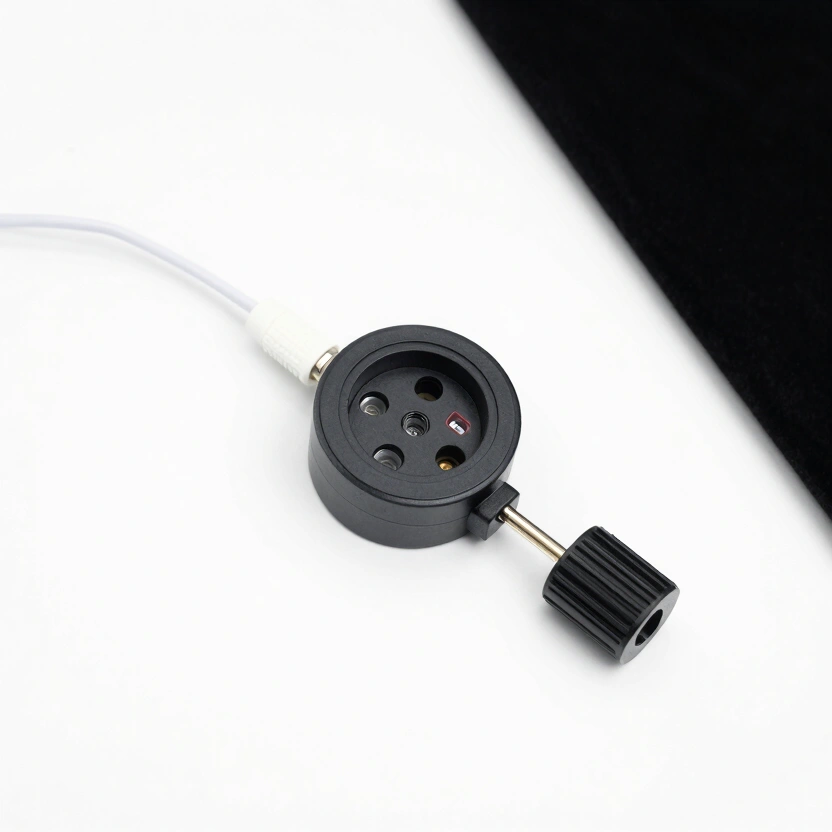
KETOTEK Digital Humidity Regulator Socket
Plug-and-play hygrostat sensor for automated humidity management.
Check Price on Amazon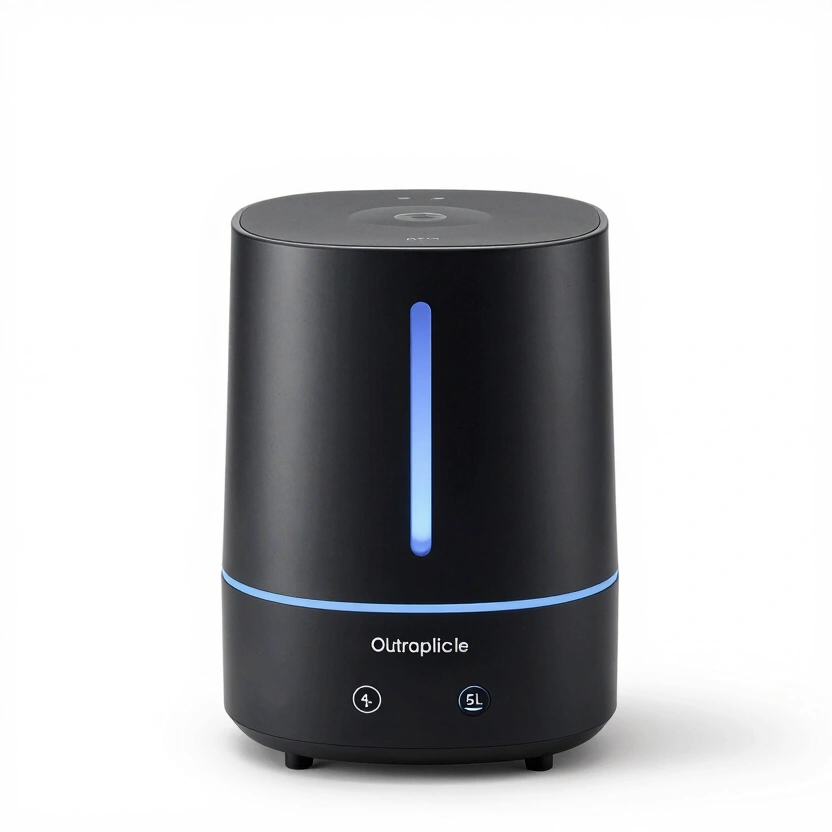
Spider Farmer Smart Ultrasonic Humidifier (5L)
Automatic humidifier with built-in hygrometer for precise fruiting chamber control.
Check Price on Amazon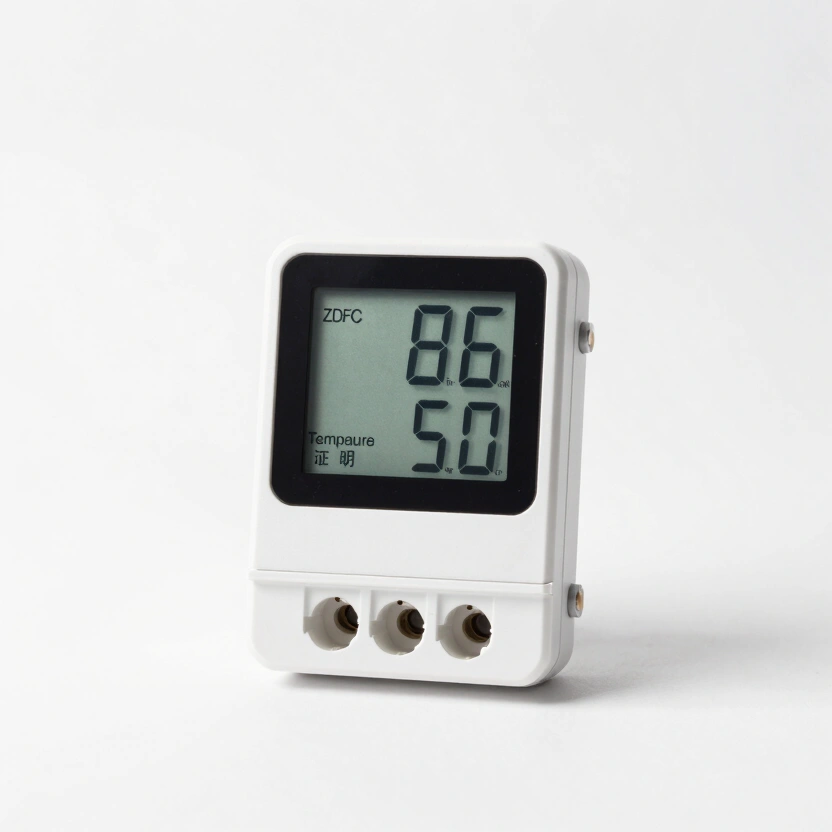
Hygrostat Socket Temperature & Humidity Switch
Integrated controller for monitoring and switching climate gear in grow tents.
Check Price on Amazon* Affiliate links. Prices last updated March 6, 2026.
The 4-Hour Rule: Mastering Cap Evaporation
The most effective technical defense against bacterial blotch is the management of the Boundary Layer of air on the mushroom cap.
The Physics of Evaporation
Bacteria require Free Water to remain active. If the surface of the mushroom remains wet for extended periods, the infection window stays open.
- The Protocol: Adjust your Martha Tent or Monotub ventilation so that any moisture applied during a misting cycle evaporates off the cap surface within 4 hours.
- Fresh Air Exchange (FAE): If your caps are still wet 6 hours after a misting cycle, your FAE is too low. You might think higher humidity is always better for mushrooms—but consider that every hour of standing water on a cap is an hour of bacterial multiplication. Increase your exhaust fan speed or add an internal circulation fan to move stagnant air away from the fruiting clusters.
Clinical Diagnosis: Blotch vs. Yellow Spot
| Feature | Bacterial Blotch (P. tolaasii) | Yellow Spot (P. agarici) |
|---|---|---|
| Primary Host | Agaricus / Hericium | Pleurotus (Oysters) |
| Color | Dark Brown / Sunken | Yellow / Tan / Superficial |
| Texture | Slimy / Rotten Earth smell | Sticky / No distinct odor |
| Severity | High (Destroys tissue) | Moderate (Visual defect) |
Hygiene Protocol: The Zinc Barrier
Interestingly, divalent cations like Zinc ($Zn^{2+}$) act as inhibitors of Tolaasin.
- Technical Tip: Some commercial growers utilize a very dilute zinc-sulphate spray ($10^{-4}$ M) on the caps during the early pinning phase. The zinc ions bind to the lactone ring of the tolaasin molecule, preventing it from forming the lethal pores in the mycelium.
Check your Martha Tent caps right now—if any surface moisture remains more than 4 hours after your last misting cycle, increase FAE immediately and install yellow sticky traps at every air intake to break the fungus gnat vector cycle before the next flush.
Frequently Asked Questions
Can I wash bacterial blotch lesions off my mushrooms and still sell them?
No. The Tolaasin toxin physically ruptures cell walls and triggers internal melanin formation—the damage is structural, not superficial. Washing removes surface slime but the brown sunken lesions remain. Worse, washing adds moisture that accelerates bacterial growth during storage. Small superficial spots can be trimmed before personal use, but blotched mushrooms should never reach a customer.
Is bacterial blotch on mushrooms dangerous to eat?
Pseudomonas tolaasii is not classified as a human pathogen. The concern is that sunken, decomposing tissue harbors opportunistic bacteria that are potentially harmful. Trim small superficial spots and cook thoroughly. If the mushroom smells sour, fishy, or has extensive brown patches covering more than 20% of the cap, discard it entirely.
How do I eliminate fungus gnats from my grow room without pesticides?
Three-pronged approach: Yellow Sticky Traps catch flying adults; BTI (Bacillus thuringiensis israelensis) granules or dunks kill larvae in substrate and casing material; and fine mesh screens (150 micron or finer) on all air intakes prevent new adults from entering. BTI specifically targets gnat larvae without harming mycelium or leaving chemical residues. Breaking the lifecycle at the larval stage is more effective than trapping adults alone.
Why does bacterial blotch always hit my largest mushroom clusters first?
Large clusters create their own “dead zones” of stagnant, humid air beneath the caps. More surface area means more opportunity for water droplets to sit undisturbed beyond the 4-hour safe window. A small, low-velocity circulation fan aimed at the base of large clusters is the most effective fix—even in a well-ventilated Martha Tent, microclimates form under big caps.
Can UV-C light be used to prevent bacterial blotch in a commercial grow room?
Yes—UV-C is highly effective at killing Pseudomonas on exposed surfaces. The risk is overexposure, which damages mushroom DNA and stunts growth. Professional operations use automated UV-C pulses during fan “off” cycles when the room is empty, targeting air and tent surfaces without direct mushroom exposure. This is an advanced technique requiring strict safety protocols and timed shielding.
Related Articles
Bacterial Contamination: Technical Diagnosis of the Wet Spot and Sour Rot
That sour smell in your grain jar is Bacillus subtilis — and its endospores survived your pressure cooker. How wet spot happens and how to stop it.
Cobweb Mold vs. Mycelium: Technical Diagnosis and Eradication of Cladobotryum
Most 'cobweb mold' posts on Reddit are actually healthy mycelium. The H2O2 melting test and visual markers that separate real Dactylium from a false alarm.
How to Identify Trichoderma: Technical Diagnosis of the Green Monster
If your jar smells like coconut, that's 6-PAP — Trichoderma's chemical signature. How to identify green mold early and what to do when you find it.