Cobweb Mold vs. Mycelium: Technical Diagnosis and Eradication of Cladobotryum
Most 'cobweb mold' posts on Reddit are actually healthy mycelium. The H2O2 melting test and visual markers that separate real Dactylium from a false alarm.
Contents
Most “cobweb mold” posts on Reddit are actually healthy mycelium. Scroll through r/contamfam or r/mushroomgrowers on any given day and you will find panicked growers ready to throw out perfectly good tubs because they mistook aggressive tomentose growth for Cladobotryum. The irony is that real cobweb mold diagnosis matters precisely because the actual pathogen is far more destructive than the false alarms suggest.
True Cobweb Mold (Cladobotryum dendroides, formerly Dactylium dendroides) is an aggressive opportunist that can envelop a 66-quart monotub in less than 24 hours, choking your primordia before they reach Stage 6. Unlike Trichoderma, which actively parasitizes your mycelium, Cobweb is a competitor that thrives in high-CO2, low-evaporation micro-climates.
Successful eradication depends on two things: a biochemical understanding of Enzymatic Defense Mechanisms and the physical management of Airflow Stagnation. Getting the diagnosis right is the first step.
Morphological Differentiation: The Visual Spectrum
Identifying Cobweb before it sporulates is the difference between a minor spot-treatment and a total loss.
1. Color and Tonality
- Mushroom Mycelium: Displays a brilliant, opaque “Titanium White.” Even in its fuzzy (tomentose) state, it reflects light uniformly.
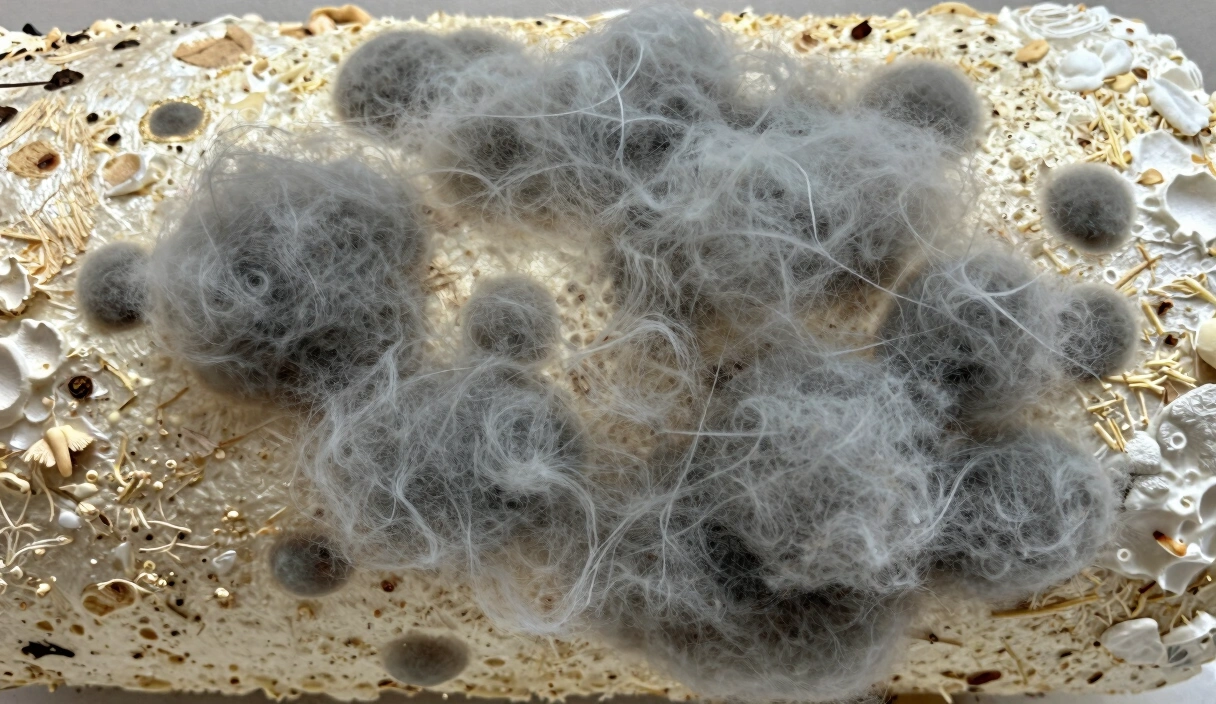
- Cobweb Mold: Appears as a dull, translucent Dull Grey or off-white. As the colony matures and begins to sporulate, it may develop a light pink or yellowish tint.
2. Growth Architecture
- Radial vs. Vertical: Mushroom mycelium grows radially across the substrate or downward into the nutrient source. It is dense and grounded.
- The “Cloud” Effect: Cobweb grows Upward into the air. It looks like a loose cloud of smoke or a clump of grey hair floating 1–2 inches above the substrate surface. It does not “grip” the substrate; it hovers over it. Do not touch it or blow on it—the spores are lighter than dust and will become airborne at the slightest disturbance, spreading the infection across every open surface in the room.
The H2O2 Melting Test: A Biochemical Analysis
The most definitive diagnostic tool in your lab is the 3% Hydrogen Peroxide ($H_2O_2$) Test. This test leverages a fundamental difference in the enzymatic makeup of different fungal species.
The Catalase Shield
Healthy mushroom mycelium (like Pleurotus or Hericium) produces high concentrations of the enzymes Catalase and Peroxidase. These enzymes act as a chemical shield, instantly breaking down $H_2O_2$ into harmless water ($H_2O$) and oxygen ($O_2$).
- The Reaction: When you spray $H_2O_2$ on healthy mycelium, it foams aggressively. The structure of the mycelium remains intact because the oxidative stress is neutralized at the cell wall.
The Cobweb Vulnerability
Cladobotryum is an evolutionary specialist in speed, not defense. It possesses significantly lower levels of catalase.
- The “Melting” Effect: When $H_2O_2$ hits Cobweb, the mold cannot neutralize the oxygen radicals. The peroxide causes immediate Oxidative Lysis, physically dissolving the fragile, thin-walled hyphae. Within seconds, the grey cloud will vanish, leaving only a small amount of liquid. If the white patch disappears completely after a spray, it was Cobweb. If it foams but remains, it is Mycelium.
Sterility & Monitoring Tools
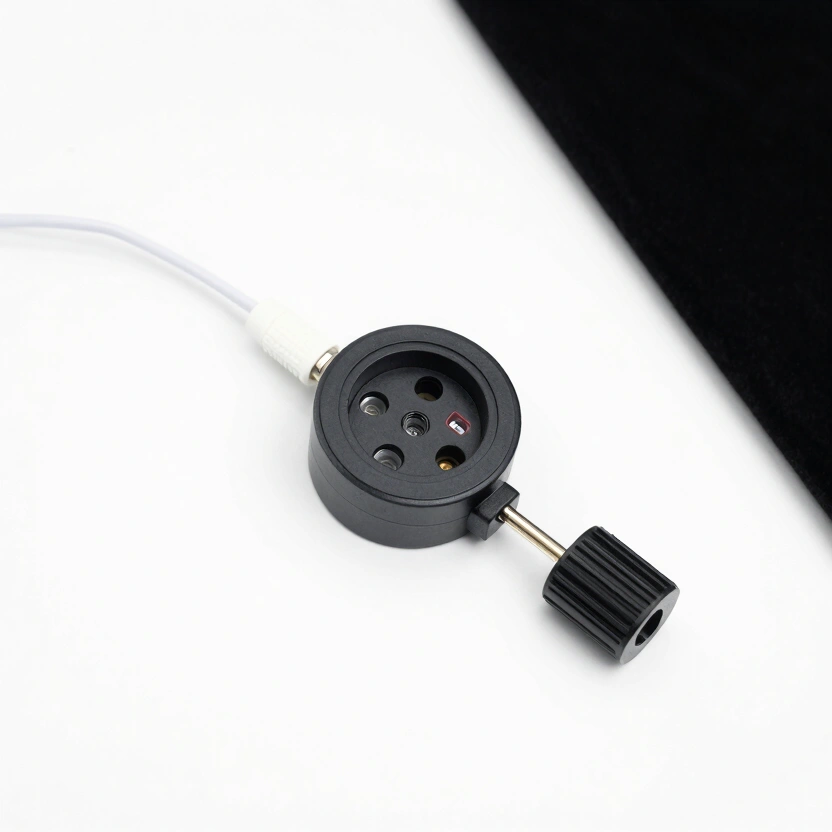
KETOTEK Digital Humidity Regulator Socket
Plug-and-play hygrostat sensor for automated humidity management.
Check Price on Amazon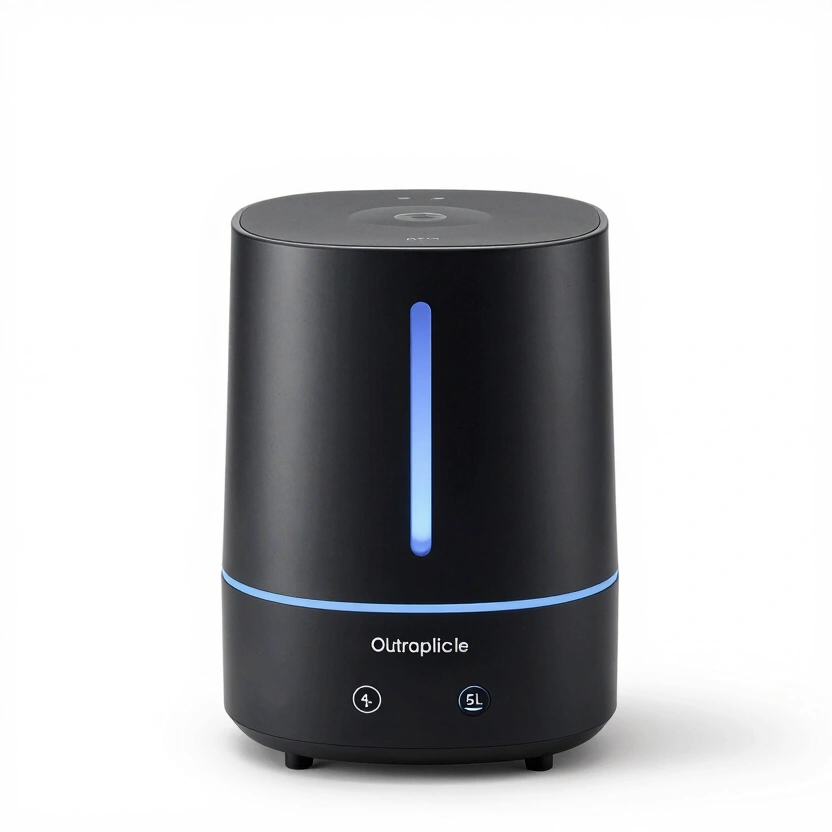
Spider Farmer Smart Ultrasonic Humidifier (5L)
Automatic humidifier with built-in hygrometer for precise fruiting chamber control.
Check Price on Amazon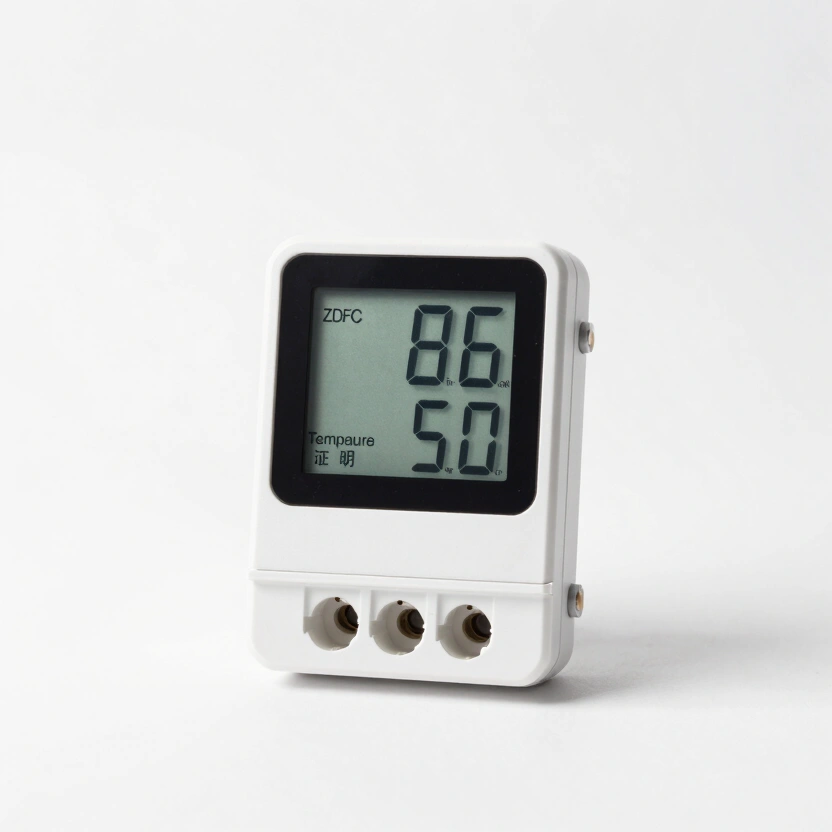
Hygrostat Socket Temperature & Humidity Switch
Integrated controller for monitoring and switching climate gear in grow tents.
Check Price on Amazon* Affiliate links. Prices last updated March 6, 2026.
The Physics of Stagnation: Why Cobweb Appears
Cobweb is an “Aerodynamic Failure” indicator. In nature, it grows in caves and deep forest litter where air is still.
1. The CO2 Pocket
Because CO2 is 1.5x denser than air, it pools at the substrate surface. If your Fresh Air Exchange (FAE) is insufficient, this stagnant CO2 layer prevents surface evaporation.
- The Trigger: Cobweb spores require a high-humidity, high-CO2 environment to germinate. If you see Cobweb, your FAE-to-RH ratio is unbalanced. You are providing too much moisture and not enough air movement. Do not respond by simply spraying more hydrogen peroxide—fix the airflow first, or the cobweb will return within 48 hours regardless of how many times you treat it chemically.
2. The Temperature Factor
Cobweb thrives in the 65°F to 75°F (18°C - 24°C) range—the exact same range we use for mushroom incubation. This makes it a constant threat during the Stage 4 (Colonization) phase.
Eradication Protocol: The Peroxide & Salt Strategy
If you catch Cobweb early (covering less than 10% of the surface), you can save the tub using this two-pronged attack.
- Chemical Neutralization: Spray the affected area directly with 3% Hydrogen Peroxide. Continue spraying until the grey cloud has “melted” into the substrate.
- The Salt Barrier: Spores of Cladobotryum are extremely light and become airborne at the slightest touch. After the $H_2O_2$ treatment, cover the area with a 1/4-inch layer of Table Salt. The salt creates a localized osmotic shock zone that prevents any surviving spores from re-germinating.
- Environmental Correction: Immediately increase your FAE. If using a Martha Tent, increase your exhaust fan cycle by 20%. If using a Monotub, loosen the bottom polyfill. Never treat the symptom without fixing the root cause—skipping the environmental correction guarantees recurrence within days.
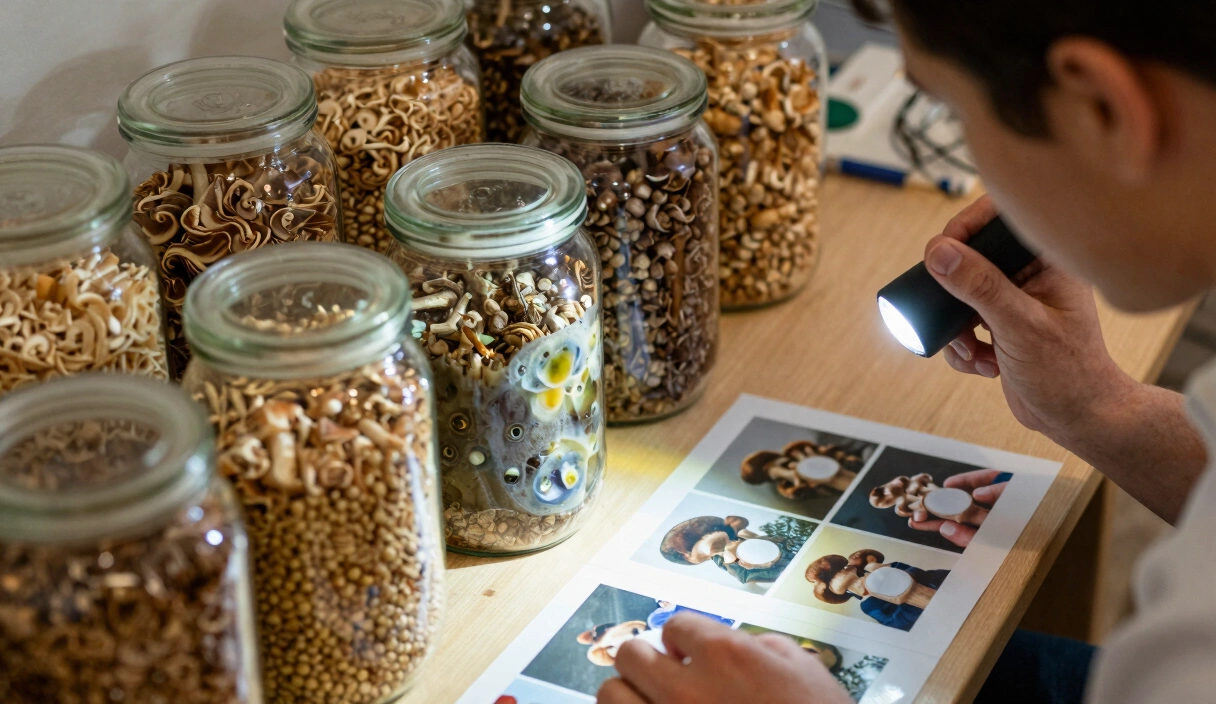
Perform the H2O2 melting test on any grey-white patches in your current grows before you panic-post on Reddit, then measure your CO2 levels at substrate height and increase your monotub FAE if readings exceed 1200 ppm.
Frequently Asked Questions
How do I tell if the white fuzzy growth in my tub is cobweb mold or healthy mycelium?
Run the H2O2 melting test. Spray 3% hydrogen peroxide directly on the suspect patch. If it dissolves and vanishes within seconds, it was cobweb—Cladobotryum lacks the catalase enzymes to neutralize peroxide. If it foams vigorously but the structure stays intact, it is healthy mushroom mycelium. Color is also diagnostic: mycelium is brilliant opaque white; cobweb is dull, translucent grey.
Why does cobweb mold keep coming back after I spray it with peroxide?
Peroxide only kills the visible hyphae. If you do not fix the root cause—high CO2 and stagnant air at substrate level—latent spores in the substrate will germinate again within days. Recurring cobweb is a definitive signal to increase your Fresh Air Exchange and potentially lower RH by 5%. Treat the environment, not just the symptom.
Can I use higher-concentration hydrogen peroxide for faster cobweb eradication?
No. Concentrations above 3% will permanently damage your mushroom mycelium regardless of its catalase production. The goal is a selective kill where the peroxide destroys cobweb’s fragile cell walls while the mushroom survives with only minor oxidative stress. 3% is the precise threshold for this differential effect.
Is cobweb mold the same thing as pin mold?
Different organisms entirely. Pin Mold (Rhizopus or Mucor) has a distinctive morphological feature: tiny black spherical heads (sporangia) at the tips of the hair-like strands. H2O2 is less effective against Pin Mold than against Cobweb. If the grey growth has visible black dots, you are dealing with a more resistant contaminant that typically requires bin disposal rather than spot treatment.
Is it safe to eat mushrooms harvested near a cobweb mold patch?
If the mushrooms look healthy, show no visible mold, and smell like fresh mushrooms, many growers consume them. The caution: cobweb can grow inside the gills of mushrooms without visible external signs. Slice suspect mushrooms in half and verify that the interior tissue is uniformly clean and white. If you see any grey threads in the gill tissue, discard the entire mushroom.
Related Articles
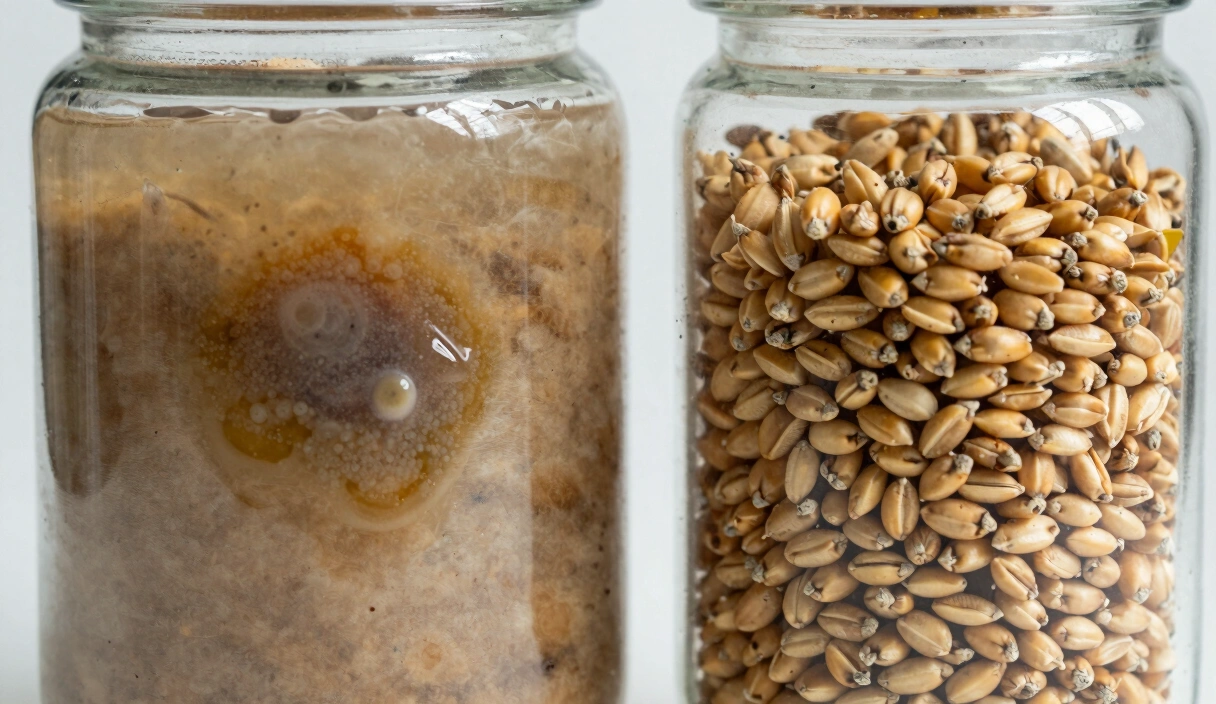
Bacterial Contamination: Technical Diagnosis of the Wet Spot and Sour Rot
That sour smell in your grain jar is Bacillus subtilis — and its endospores survived your pressure cooker. How wet spot happens and how to stop it.
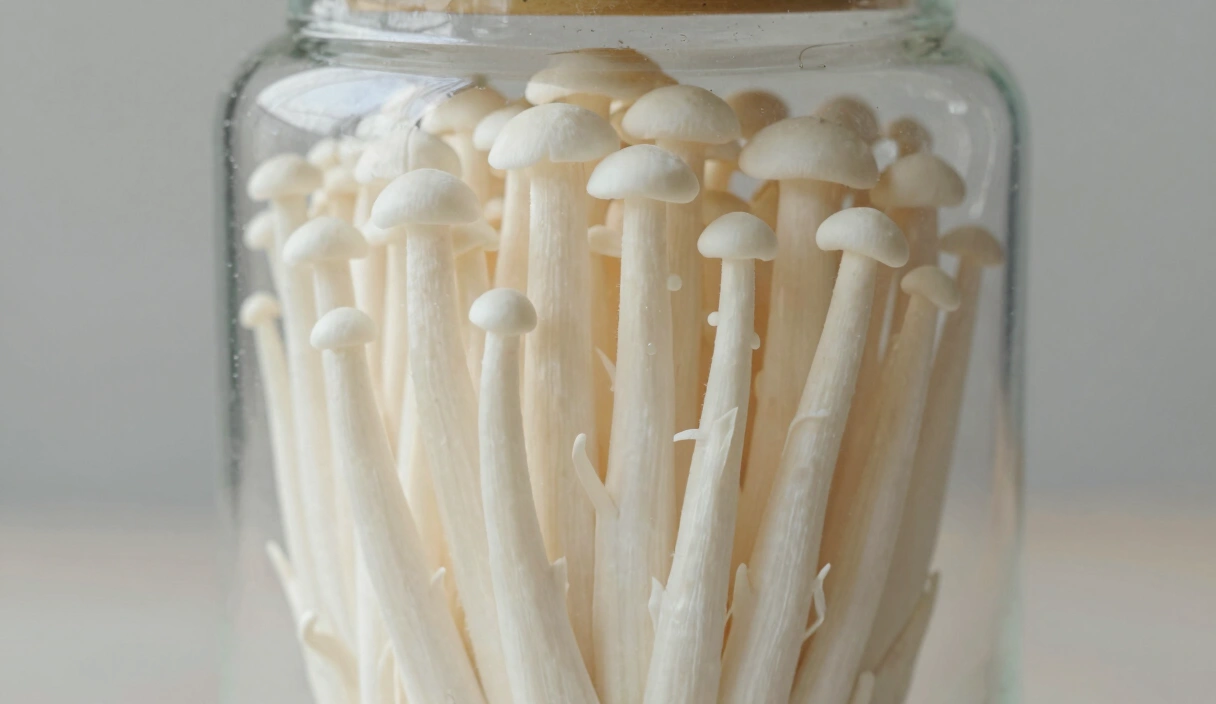
Enoki Mushroom Mastery: Engineering Morphology and Cold-Weather Yields
Wild enoki looks nothing like the white supermarket version. How to grow Flammulina velutipes at home using cold shocking and CO2-driven stem elongation.
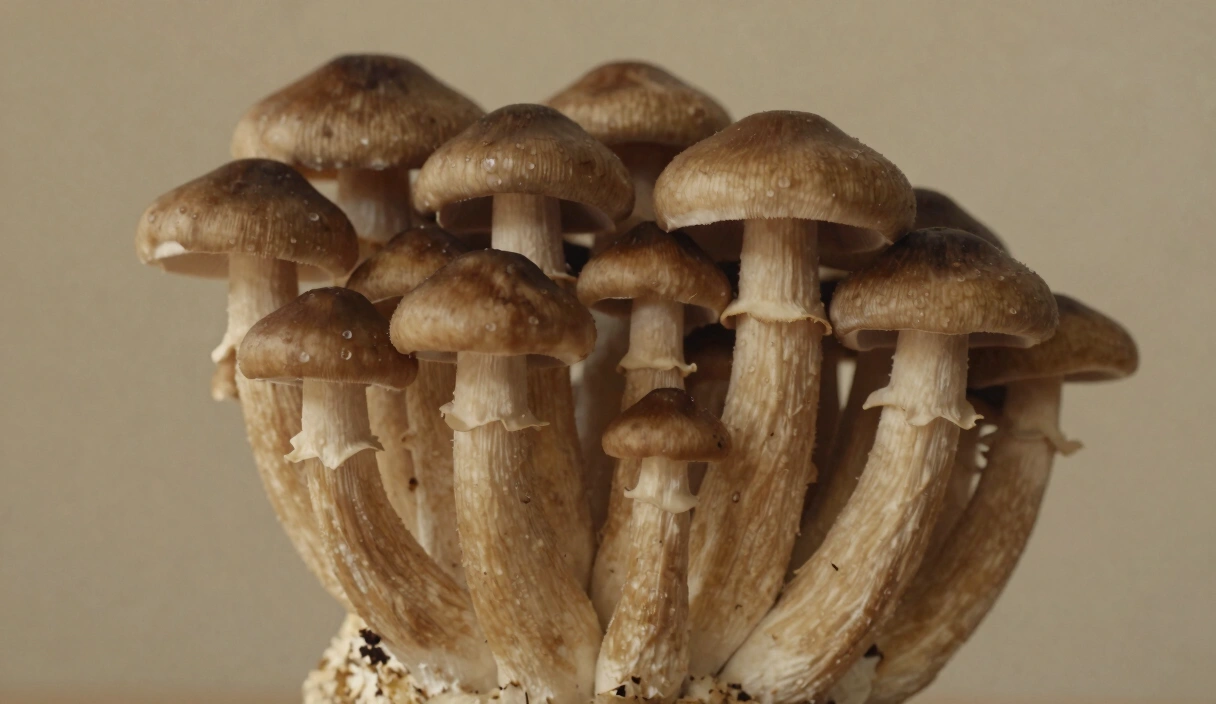
Pioppino Mushroom Mastery: Engineering Texture and Color in Cyclocybe aegerita
Pioppino grows slowly, fruits late, and demands patience. But the dense, crunchy texture makes Cyclocybe aegerita worth the extra weeks.