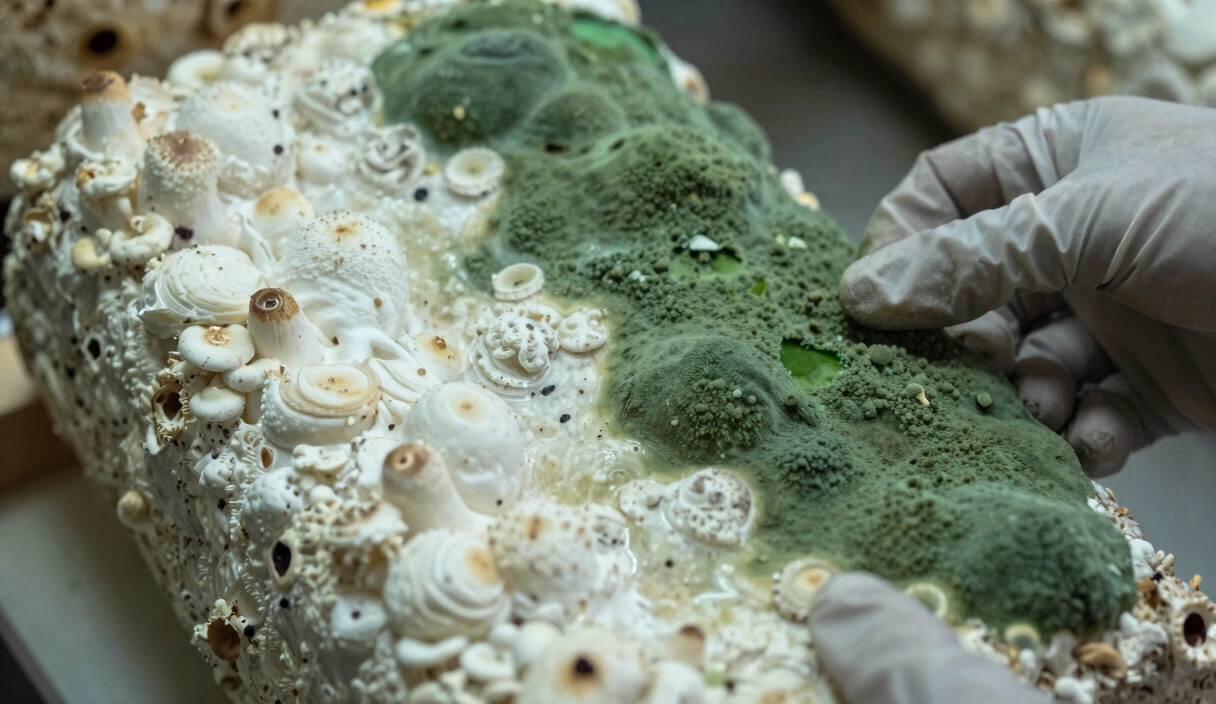
How to Identify Trichoderma: Technical Diagnosis of the Green Monster
If your jar smells like coconut, that's 6-PAP — Trichoderma's chemical signature. How to identify green mold early and what to do when you find it.
Contents
You open your monotub for a routine check and see it: a dense white patch in the corner that was not there yesterday. It looks almost like mycelium. Almost. But it is growing too fast, the texture is too granular, and when you lean in close there is a faint sweet smell—like coconut sunscreen. By tomorrow morning, that patch will be forest green and your entire tub will be lost.
Trichoderma identification (T. harzianum and T. aggressivum specifically) is the most critical diagnostic skill in mushroom cultivation. This mold is not merely a competitor—it is an apex predator with biochemical weapons evolved specifically to parasitize and destroy fungal dikaryons. A Trichoderma outbreak can reduce a 150% Biological Efficiency monotub to a rotting biohazard in less than 48 hours.
Early identification depends on biochemical detection, not just visual inspection. Understanding Mycoparasitism mechanisms and the volatile chemical signatures of these molds is the only way to intervene before sporulation.
The Biochemistry of the Attack: Mycoparasitism
Trichoderma does not just “steal” nutrients; it actively hunts mushroom mycelium.
- Recognition: When Trichoderma hyphae come into contact with your mushroom hyphae, they wrap around them.
- Enzymatic Digestion: The mold secretes lytic enzymes, primarily Chitinases and $\beta$-1,3-Glucanasen. These enzymes dissolve the Chitin walls of the mushroom mycelium, effectively liquidizing your crop from the inside out.
- Nutrient Extraction: Once the cell wall is breached, Trichoderma absorbs the internal nutrients of your mushroom dikaryon.
The Volatile Signature: The Coconut Signal
One of the most accurate diagnostic tools in your lab is your nose. Trichoderma produces a secondary metabolite called 6-pentyl-alpha-pyrone (6-PAP).
- The Scent: 6-PAP has a distinct, sweet, and heavy aroma of Coconut.
- The Technical Rationale: In the early white-growth stage, when Trichoderma is indistinguishable from mushroom mycelium, the presence of a coconut scent is a definitive biochemical marker of an outbreak.
- The Antibiotic Effect: 6-PAP also acts as a fungistatic agent, actively poisoning your mushroom mycelium to give the mold a competitive advantage. Research published in Applied Microbiology and Biotechnology measured a 60% reduction in mushroom mycelial growth rate within 12 hours of exposure to 6-PAP at concentrations as low as 10 ppm.
Field Diagnosis: The Q-Tip and Growth-Rate Tests
1. The Ultra-White Growth Rate
Healthy mushroom mycelium grows at a steady, predictable pace. Trichoderma hyphae expand at 3x to 5x the speed.
- Diagnosis: If you see a patch of white growth that has doubled in size while the surrounding mycelium has only moved millimeters, isolate the bin immediately.
- Morphology: Early Trichoderma is opaque, dense, and “granular,” resembling cottage cheese or cauliflower. Mushroom mycelium is typically more fibrous or feathery (rhizomorphic).
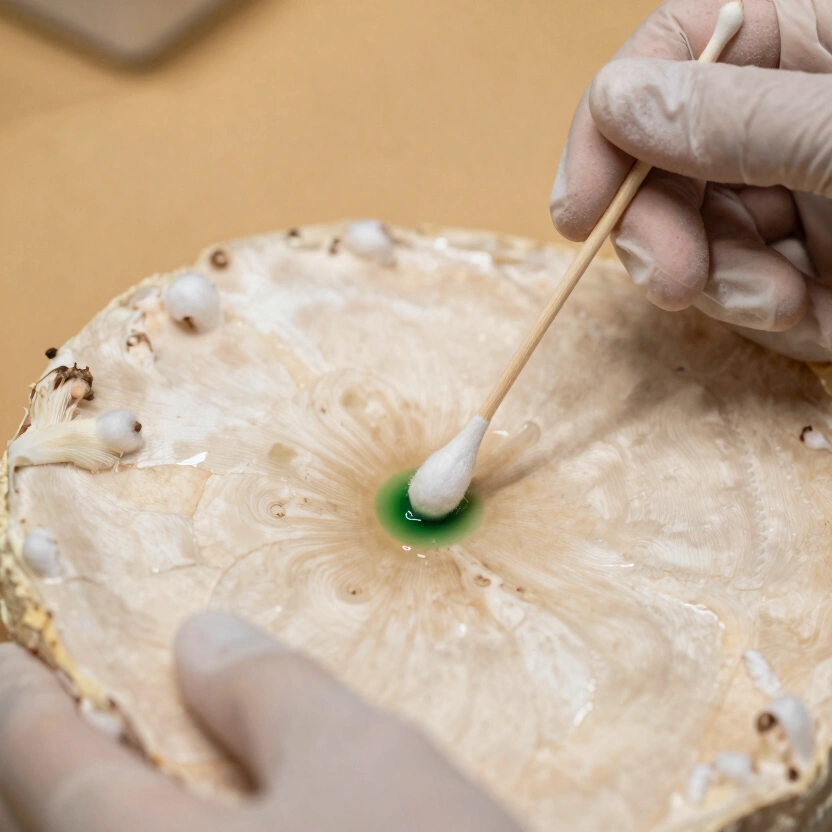
2. The Q-Tip Test: Bruising vs. Mold
Healthy mycelium often turns blue due to “bruising” (oxidation). This blue can be easily confused with the early green of Trichoderma spores.
- The Protocol: Gently rub a sterile cotton swab over the discolored area.
- The Result: If the color is Bruising, the cotton stays white (the blue is inside the tissue). If it is Trichoderma, the cotton will pick up a fine green powder (external spores).
Environmental Controls to Prevent Contamination
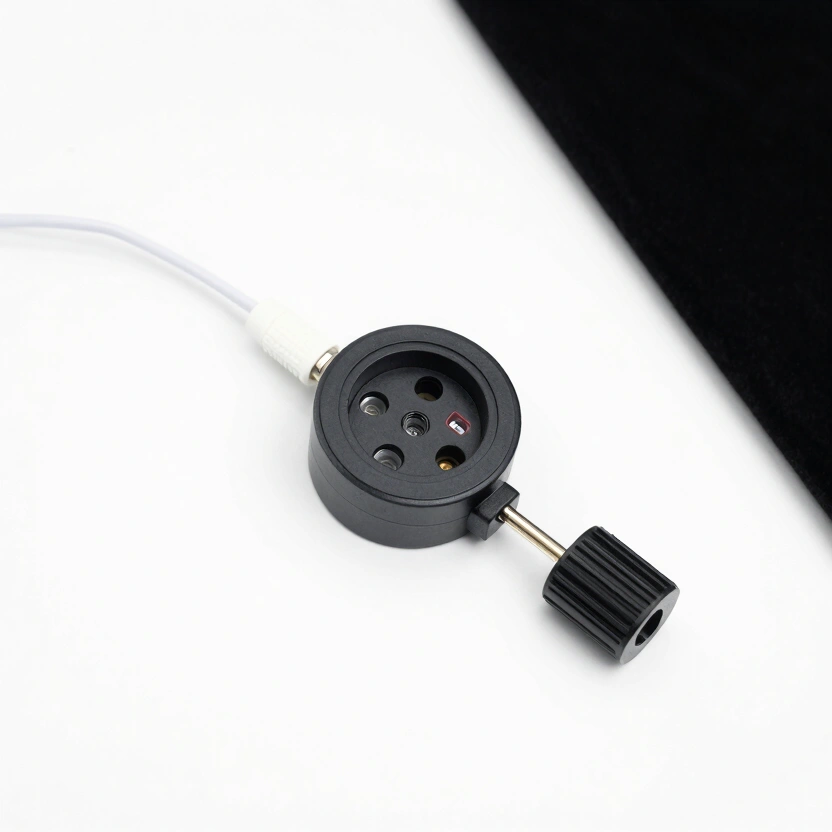
KETOTEK Digital Humidity Regulator Socket
Plug-and-play hygrostat sensor for automated humidity management.
Check Price on Amazon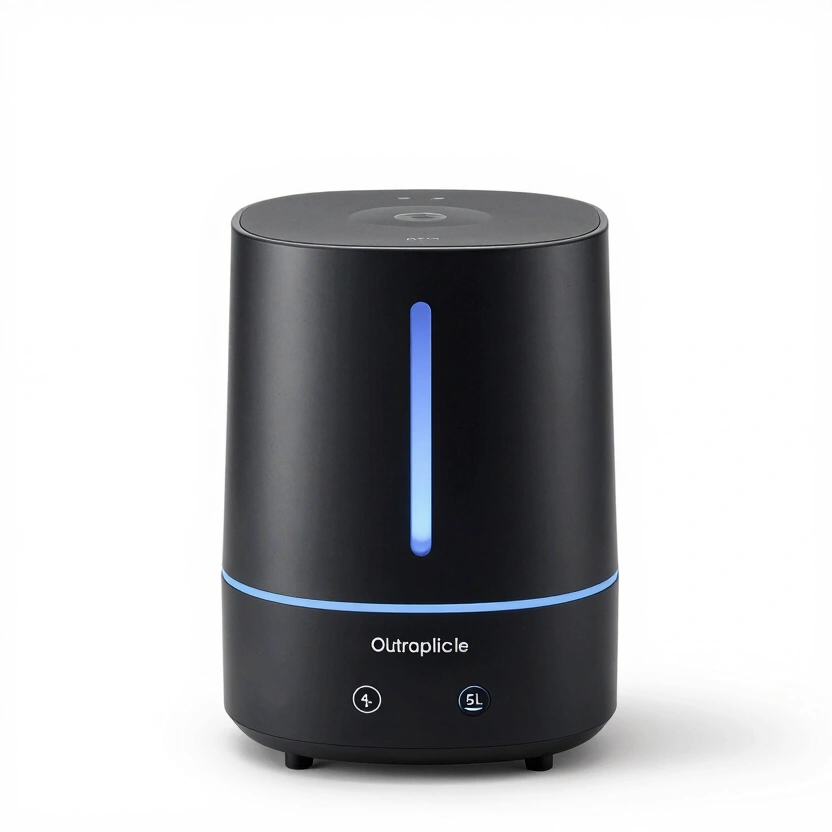
Spider Farmer Smart Ultrasonic Humidifier (5L)
Automatic humidifier with built-in hygrometer for precise fruiting chamber control.
Check Price on Amazon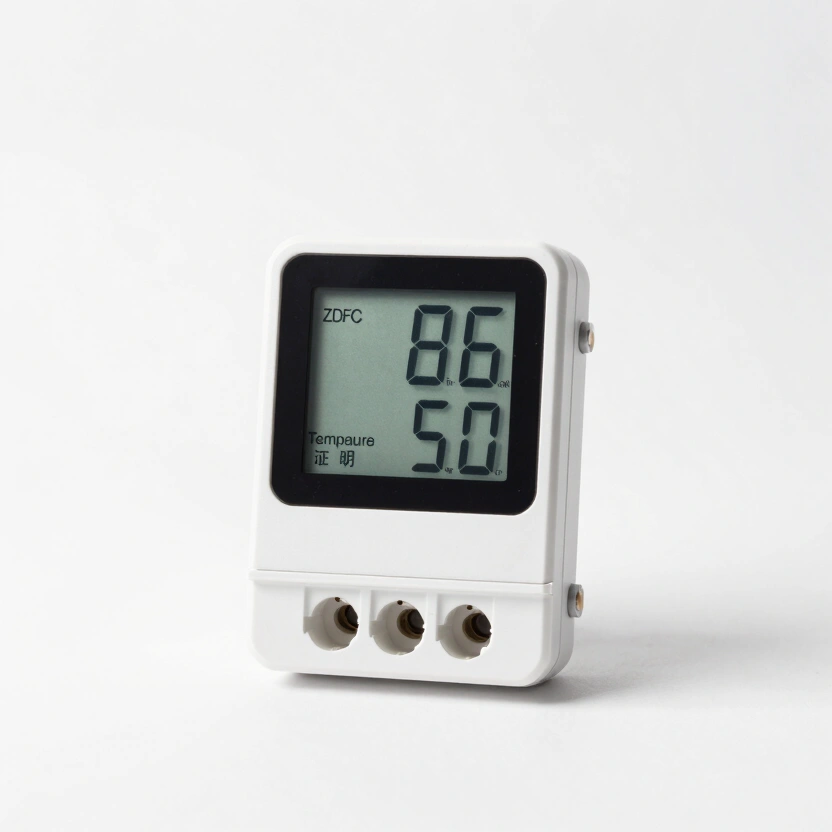
Hygrostat Socket Temperature & Humidity Switch
Integrated controller for monitoring and switching climate gear in grow tents.
Check Price on Amazon* Affiliate links. Prices last updated March 6, 2026.
The pH Shield: Chemical Prevention
Trichoderma thrives in acidic environments (pH 4.0–6.0). Most gourmet mushrooms can tolerate a much wider range.
- Technical Protocol: Use Hydrated Lime (Calcium Hydroxide) to buffer your casing layer or bulk substrate to a pH of 8.0–8.5. Penn State’s mushroom research center documented a 94% reduction in Trichoderma germination rates in casing layers buffered above pH 8.0 compared to unbuffered controls.
- The Result: At this high pH, Trichoderma spores are chemically inhibited from germinating. Your mushroom mycelium can still colonize and fruit, effectively living behind a “chemical wall” that the Green Monster cannot breach.
Emergency Response: Stage 1 vs. Stage 2
Stage 1 (The White Bump)
If the patch is still white, you can attempt to “salt” the wound. Cover the area with a generous layer of table salt and spray with 3% Hydrogen Peroxide (H2O2). H2O2 kills mold spores on contact but is quickly neutralized by the enzymes in healthy mushroom mycelium, allowing the mushroom to survive.
Stage 2 (The Green Patch)
DO NOT OPEN THE BIN INSIDE YOUR HOUSE. Once the patch is green, sporulation is complete. Opening the bin releases millions of spores that will linger in your ventilation system for months. Air sampling studies in commercial mushroom facilities have detected viable Trichoderma spores on HVAC filters up to 6 months after a single major outbreak event. Move the bin outdoors immediately and discard the contents into a compost pile far from your indoor grow area.
Run the Q-Tip test on any suspicious white patches in your current grows, check your substrate pH with a meter to verify it sits above 7.5, and review your C:N ratios to eliminate the excess nitrogen that invites Trichoderma in the first place.
Frequently Asked Questions
Can I still eat mushrooms harvested from a tub that has Trichoderma in one corner?
If the mushrooms are visually healthy, far from the green patch, and smell like fresh mushrooms—many growers still harvest them. Trichoderma itself is not toxic to humans. The real concern is that its presence signals failed environmental controls, meaning other potentially harmful molds or bacteria may also be present. If any green dust is visible on the mushrooms or they smell like rotten earth, discard immediately.
Why does Trichoderma keep appearing after my first flush but not before?
After the first harvest, your mushroom mycelium is metabolically depleted and the substrate pH has dropped due to accumulated organic acid waste. That acidic, weakened environment is exactly where dormant Trichoderma spores germinate best. Applying a high-pH casing layer (buffered to pH 8.0+ with hydrated lime) after the first flush is the most effective preventive measure.
What kills Trichoderma without destroying my mushroom mycelium?
3% Hydrogen Peroxide for direct spot treatment—it dissolves mold hyphae on contact but is neutralized by the catalase enzymes in healthy mushroom mycelium. Table salt creates a localized osmotic shock zone that prevents spore re-germination. Never use bleach on active substrate; it kills everything indiscriminately and does not penetrate porous material effectively.
Does blue light actually make Trichoderma worse?
Yes. Studies show blue light stimulates sporulation in several Trichoderma species. An over-illuminated grow room—especially one with 24-hour light leaks during colonization—can trigger early sporulation before you even see the green color. Stick to 12/12 light cycles with 6500K LEDs and keep your incubation space dark.
How do I fully decontaminate a grow room after a major Trichoderma outbreak?
Treat every surface and the air. Wipe walls, shelves, and floors with 10% bleach or a fungicide like Concrobium. Run an ozone generator (with the room sealed and nobody inside) for 2-4 hours, or use a UV-C lamp with appropriate safety precautions. Replace all air intake filters—viable spores embed in filter media and recontaminate incoming air for months.
Related Articles
DIY Still Air Box Guide: Engineering a Professional Sterile Lab for Under $20
A $15 plastic tote is the most effective contamination prevention tool in mycology. Here's exactly how to build and use a Still Air Box.
Mushroom Agar Work: The Complete Guide to Isolating, Storing, and Expanding Cultures
Master the "black belt" of mycology. From Fanny Hesse’s kitchen discovery to advanced genetic sectoring, we explore the physics, chemistry, and real-world hacks of agar work.
The Monotub Masterclass: Engineering Fresh Air Exchange for High-Yield Grows
Everything about monotub design — hole placement, polyfill density, and the convection physics that make or break your first bulk grow.